
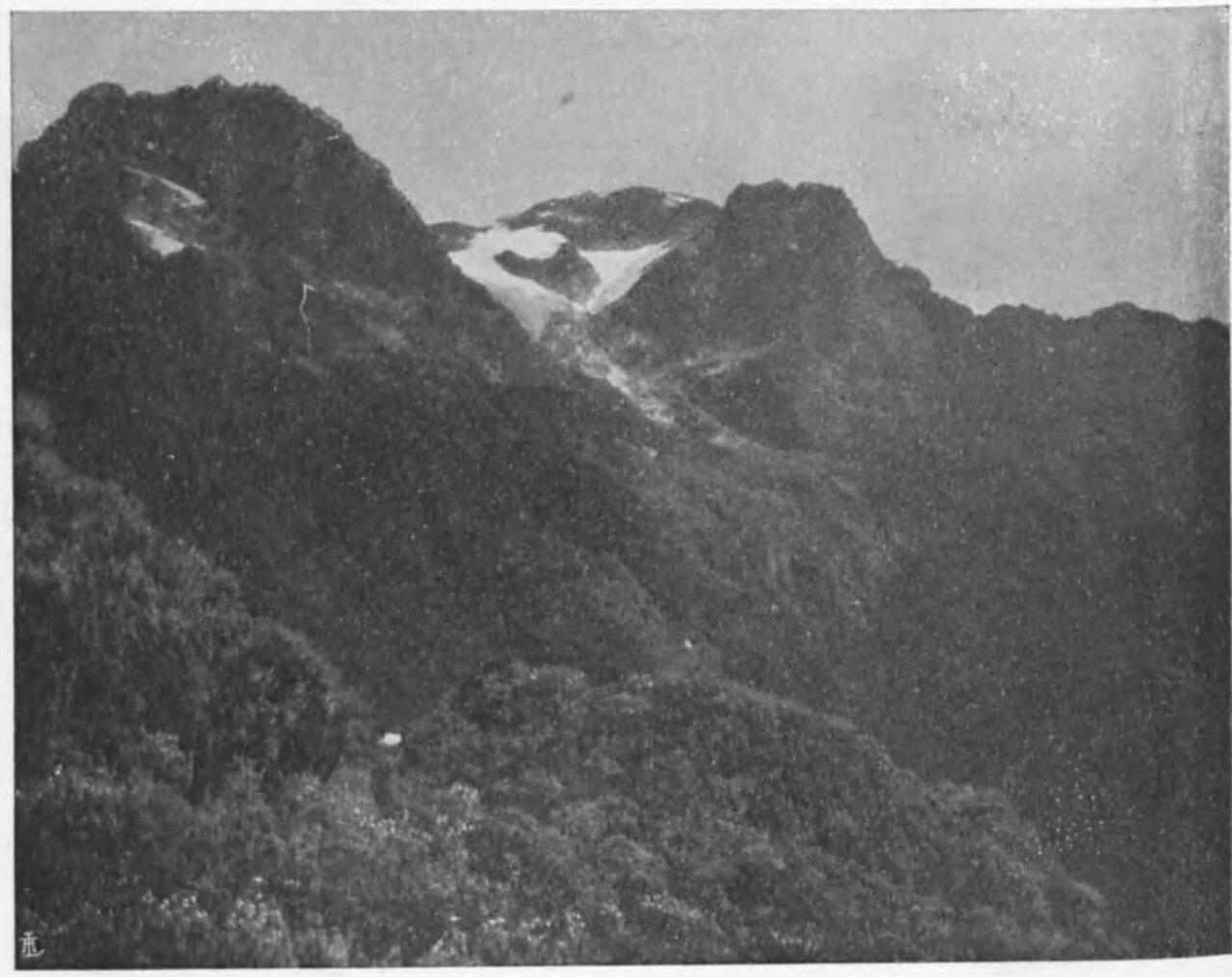
Abruzzi's 1907 Expedition and the Naming of the Peaks
The Duke of the Abruzzi reached Stairs Peak in 1906 and published a full account the following year in the Geographical Journal, in which he proposed Thomson as the name for the massif and assigned Weismann, Sella, and Stairs to its three summits. The Uganda Wildlife Authority later adopted the present name Mount Luigi di Savoia, honoring the expedition's leader.
Weismann's First Recorded Ascent in 1932
Weismann, the second-highest summit at 4,620 m, received its first recorded ascent in April 1932, when a party led by Noel Humphreys reached the top. This ascent, documented in Alpine Journal accounts of Rwenzori exploration, extended the record of climbed Rwenzori summits beyond those reached during the Abruzzi expedition.
Historical Glaciation on Weismann and Stairs
A January 1960 field survey recorded in the Journal of Glaciology documented an ice cap persisting on Weismann and noted that the Stairs Glacier had already vanished by that date. The two summits thus carried distinct glacial histories even within recorded observation, with ice cover on Weismann outlasting that of the lower Stairs Peak.