
A Sky Island Setting
The Arizona Geological Survey describes the Santa Catalinas as a forested highland emerging from the Sonoran Desert floor. Vegetation changes along the elevation gradient, with plant communities shifting as the terrain rises toward the summit. This pattern characterizes what ecologists call a sky island, an elevated terrain mass isolated by surrounding lowland desert, and Mount Lemmon represents the uppermost expression of that gradient in the Santa Catalinas.
Sara Plummer Lemmon and the 1881 Expedition
In 1881, botanist and illustrator Sara Plummer Lemmon traveled to the Santa Catalinas on a botanical collecting trip. She reached the summit with her husband John Gill Lemmon and local rancher E. O. Stratton. The peak was subsequently named for Sara Plummer Lemmon.
Radar Operations and Astronomical Research
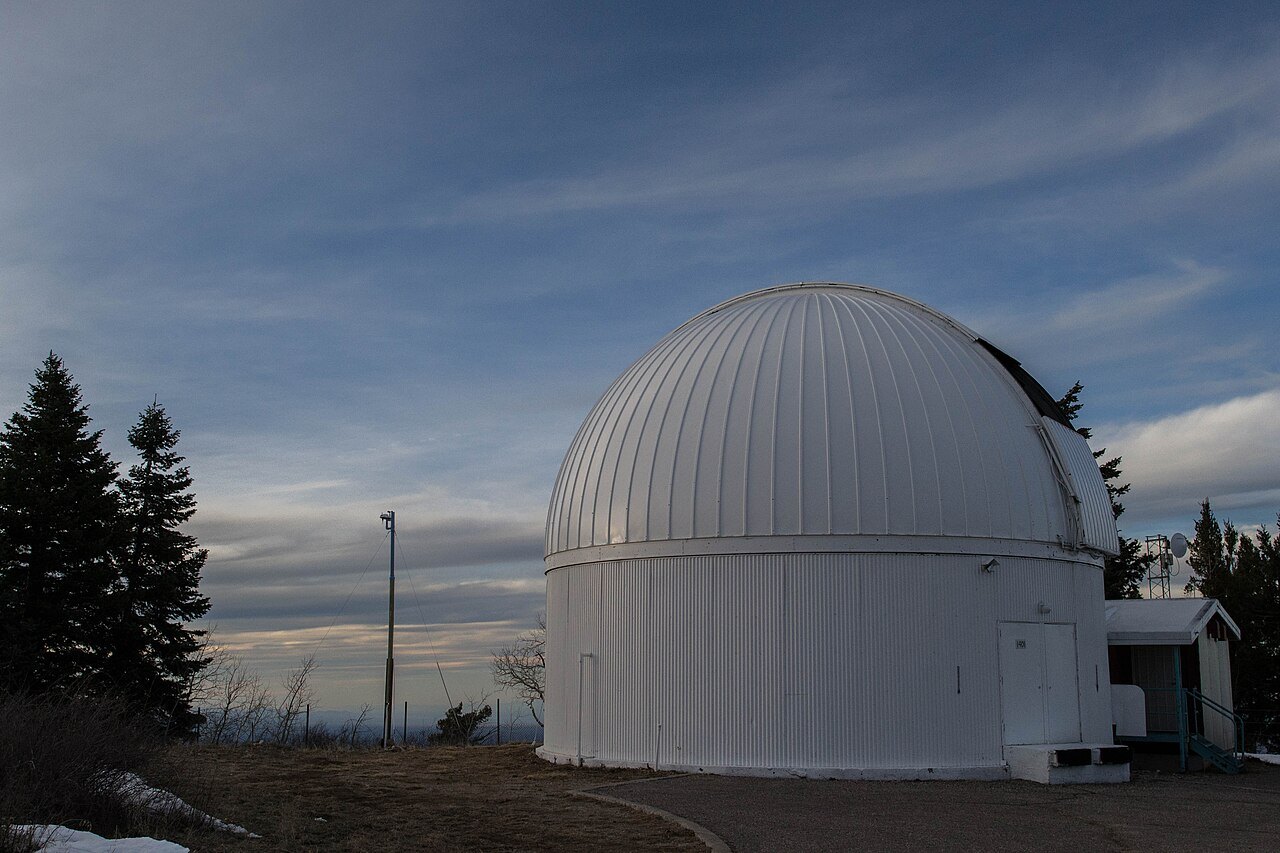
Radar operations were conducted from the summit between 1956 and 1969, as documented by the University of Arizona. University telescopes were later installed at the site. The Catalina Sky Survey, a university program, uses instruments at the summit to search for near-Earth asteroids.