
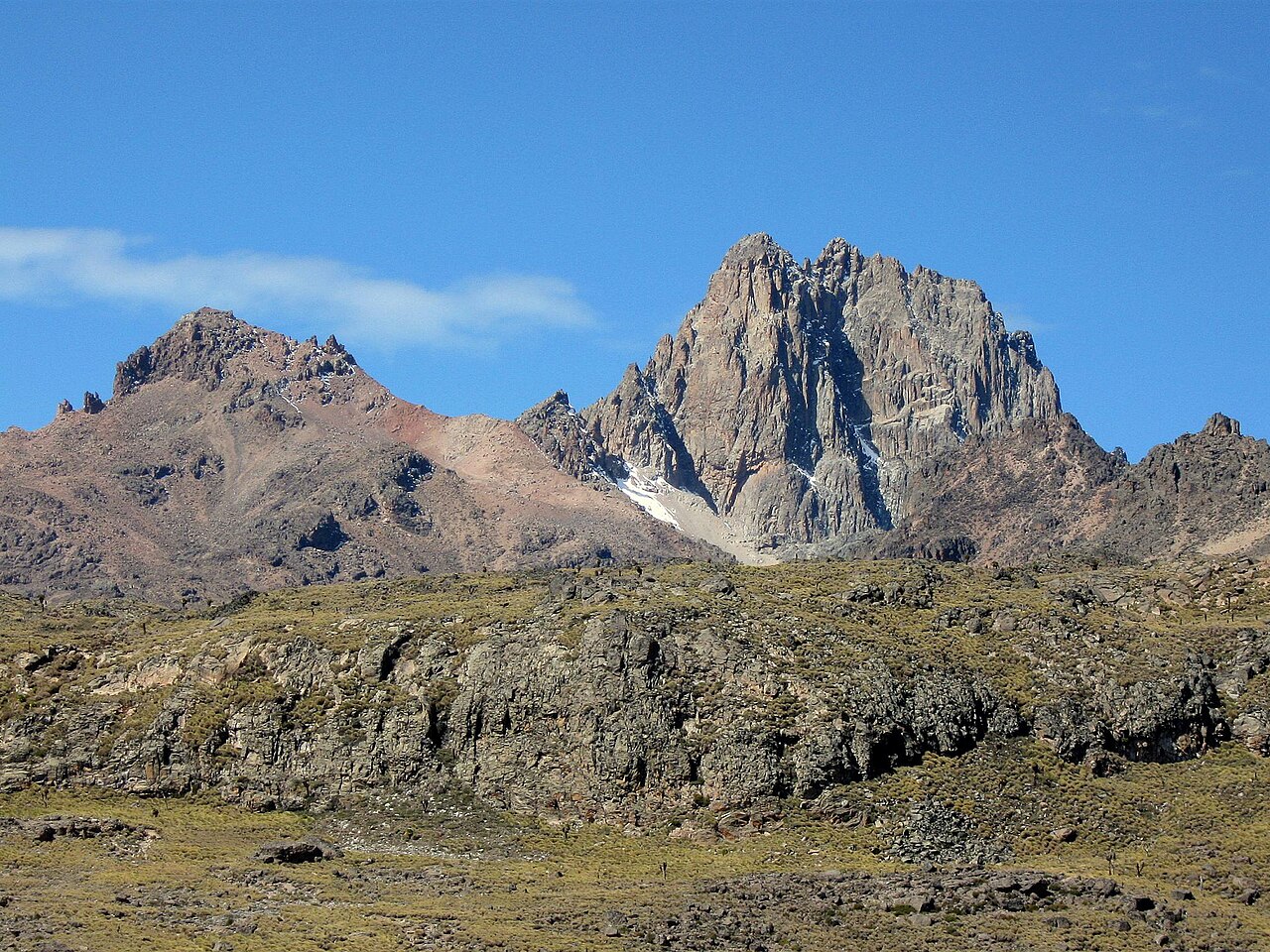
An Extinct Volcano Carved by Ice
UNESCO describes Mount Kenya as an extinct volcano whose main period of activity ran from approximately 3.1 to 2.6 million years ago. The sharp, craggy forms that now define the upper mountain are products of glacial action following the volcanic period, which cut the radiating U-shaped valleys extending outward from the central peaks. Glacial lakes and moraines persist below Batian and Nelion as tangible remnants of a larger ice presence that the American Alpine Journal notes has been retreating.
Kĩrĩnyaga and Gĩkũyũ Tradition
The mountain's Gĩkũyũ name is Kĩrĩnyaga. In Gĩkũyũ tradition, the mountain is regarded as sacred and as the dwelling place of the deity Ngai when visiting the earth. The mountain's spiritual standing in this tradition stands alongside its physical prominence as a defining characteristic of how the peak has been understood by those who have lived in its shadow for generations.
Point Lenana and the Summit Peaks
Point Lenana, at 4,985 m, is a distinct lower peak separated from Batian and Nelion and is frequently visited by walkers rather than technical climbers. Batian and Nelion are alpine climbing objectives requiring mountaineering skills to reach. The American Alpine Journal discusses these peaks in a technical context, and the distinction between Lenana and the twin summits reflects what the mountain demands at its upper elevations.
The 1899 Batian Ascent
The first recorded ascent of Batian was completed in 1899 by Halford Mackinder, César Ollier and Josef Brocherel. The route involved approaching on the southeast face of Nelion and then traversing the Diamond Glacier to reach Batian's summit. The American Alpine Journal notes that the expedition depended substantially on Gĩkũyũ, Maasai and Swahili porters, cooks and guards, a dependence that took place under colonial conditions. Mount Kenya received UNESCO World Heritage inscription in 1997.