
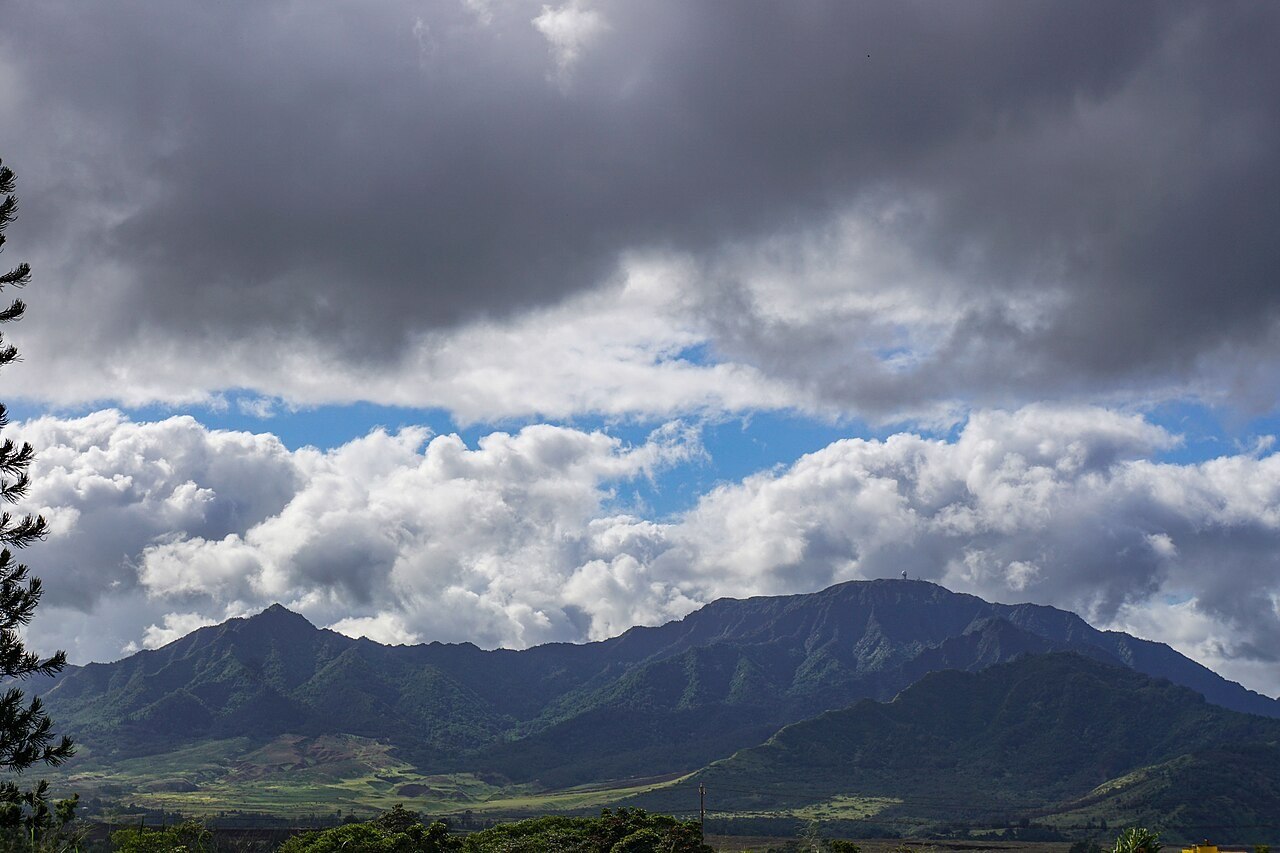
A Plateau Summit Above the Trade Winds
Kaʻalaʻs summit is a broad elevated plateau rather than a sharp apex. Cloud cover, orographic rain, and persistent fog maintain saturated, poorly drained soils that support a genuine bog — a feature nearly absent elsewhere on Oʻahu. This moisture regime distinguishes the summit from the drier ridges of the lower Waiʻanae Range below.
Native Flora of the Summit Bog
The Hawaiʻi DLNR botanical field guide records native ferns, clubmosses, and flowering plants near the boardwalk traversing the reserve. These species are adapted to the acidic, nutrient-poor, perpetually wet substrate of highland bogs. Documented endemics persist at Kaʻala partly because the summitʻs climatic isolation limits competition from lowland flora.
The Kaʻala Natural Area Reserve
The state of Hawaiʻi established the Kaʻala Natural Area Reserve to protect what DLNR describes as a representative ecosystem — a functioning native montane bog and wet forest retaining its ecological structure. The reserve covers a defined portion of the summit area and should not be conflated with the full Waiʻanae Range.