
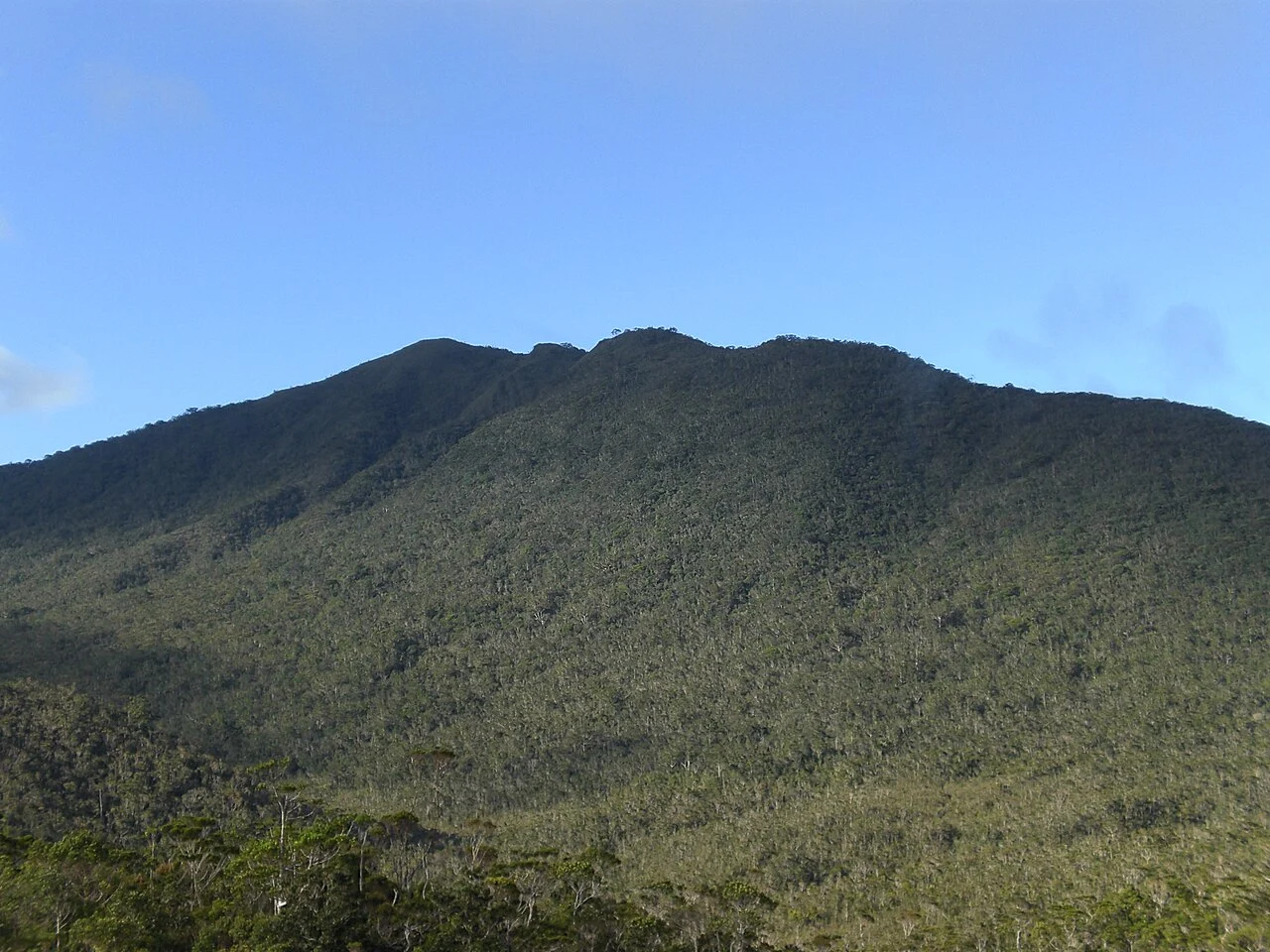
Tectonic Soils and Upland Ecology
UNEP-WCMC attributes the mountain's unusual upland character to its position near a subduction zone, where tectonic activity has produced metal-rich lateritic soils. These chemically demanding substrates concentrate biodiversity into specialist niches, giving selective advantage to species adapted to endure elevated metal content across the higher elevations.
Mossy Pygmy Forest Band
At roughly 1,160 to 1,200 metres elevation, as documented in the UNESCO dossier, Mount Hamiguitan's vegetation shifts into a mossy pygmy forest of small, contorted trees draped in epiphytes and persistent mist. Nepenthes hamiguitanensis, a carnivorous pitcher plant named for the mountain, has been recorded within this distinct altitudinal band.
Sanctuary Declaration and Wildlife
Philippine Republic Act 9303 declared Mount Hamiguitan a wildlife sanctuary in 2004, establishing legal protection more than a decade before the 2014 UNESCO World Heritage inscription of the Mount Hamiguitan Range Wildlife Sanctuary. The UNESCO documentation identifies the Philippine eagle and Philippine cockatoo as species protected within the sanctuary's boundaries.