
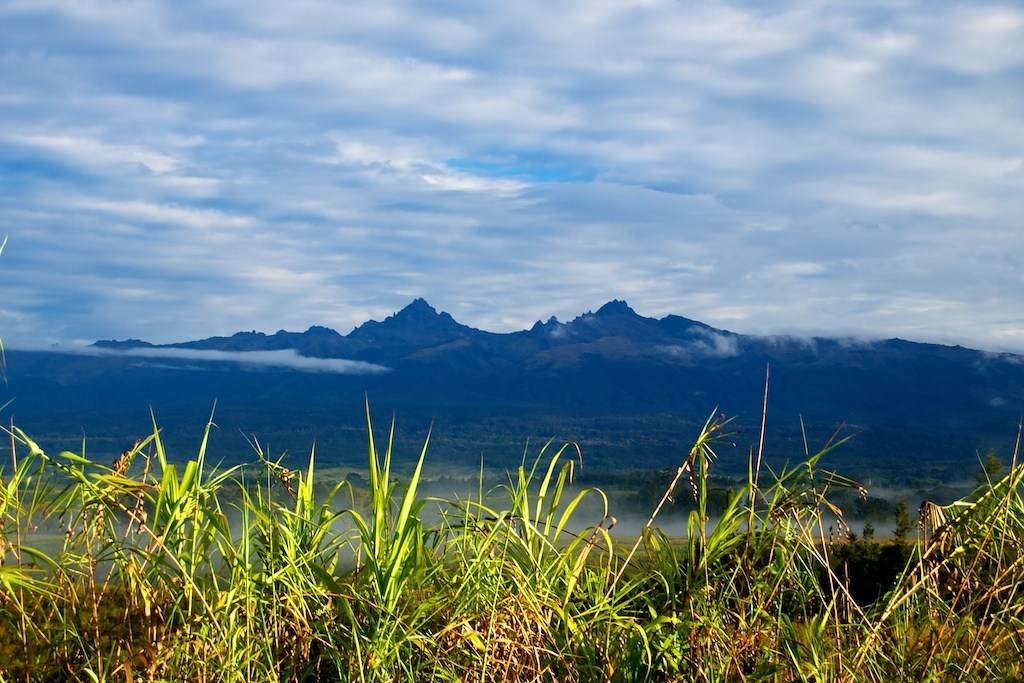
A Volcanic Structure Unlike Any Other in the Highlands
The Smithsonian Institution's Global Volcanism Program describes Giluwe as a basaltic-andesitic shield volcano, setting it apart from the fold-and-thrust mountains that surround it. The summit region and upper flanks carry numerous cinder cones and lava domes consistent with a prolonged, episodic eruptive history. The heavily dissected character of the higher slopes reflects sustained glacial erosion across multiple cold periods, so that the volcano's present surface records both volcanic construction and the cumulative work of ice over deep time.
Middle Pleistocene Ice and the Evidence of Subglacial Eruption
Löffler identified evidence for a glacial ice cap on Giluwe dating to approximately 290,000 years ago in the middle Pleistocene. His study documented a volcanic breccia formed when a subglacial eruption brought rising magma into contact with ice or meltwater; alteration textures within that breccia indicated an ice cover estimated at least 100 m thick over the summit area at the time of eruption. This physical record of magma-ice interaction provides direct evidence of substantial glacial conditions on a tropical volcano well before the last glacial maximum.
Cosmogenic Dating and the Sequence of Glacial Advances
Barrows and colleagues applied chlorine-36 cosmogenic exposure dating to moraine boulders and supplemented those ages with radiocarbon dates to build a resolved glacial chronology for Giluwe. Their analysis distinguished multiple discrete glacial episodes and established that the volcano's most extensive ice advance predated the last global glacial maximum — placing Giluwe's greatest glacial footprint in an earlier cold period rather than the most recent one. That finding contributes a specific data point for understanding how tropical Pacific mountain glaciers responded to Pleistocene climate cycles that do not mirror Northern Hemisphere ice-age timing.