
Naming and the 1872 Survey
Almon Harris Thompson led the 1872 expedition that reached the high point and named the mountain for his wife, Ellen Powell Thompson. She collected plant specimens for botanist Asa Gray during the broader survey, then returned to base camp before the party continued to the summit. Both the National Park Service Capitol Reef Fact Guide and Smithsonian historical research on the Powell Survey independently date the naming to 1872.
Intrusive Geology and the Laccolith Concept
Grove Karl Gilbert studied the Henry Mountains in the 1870s and used them to articulate how magma intruding beneath sedimentary layers could arch those beds upward without breaking the surface, work that helped establish the concept of the laccolith. He published these findings in his 1877 Report on the Geology of the Henry Mountains. Mount Ellen is composed of multiple igneous intrusive bodies, and its elevated terrain is a direct expression of that subsurface geology.
Massif Structure and the North Summit Ridge
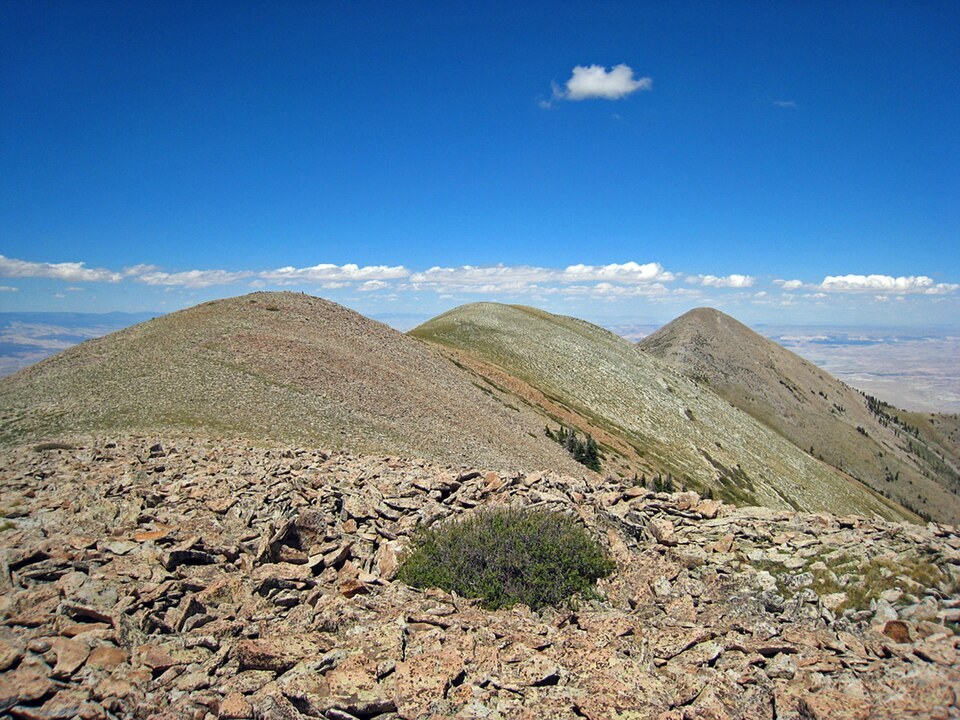
The USGS GNIS maintains two separate records, one for the massif as a whole and another for Mount Ellen Peak, the lower but visually prominent pointed summit to the north. The surveyed high point lies on North Summit Ridge, clearly differentiated on USGS topographic mapping from the named lower peak, with lidar data corroborating this position as the true summit of the range.