
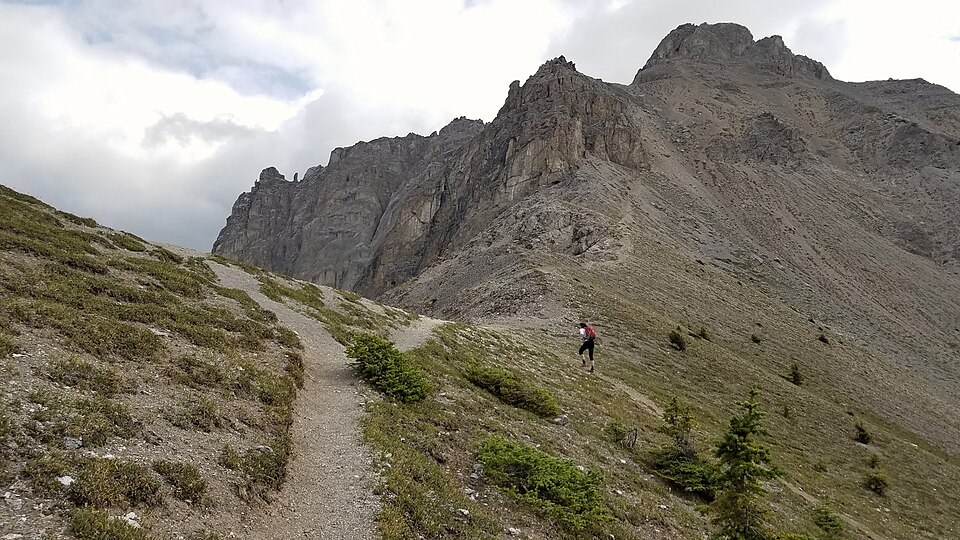
Geology of the Sawback Profile
The Geological Survey explains that Mount Edith's pinnacles formed where steeply inclined former rock layers were cut by erosion acting from more than one direction. That structural condition, expressed across the range's southern end, accounts for the sawtooth appearance the Sawback Range carries across the skyline.
Competing Name Claims
According to Ron Kelland, provincial Historic Places Research Officer, the mountain's name carries two separate traditions. Local references credit Edith Orde, an aide to Lady Agnes Macdonald, wife of Canada's first prime minister. Edith Wanklyn (née Angus) was separately credited by the CPR and by the Angus and Wanklyn families.
When alpinist Arthur O. Wheeler proposed adding "Cavell" to honor the executed British nurse, the Orde family and Banff residents associated the existing name with Edith Orde. The board accepted Wheeler's proposal in December 1915 but withdrew it in January 1916, ultimately commemorating the nurse through a separate peak in Jasper. Natural Resources Canada's formal registry records the name decision as 1956.
Norman Collie's 1900 Climb
In 1900, Norman Collie and outfitter Fred Stephens made an early recorded ascent to the northern high point. The Canadian Alpine Journal account describes rough rock and sustained scrambling on the approach, placing this climb among Collie's documented explorations across the Canadian Rockies during those years.