
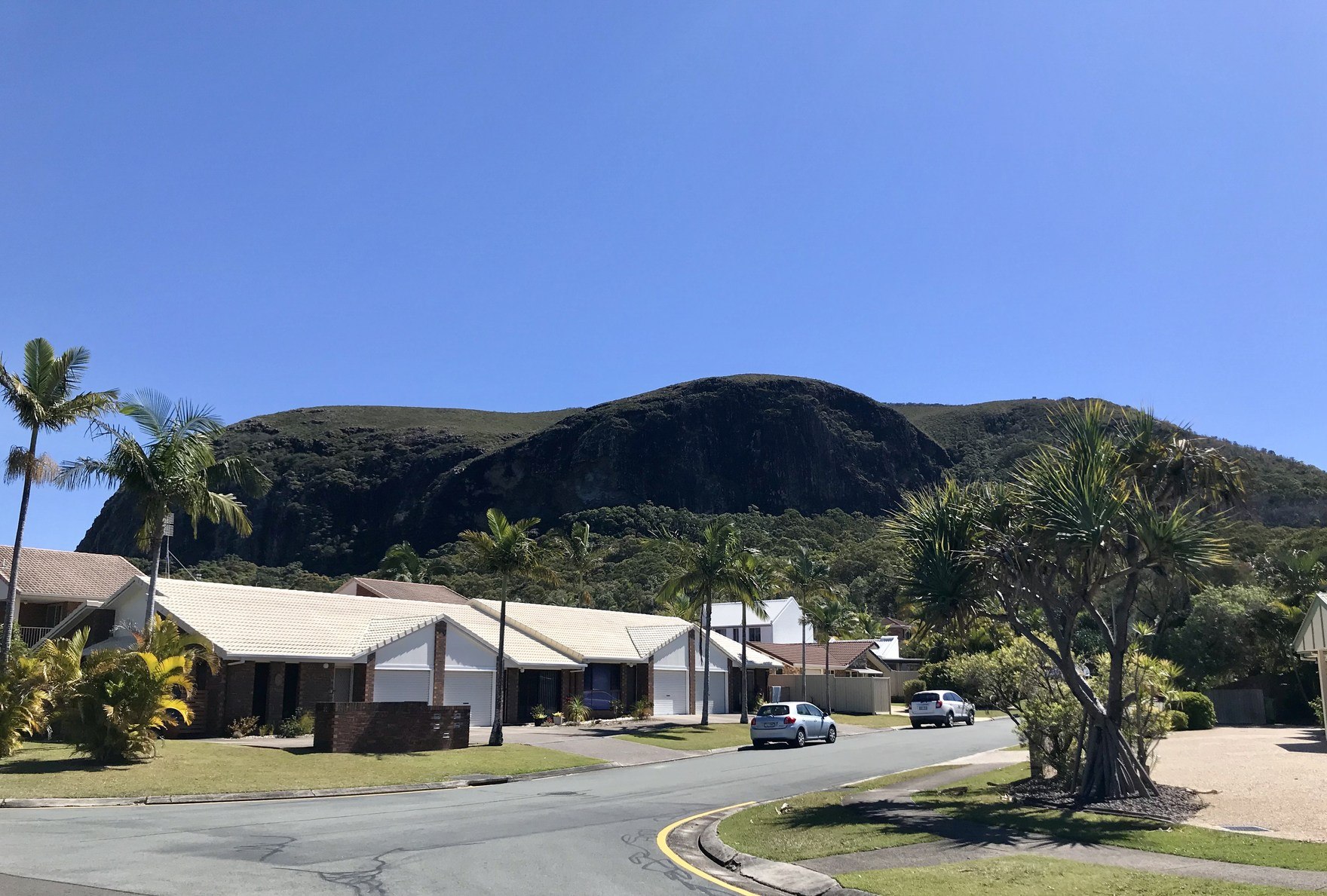
A Dome Born of Fire and Erosion
Approximately 26 million years ago, magma forced upward into softer sandstone beneath what is now the Sunshine Coast. That sandstone has since eroded away, exposing the harder rhyolite core. At 208 metres, Mount Coolum stands prominently above the surrounding coastal lowlands, the resistant rock contrasting with the eroded terrain around it.
Columns That Lie Rather Than Stand
As the rhyolite cooled and contracted, it fractured into large hexagonal columns. Near the dome's margin, these columns tend to lie at low angles rather than standing vertically — a distinctive characteristic of the exposed rock formations visible at the flanks of the dome.
A Park Shaped by Endemism
Mount Coolum National Park was gazetted in 1990 and protects several distinct plant communities, including low montane heath across the upper dome. Among its significant botanical features is the Mount Coolum she-oak, identified by Queensland Parks as endemic to this mountain and found nowhere else.