
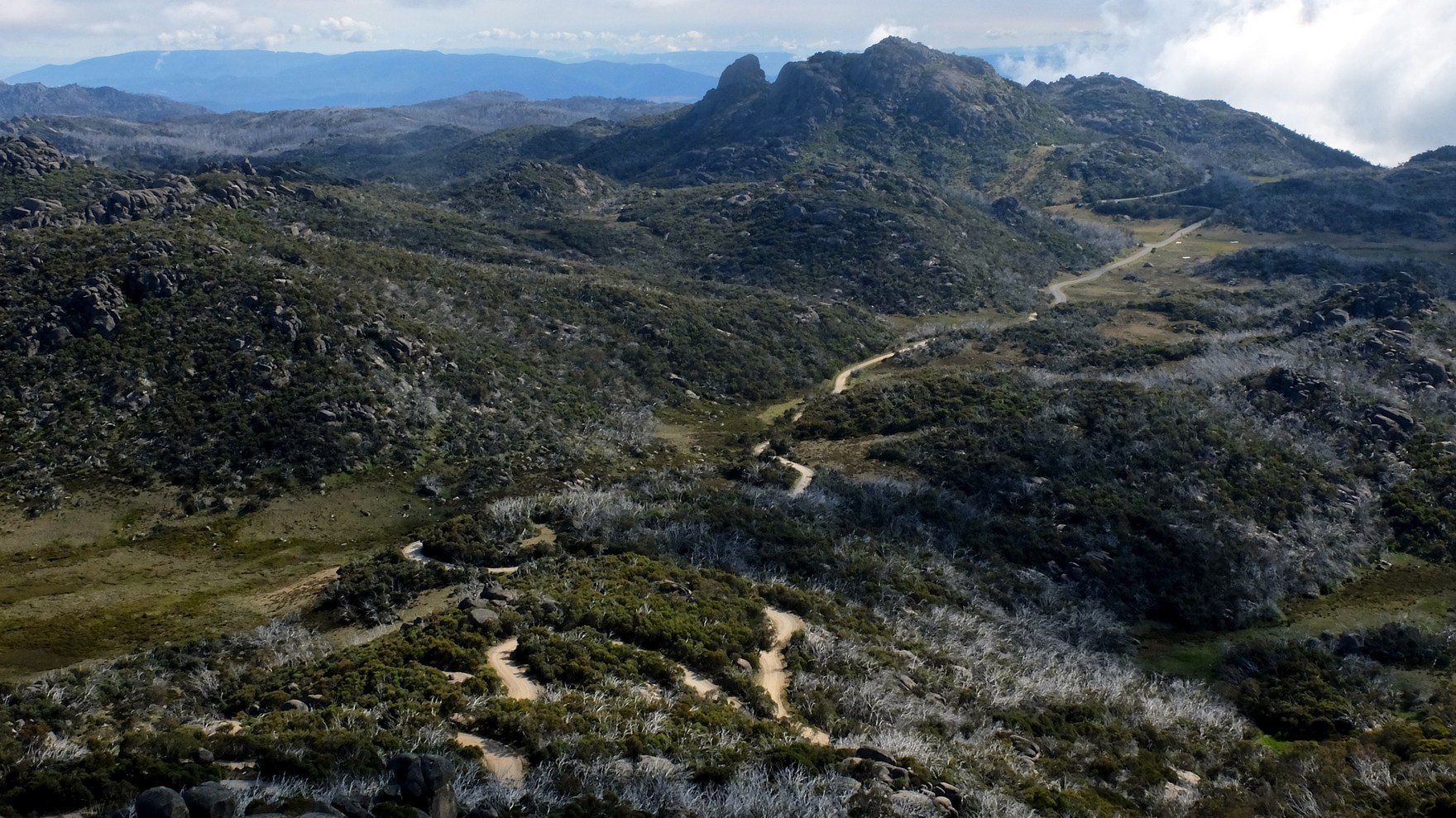
The Horn and the Plateau's Edge
The Horn, at 1,723 m, is the plateau's highest point and stands apart from other named features including Mount McLeod and Lake Catani. Exposed granite dominates its profile. Parks Victoria describes the plateau edge as bounded by sheer cliffs; at The Horn, the flat interior gives way to vertical relief without transition.
Granite Tors and the Shaping of the Upland
Across the Great Granite Plateau, differential weathering has left granite tors — isolated formations where resistant blocks outlasted surrounding rock — standing above the general upland. At the plateau's margins, cliffs drop from the tableland. This contrast between the flat interior and cliff-edged perimeter defines Mount Buffalo's silhouette from the valleys below.
The Mount Buffalo Chalet and Its Heritage Record
Built in 1910 at a site near the Gorge, the Mount Buffalo Chalet is heritage-listed and represents an early period of organised alpine tourism in Victoria. Parks Victoria announced in 2024 that conservation works were underway, addressing timber structures and drainage systems — work reflecting the demands an alpine environment places on ageing fabric.