
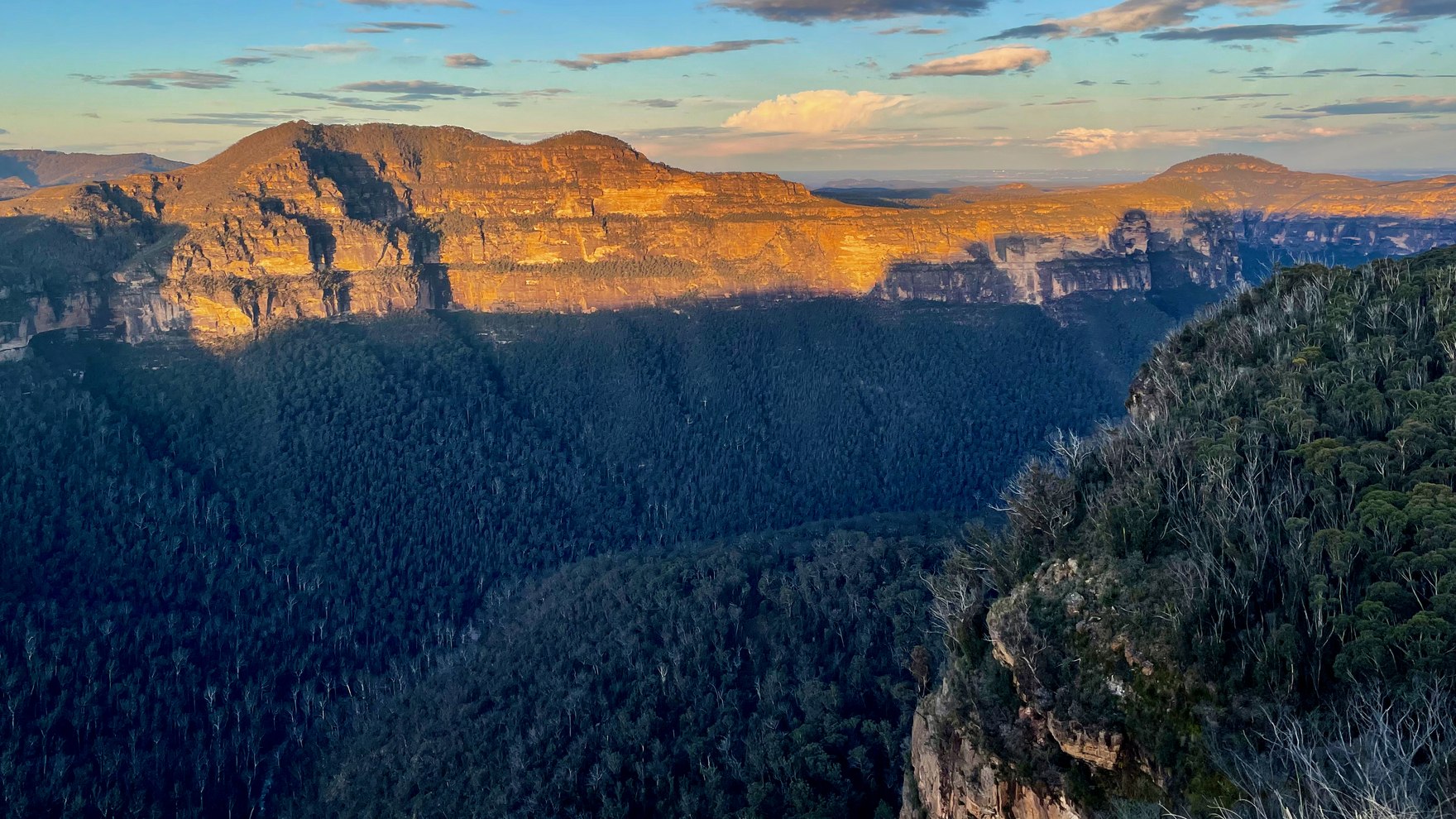
A Volcanic Cap over Sandstone
Basalt from eruptions between 12 and 17 million years ago mantles the upper reaches of Mount Banks, shielding the sandstone beneath from the erosion that has carved the Grose Valley progressively deeper. This resistant cap holds the summit above the surrounding plateau and accounts for the mountain's raised double outline.
Banks Wall and the Layered Rock Record
Banks Wall drops 510 metres from the summit cap into the valley, exposing in cross-section the layered sandstone strata that the overlying basalt has helped protect from removal. The cliff face makes visible the distinction between the basalt-covered upper rock and the full sandstone sequence that valley erosion has since uncovered below.
Vegetation and the Mountain's Name
The park authority records heath and open woodland on the approaches to the summit, with tall monkey gums established on the richer basalt soil near the top. The mountain bears the name of Joseph Banks, the naturalist of the 1770 Australian coastal voyage.