
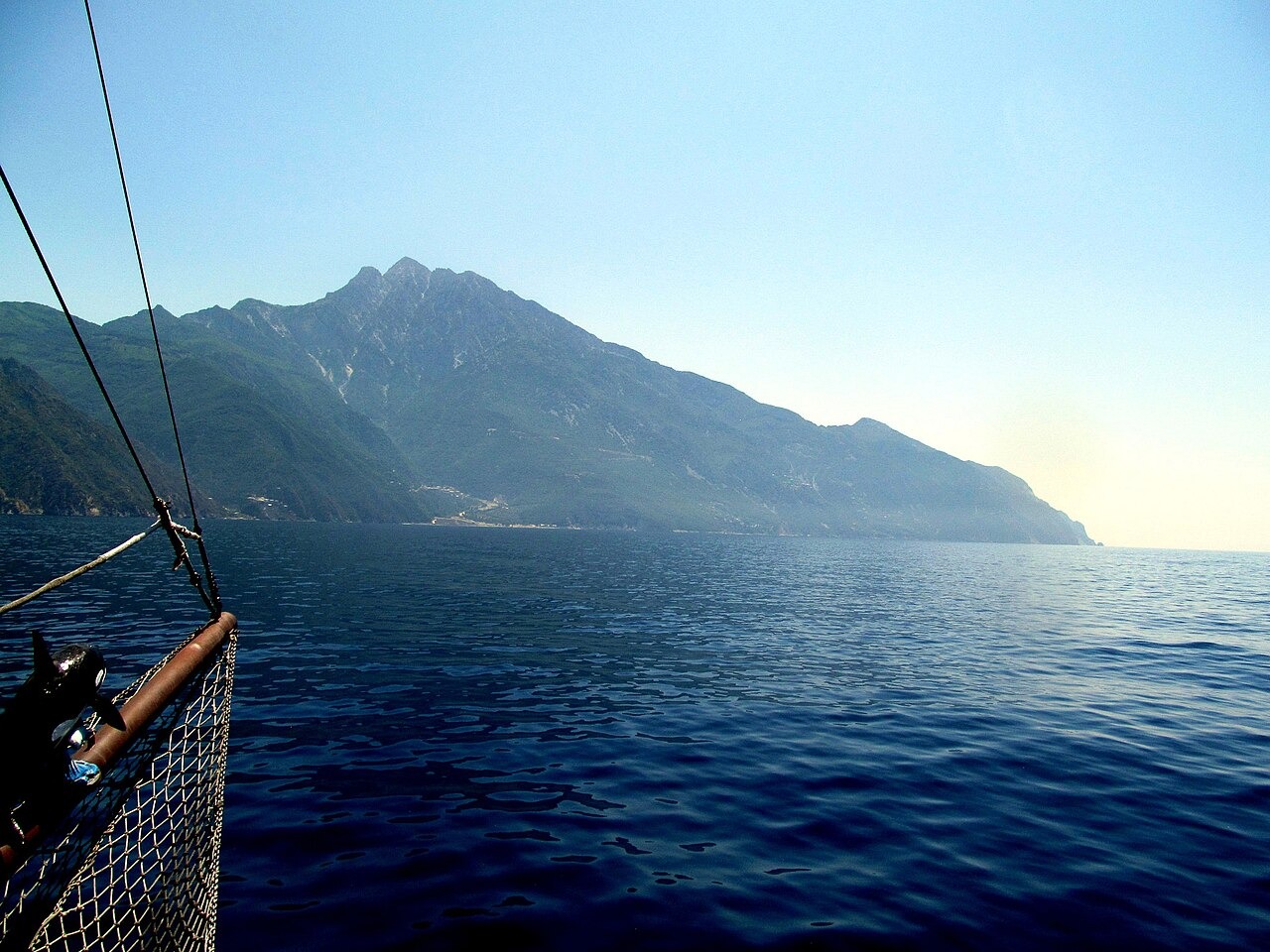
Peninsula, Mountain, and Heritage Property
In 1988 UNESCO inscribed the wider Athos Peninsula as a mixed cultural and natural World Heritage property. The designation covers the peninsula's forested slopes, rugged coastline, and the monastic settlements distributed across the land. The UNEP World Conservation Monitoring Centre records the site's distinctive landscape as integral to the setting in which the monastic communities developed.
A Thousand Years of Monastic Foundation
ICOMOS records monastic presence on the peninsula before 963, the year it dates the foundation of the Great Lavra by Athanasius the Athonite. Twenty monasteries and their associated smaller communities — sketes, kellia, and hermitages — are distributed across the Athonite territory. These settlements together form a substantial concentration of medieval religious architecture in the Orthodox world.
Painting, Manuscripts, and Architectural Legacy
UNESCO identifies the site's significance in the history of monumental painting and manuscript production, and describes its influence on Orthodox church architecture. Paintings at the Protaton Church date to around 1290. The Byzantine and Christian Museum and Greek archaeological scholarship identify 1560 frescoes by Frangos Katelanos in the St Nicholas chapel of the Great Lavra as a further marker of the Athonite artistic tradition.