
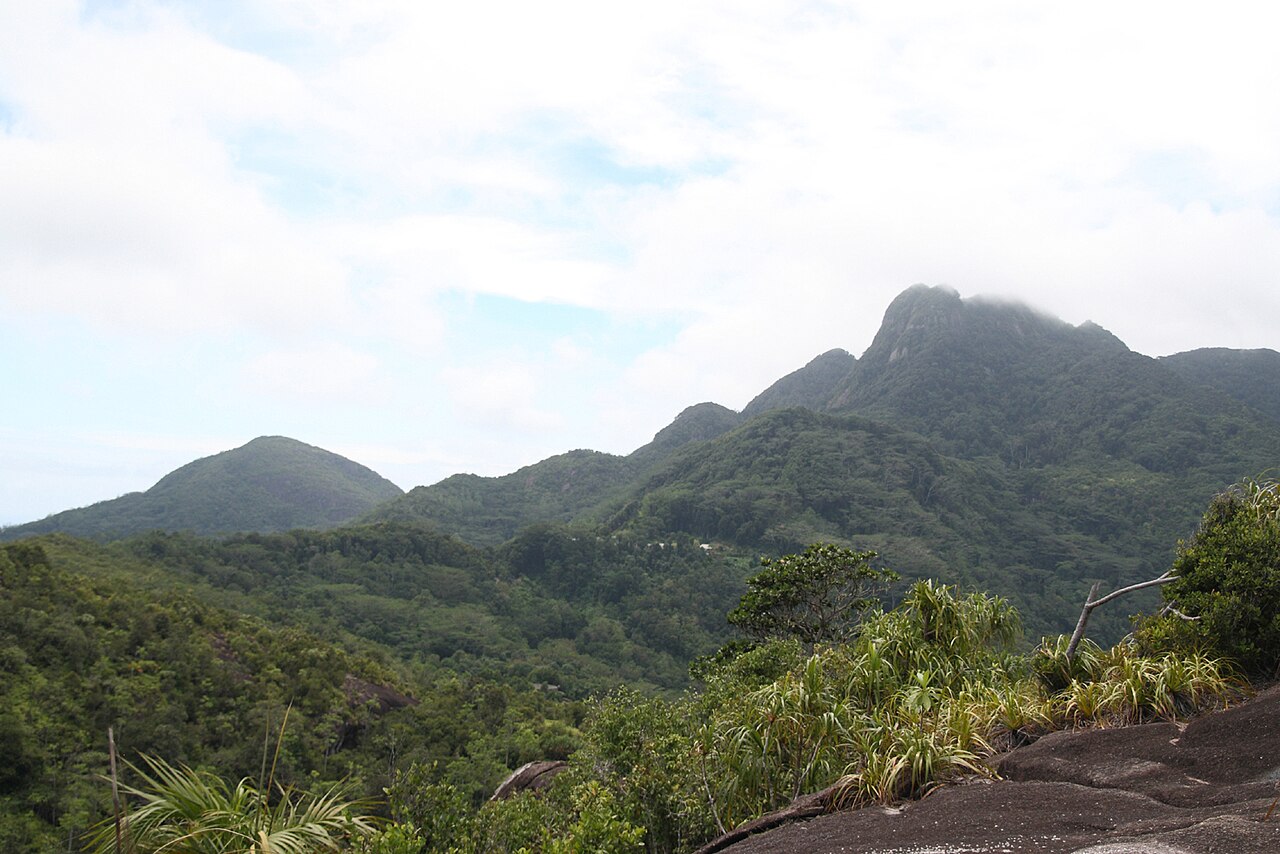
Granite Summit and Mist Forest
The mountain's geology reflects Mahé's Precambrian granitic foundation, with bare rock outcrops prominent near the 905-metre summit. Above roughly 600 metres the vegetation shifts to primary moist forest, where persistent cloud keeps surfaces draped in mosses and epiphytes. The Key Biodiversity Areas field profile identifies this highland zone as among the least disturbed forest remaining on the island.
Seychelles Scops Owl Stronghold
The national park is documented as a primary stronghold for the Seychelles scops owl, Otus insularis, an endemic species whose population is concentrated within the highland forest. The Key Biodiversity Areas assessment records the park's moist forest above 600 metres as critical habitat supporting this owl, which is listed as a species of conservation concern within the Seychelles protected-area network.
Cinnamon and Coffee Processing Structures
Within the park boundaries, the Seychelles Parks and Gardens Authority records surviving buildings associated with cinnamon and coffee processing, reflecting the plantation economy that shaped Mahé's interior during the nineteenth and early twentieth centuries. Cinnamon distillation operations used water channelled first through bamboo gutters and later through metal guttering to cool the distillate, and remnant structures from these facilities remain at documented locations within the park.