
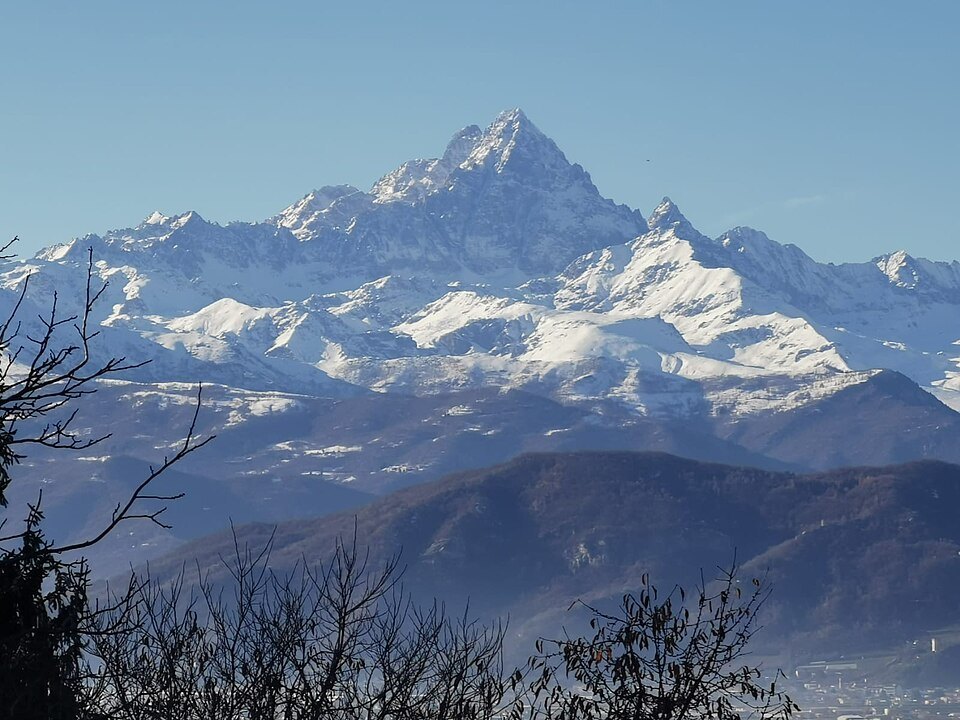
The Greenstones and the Geology of the Massif
The Parco del Monviso identifies the presence of greenstones in the massif as a defining feature of its geological composition. These rocks, associated with the ophiolite sequences of the Cottian Alps, distinguish Monviso from other Alpine groups and contribute to the scientific distinctiveness of the area. The cross-border park that takes its name from the peak protects this landscape straddling the Italian and French slopes.
The Buco di Viso: a Tunnel from 1480
One of the most singular features of Monviso is not on the summit but within the rock that supports it: the Buco di Viso, completed in 1480 at the behest of the Marquisate of Saluzzo, is a tunnel hewn to allow commercial and military traffic between the Italian and French slopes. It is a work of medieval engineering remarkable both for its era and for the altitude at which it sits, designed to overcome the difficulties of crossing the Cottian Alps in adverse weather. The Buco di Viso is a passage through the mountain, not a point on the direct route to the summit.
The First Ascents and the Founding of the CAI
The Parco del Monviso records a first ascent in 1861, but it is 12 August 1863 that the Club Alpino Italiano marks as the reference Italian ascent, made by Quintino Sella, Giovanni Barracco, and the brothers Paolo and Giacinto di Saint Robert. Just months later, on 23 October of the same year, the Club Alpino Italiano was formally constituted in Turin: Monviso is therefore an integral part of the founding history of organised Italian mountaineering.
The summit and the watercourse that descends from it intertwine human history and physical geography in an unusual way: Pian del Re, the plain at the source of the Po at approximately 2,020 metres, is the point from which the river begins its journey across the Po Valley to the Adriatic, drawing a direct connection between Alpine rock and Italy's most extensive plain.