
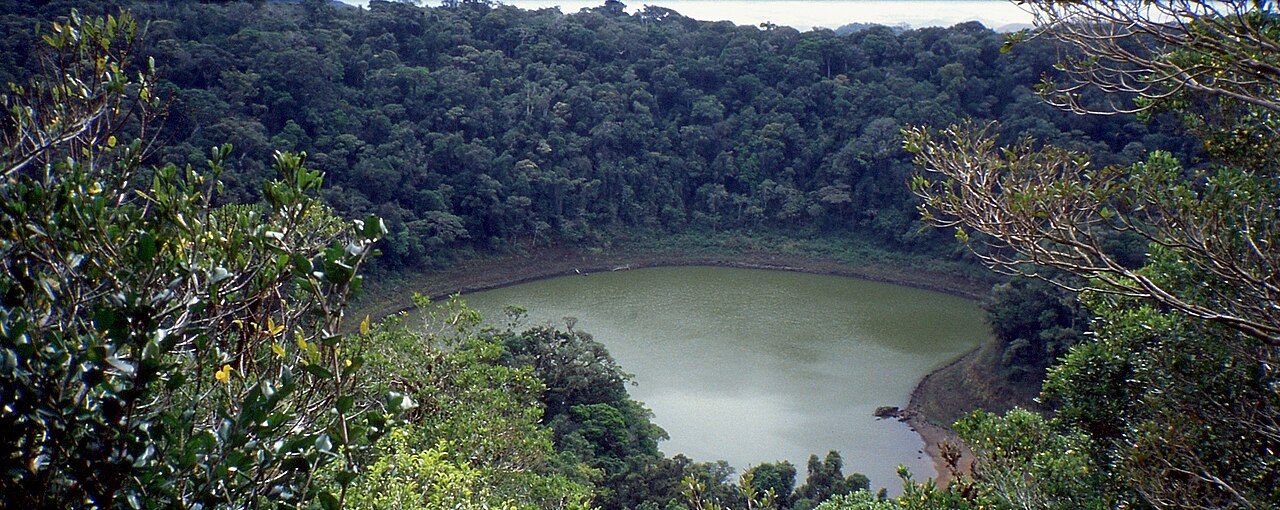
Volcanic Landforms and Crater Lakes
Field accounts published in the Revue de géographie alpine in 1958 document the basalt geology and volcanic craters that define the massif's structure. Several of these craters hold lakes, while others have been reshaped by erosion and forest growth. Streams fed by the massif's reliable rainfall descend through the landscape, forming waterfalls that the Madagascar National Parks records as notable features of the park.
Moist Forest in a Dry Regional Context
The massif intercepts moisture that the surrounding lower terrain does not receive, producing forest conditions distinct from the drier areas nearby. This difference supports a dense canopy and a layered understorey that the protected-areas portal associates with the park's conservation value. The contrast between the massif's vegetation and that of the surrounding landscape is documented in the park's official records.
Wildlife Including Sanford's Brown Lemur
Madagascar National Parks identifies Sanford's brown lemur among the wildlife present within Montagne d'Ambre. The species is one of several lemurs recorded in the park's forests. The protected-areas portal and the MNP site together provide the basis for wildlife information associated with the massif, and the park has been a focus of biodiversity monitoring since its establishment in 1958.