
Serpentinite, an exceptional rock
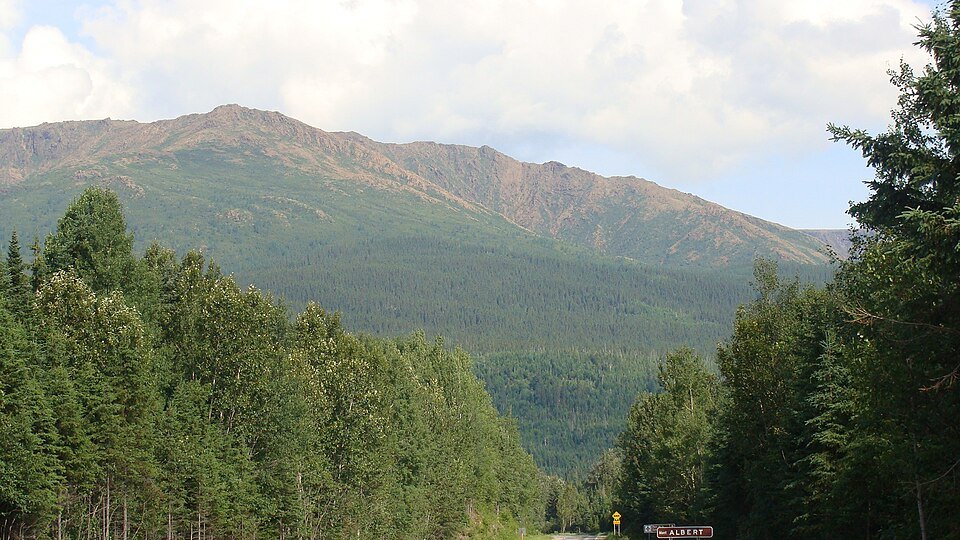
The orange colour on the surface of the plateau results from the superficial oxidation of a dark green to black rock: serpentinite. According to Sépaq, this is the only alpine serpentinite substrate in Québec. This ultrabasic rock has a particular chemical composition — rich in magnesium and heavy metals, low in calcium and available nitrogen — that acts as a severe filter on the plant species able to establish themselves there. The result is a harsh environment where plant colonisation remains fragmentary, leaving much of the bare rock exposed to the elements.
It is not the mineral composition of the serpentinite alone that determines the vegetation of the plateau, but the combination of this chemistry with altitude and exposure. Plants that manage to establish themselves must simultaneously tolerate the potential toxicity of the substrate and the demanding climatic conditions of the plateau. Sépaq notes that the tundra flora found on the plateau and on the slopes of the Ravin du Diable holds protected floristic status, reflecting its recognised ecological value.
The plateau and the Ravin du Diable
Parc national de la Gaspésie distinguishes in its trail map two named sectors associated with Mont Albert: the northern summit sector and the Serpentine sector. These geographical designations reflect the morphology of the plateau, which is not a uniform dome but a space structured by internal topographic variation. The Ravin du Diable, named explicitly by Sépaq as one of the environments sheltering the protected tundra, is one of the major incisions in the plateau, creating slope conditions distinct from those of the open plateau.
An ecological isolate in the Québec Appalachians
The combination of a unique substrate and an altitude sufficient to sustain tundra conditions creates on Mont Albert an ecological isolate without equivalent in the province. Sépaq explicitly presents the mountain as "a unique mountain ecosystem," a formulation that aptly captures the singularity of this space within Parc national de la Gaspésie and, more broadly, within the Québec Appalachians. Unlike the surrounding summits, whose upper slopes generally support dense boreal forest, the Mont Albert plateau maintains an open, arctic-looking vegetation — a remnant of the postglacial conditions that favoured the establishment of tundra species on this inhospitable substrate.