
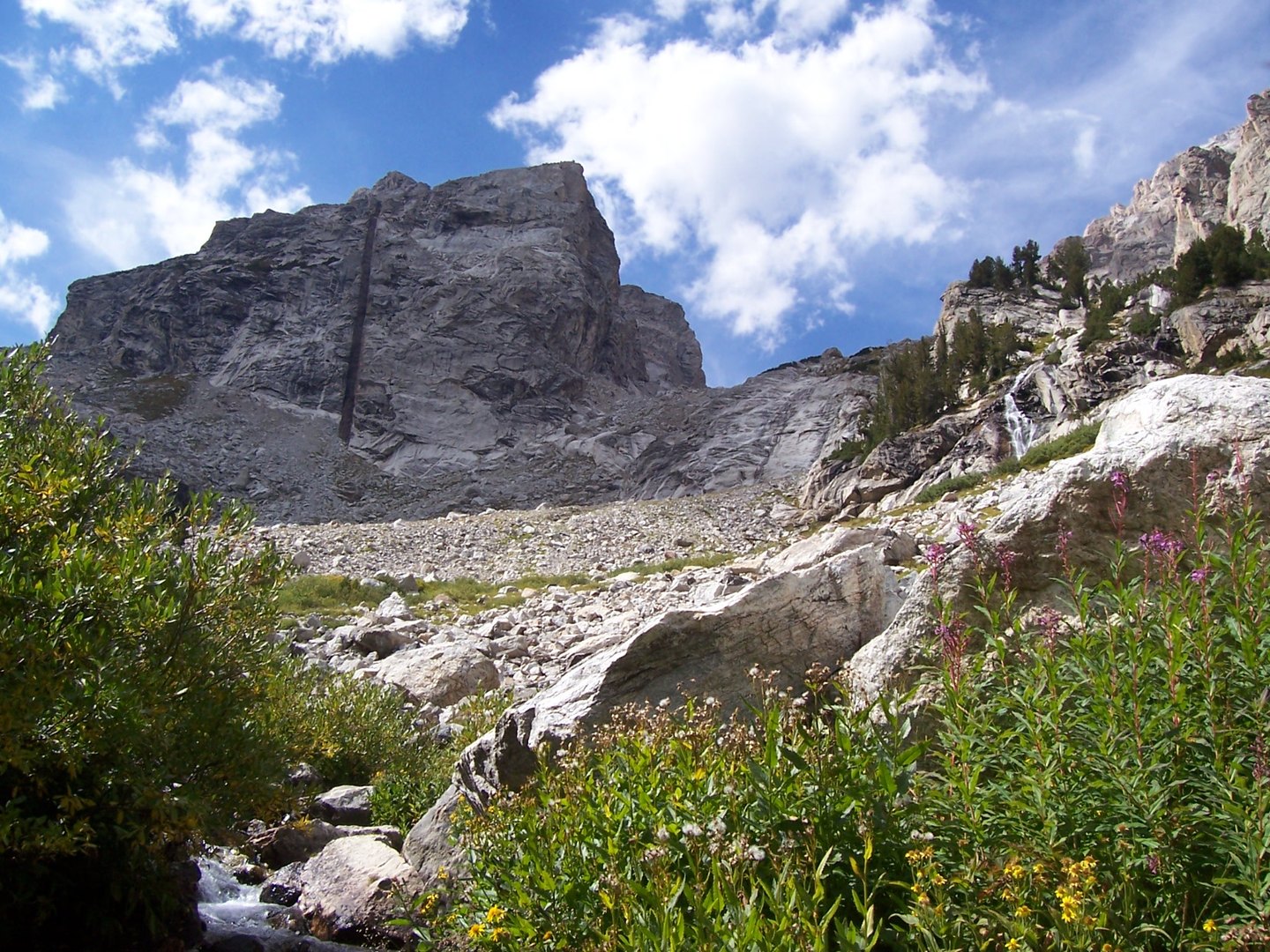
The Diabase Dike
Roughly 775 million years ago, magma filled a crack in the surrounding rock and hardened into diabase. The granite around the dike is harder than the diabase itself, so differential weathering has worn the dike back, leaving a recessed line visible on the east face. National Park Service geology guides document this feature.
Glacial Shaping
Ice Age glaciers carved the high ridges and deep canyons characteristic of the Teton Range. The National Park Service identifies Middle Teton Glacier as a separately named glacial feature associated with the peak. The range's rock is predominantly granite; the diabase dike is a distinct intrusion, not representative of the Tetons as a whole.
Climbing History
An American Alpine Journal overview records an ascent of Middle Teton in 1923, the same year South Teton was climbed. On August 28, 1929, Fritiof Fryxell and Philip Smith completed a traverse of the peak by a new line, an event Fryxell documented in his own account and distinct from the earlier ascent.