
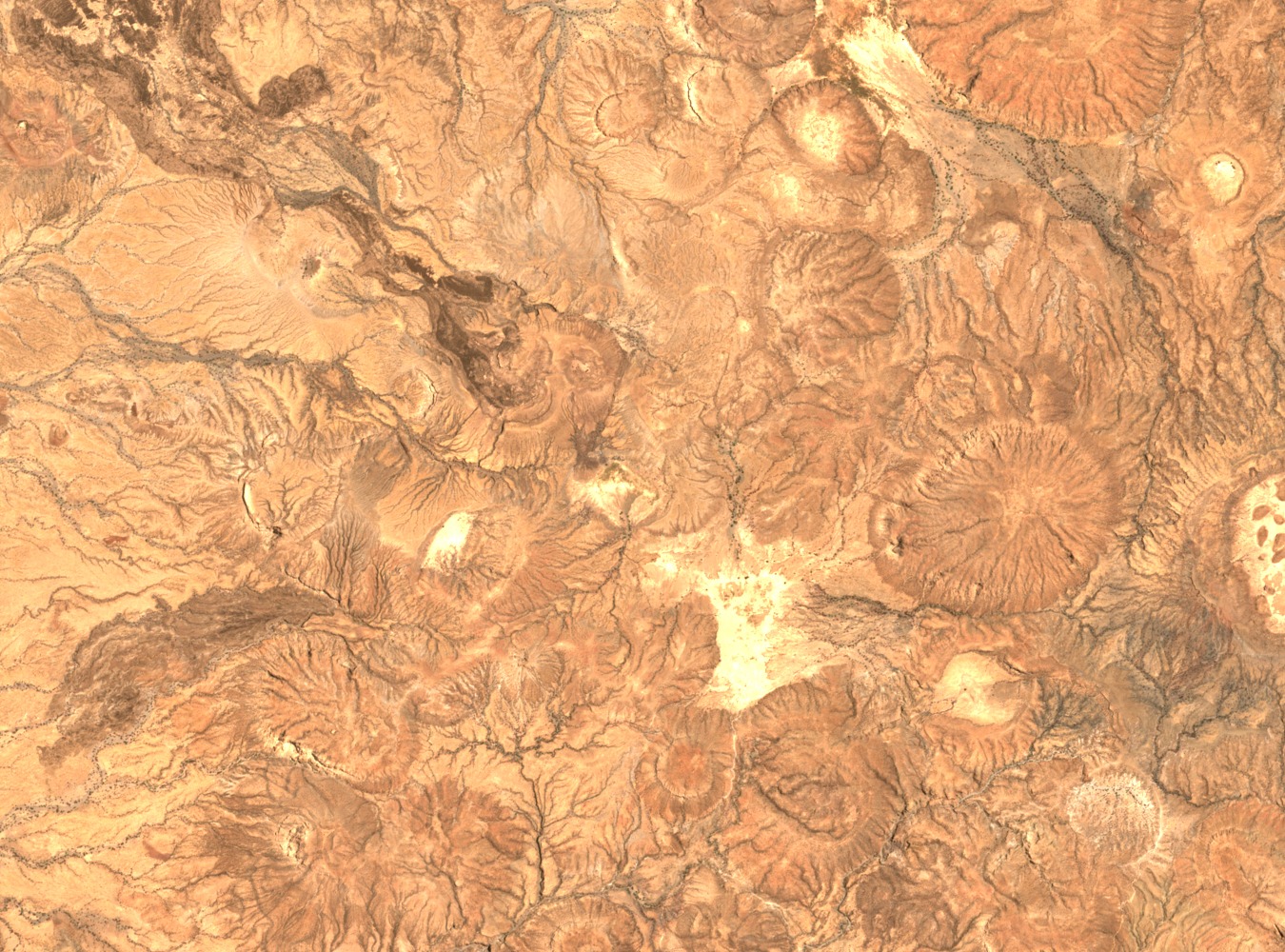
Lava Plateau and Scoria Cone Landscape
A basalt lava plateau roughly 50 by 100 kilometres forms the structural core of the field, built by successive flows originating from more than 300 scoria cones. The central zone also contains phonolitic and trachytic deposits alongside maars, shallow explosion craters that form through rapid steam generation when rising magma meets groundwater. This variety of volcanic forms reflects repeated shifts in eruption style and magma composition across the field's long history.
Seven Million Years of Documented Activity
Field chronology research published in the Journal of African Earth Sciences dated the oldest sampled deposits to approximately seven million years ago, placing the onset of volcanism in the late Miocene. Dated samples extend forward to around 5,000 years ago, and the Smithsonian Global Volcanism Program associates the youngest documented deposits with a tuff ring and associated lava, indicating explosive phreatomagmatic activity persisted into the Holocene.
Geochemistry and Isotopic Character
Chemical Geology research on the Meidob Hills examined the field's geochemistry and isotopic signatures, situating its alkaline magmas within the broader context of intraplate African volcanism. The phonolitic and trachytic compositions found in the central field point to magmatic differentiation over time, while the range of vent types across the 5,000 square kilometre extent reflects variable interaction between ascending melts and the overlying Precambrian crust.