
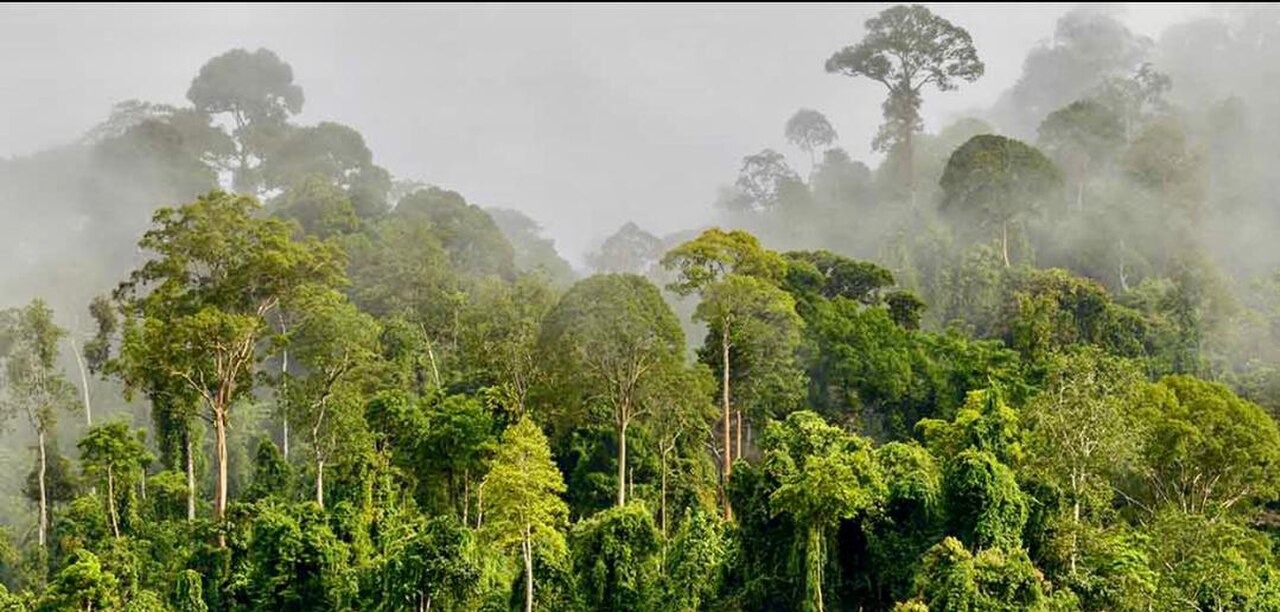
Dimonika Biosphere Reserve and UNESCO Recognition
UNESCO designated the Dimonika Biosphere Reserve in 1988, covering approximately 136,000 hectares in the central Mayombe, roughly 50 kilometres inland from the Atlantic coast. The reserve encompasses intact forest blocks alongside patches where earlier clearing has given way to natural recolonisation, providing a documented record of forest recovery within the range.
Forest–Savanna Boundary: Soil and Isotope Observations
A field study published in Oecologia measured soils, vegetation composition, and carbon isotopes at transects crossing the Mayombe forest–savanna edge. The research characterised conditions at specific sampling positions along that boundary, offering precise local data on the physical and botanical contrasts between closed-canopy forest and the isolated savannas embedded within it.
Botanical Inventories at Fern and Bélo
Separate field inventories have surveyed plant diversity at distinct sites within the broader Mayombe region. Fern-focused work documented in the Botanical Society of France journal recorded species from Republic of the Congo localities, while plant inventories near Bélo in the eastern part of Conkouati-Douli National Park, published in the International Journal of Innovation and Applied Studies, extended knowledge of floristic composition toward the range's eastern margins.