
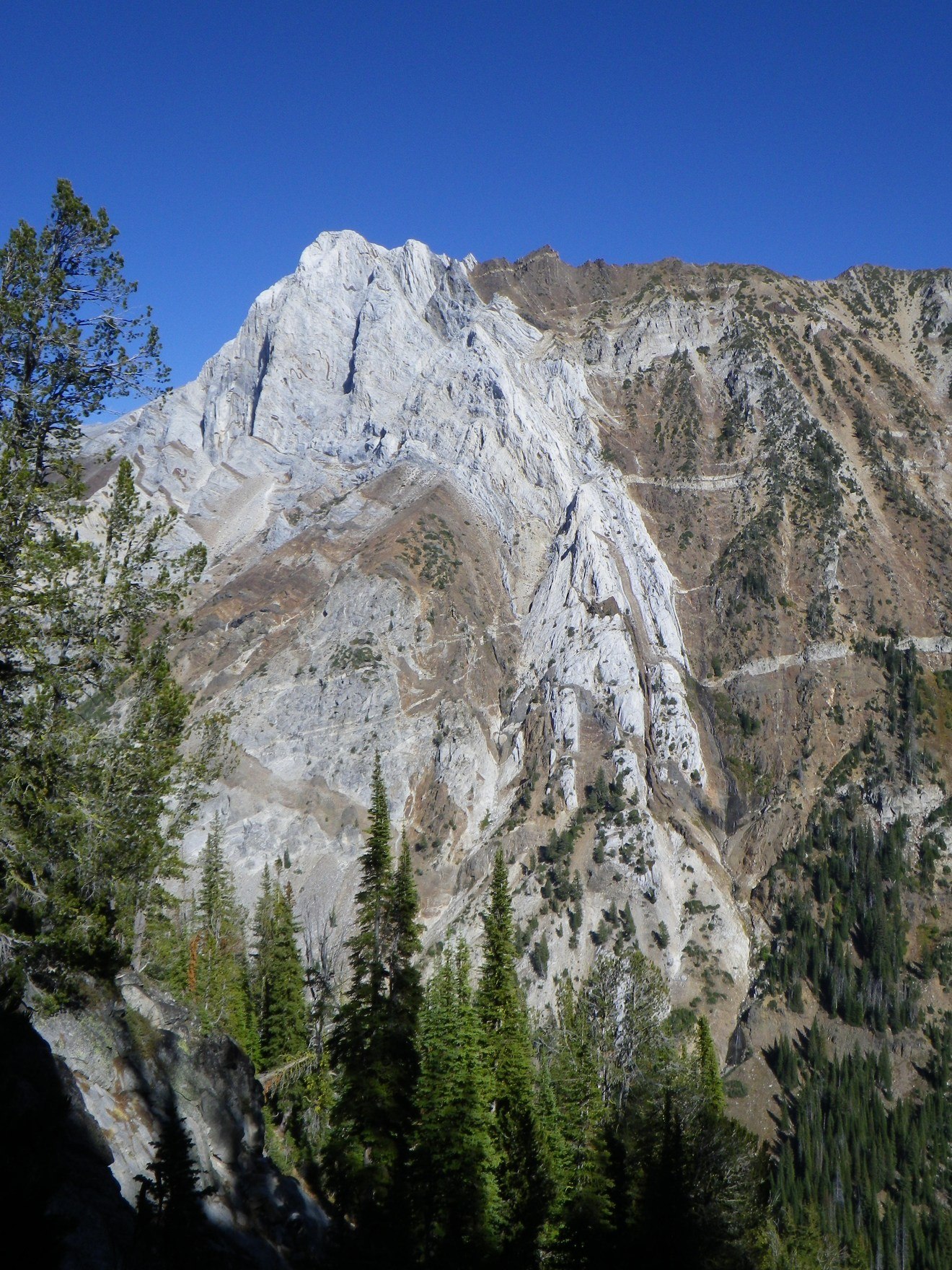
A Summit Built from Ancient Seafloor
The Matterhorn's white summit rock is marble derived from the Triassic Martin Bridge Limestone, identified by Oregon's geology department. Metamorphic processes recrystallized marine sediment into pale carbonate stone, setting it apart from neighboring Wallowa peaks where granite and quartz diorite — igneous intrusive rocks — produce the grey and buff tones typical of the range.
Eagle Cap Wilderness and Ice Lake
The Matterhorn rises within the Eagle Cap Wilderness, where Pleistocene glaciation carved U-shaped valleys and scoured basins that now hold high lakes. Ice Lake occupies one such basin near the peak, its position in the glaciated terrain illustrating the layered topography that defines this part of the Wallowa Mountains.
A Name Borrowed from the Alps
The name follows a nineteenth-century American practice of applying famous Alpine names to striking local summits. The Oregon peak shares only the name with its Swiss-Italian counterpart, differing in geology, scale, and climbing history. Its white marble crown evidently impressed early surveyors enough to invite the comparison.