
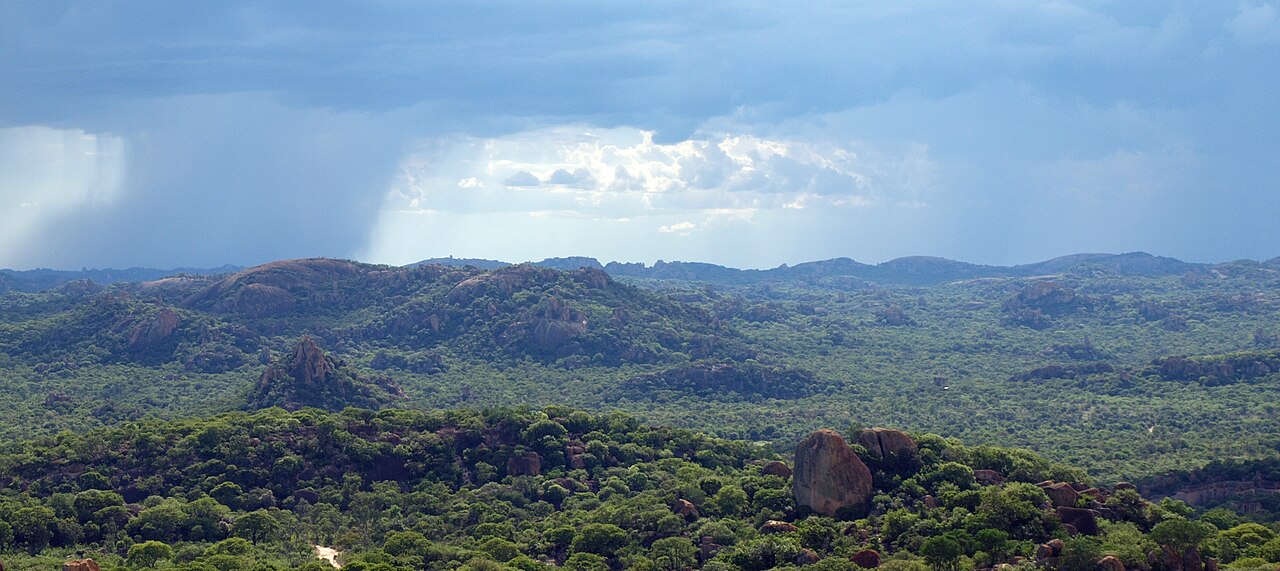
Granite Landforms Shaped by Differential Erosion
Differential weathering has stripped softer material from the granite mass, leaving rounded domes called whalebacks alongside isolated balanced boulders and deep rock shelters where harder zones resisted erosion. The resulting terrain is unusually varied at close range, with open dome surfaces giving way within short distances to shaded overhangs and enclosed cavities formed entirely by natural rock arrangement.
Rock Paintings and Long Human Occupation
The shelters preserve rock paintings that UNESCO dates to at least 13,000 years ago, though human occupation of the hills extends further back and the paintings themselves span a wide and undetermined range of periods. The nomination records many accessible painted shelters within the landscape, reflecting sustained human presence and activity rather than a single bounded episode of art-making.
The Living Mwari Religious Tradition
The Mwari religion, centred on an oracular deity, remains actively practised in the Matobo Hills and shapes how communities engage with specific locations across the landscape. The UNESCO World Heritage designation recognises this continuing sacred relationship alongside the archaeological record, acknowledging that the hills function as a living religious landscape for communities in Matabeleland South.