
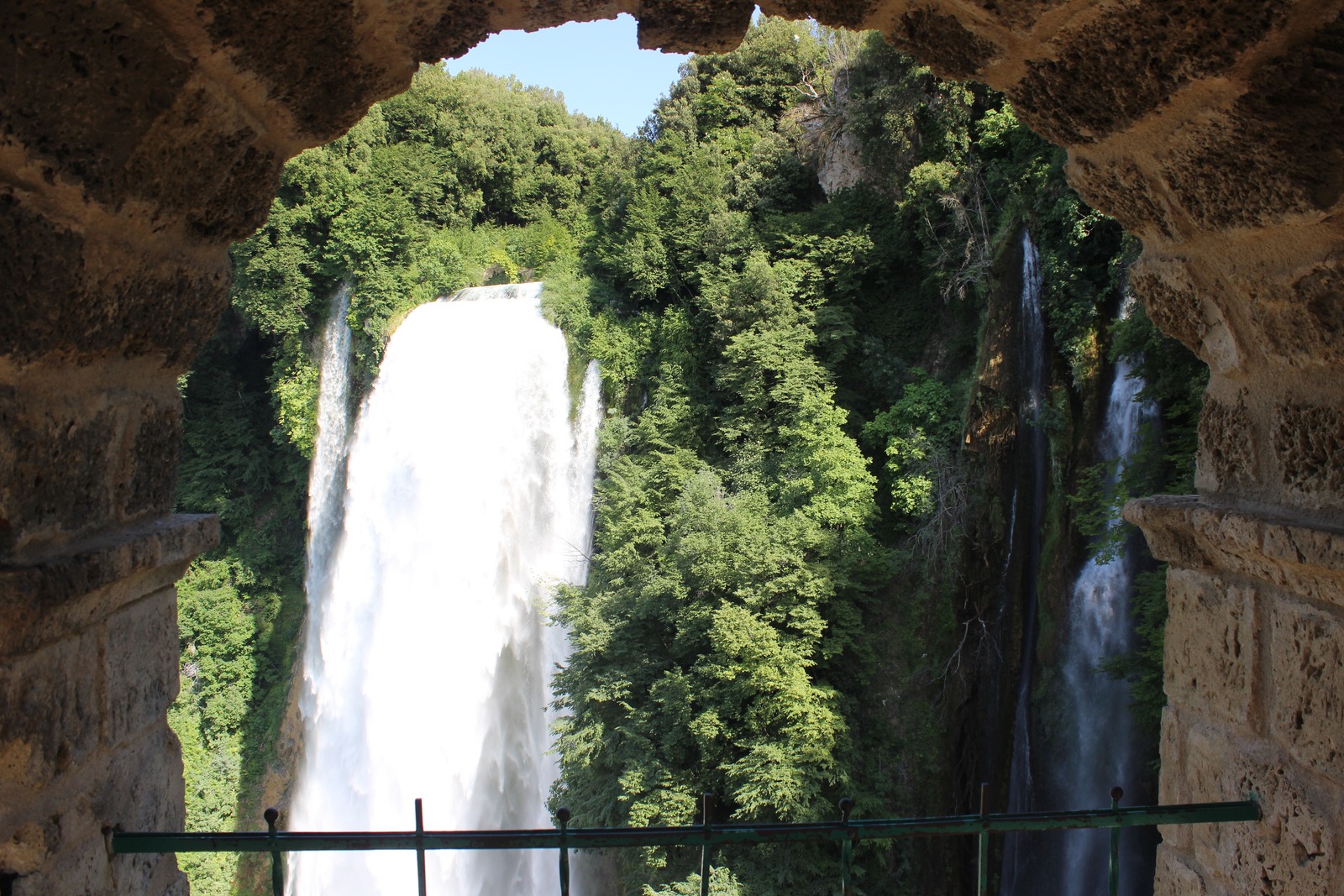
A Stone Pavilion Above the First Drop
Standing at the cliff edge above Marmore, the viewpoint frames the uppermost cascade in its full width. The small stone viewing pavilion known as the Specola was completed there in 1781 under Pope Pius VI, its arched stonework directing the sight line across the fall. The three drops combined span approximately 165 metres. Beginning in 1787, the engineer Andrea Vici undertook separate work on the lower sections under the same pope.
Travertine Barrier and Roman Diversion
The Velino deposited calcium carbonate as it descended, building a thick layer of continental calcareous tufa near its confluence with the Nera that formed a natural barrier blocking drainage across the Rieti basin. In 271 BCE, Roman consul Manius Curius Dentatus ordered the excavation of the Curiano channel, diverting the Velino over the cliff into the Nera below. Tufa deposition remains active today and caves have formed within the accumulated deposit.
Grand Tour, Byron and the Galleto Plant
The falls became a Grand Tour destination, and Lord Byron evoked the Velino's roaring descent and spray in Canto IV of Childe Harold's Pilgrimage, published in 1818. Hydroelectric use of the river system began in the late nineteenth century. The original section of the Galleto plant, built just downstream between 1926 and 1929, drew regulated Velino waters through diversions to supply its turbines.