
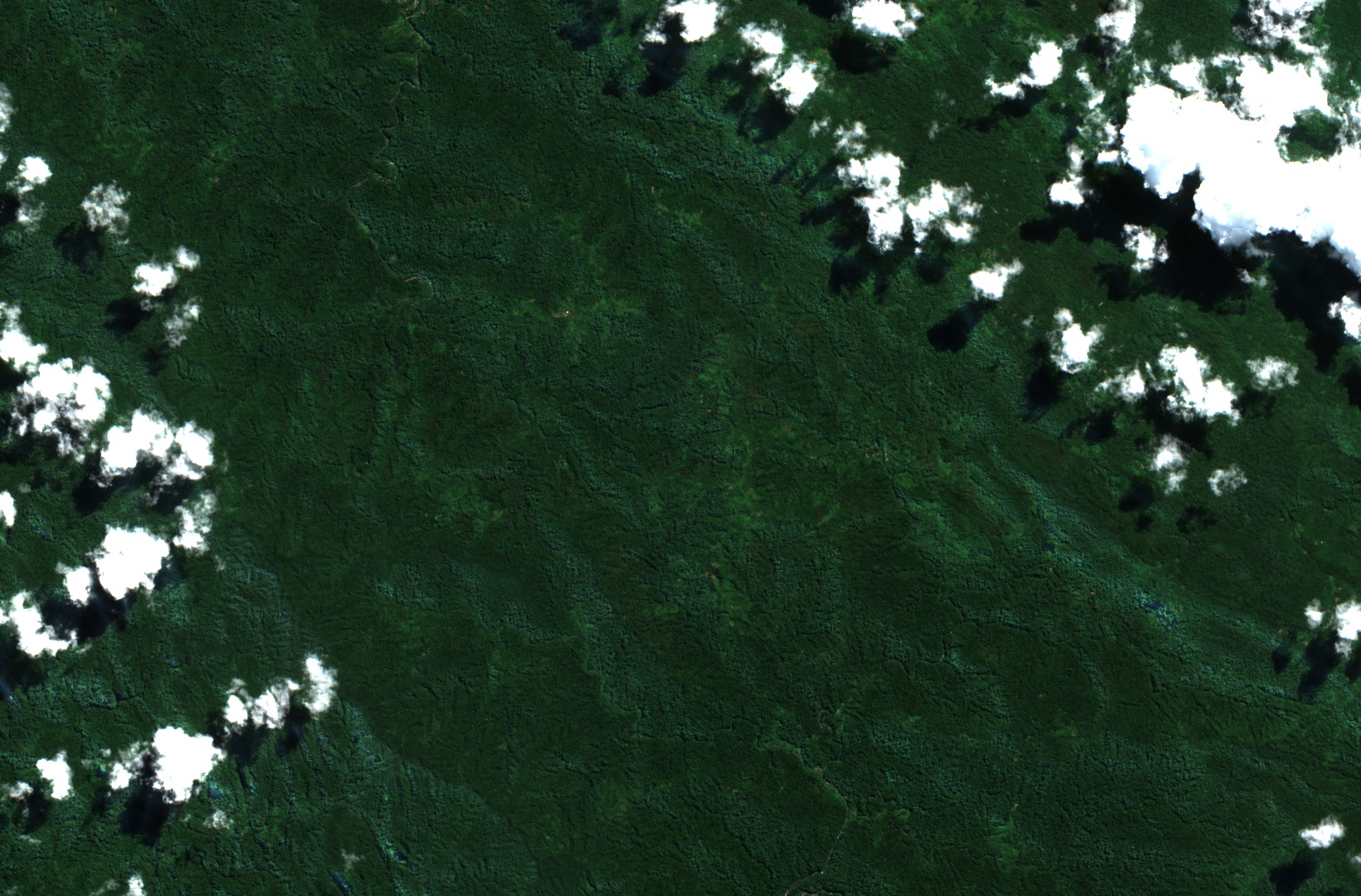
Seafloor lifted into mountains
The rock underlying the central highlands belongs to the Ontong Java Plateau, a vast body of oceanic crust whose basaltic basement formed approximately 122 million years ago beneath the ocean. Over time, ocean sediments including limestone accumulated on the basalt. When the plateau collided with the Solomon island arc, deformation and uplift along the margin brought cross-sections of that original ocean floor to the surface. In 2002, Tejada and colleagues showed that basalts in central Malaita resemble rocks recovered by drilling into the offshore plateau. Rainfall and streams have since carved the island's valleys, and the limestone terrain is punctuated by sinkholes and caves.
Counting birds in East Kwaio
Between 20 October and 2 November 2018, a joint team including researchers from the Kwainaa'isi Cultural Centre and the Australian Museum conducted coastal and mountain fieldwork in East Kwaio. The survey, published by Callaghan and co-authors in 2019, recorded 58 resident landbird species. Among these were four species endemic to Malaita, including the Malaita fantail (Rhipidura malaitae) and the Malaita white-eye (Zosterops stresemanni). The team documented local Kwaio names alongside species counts.
Forests on customary land
In 2019, Kwaio leaders helped establish the Baru Conservation Alliance, working with the Kwainaa’isi Cultural Centre and the Australian Museum. Its work links biological surveys with forest protection on customary land, where families and communities decide how the forest is used. The Central Malaitan Highlands are recognized as a Key Biodiversity Area.