
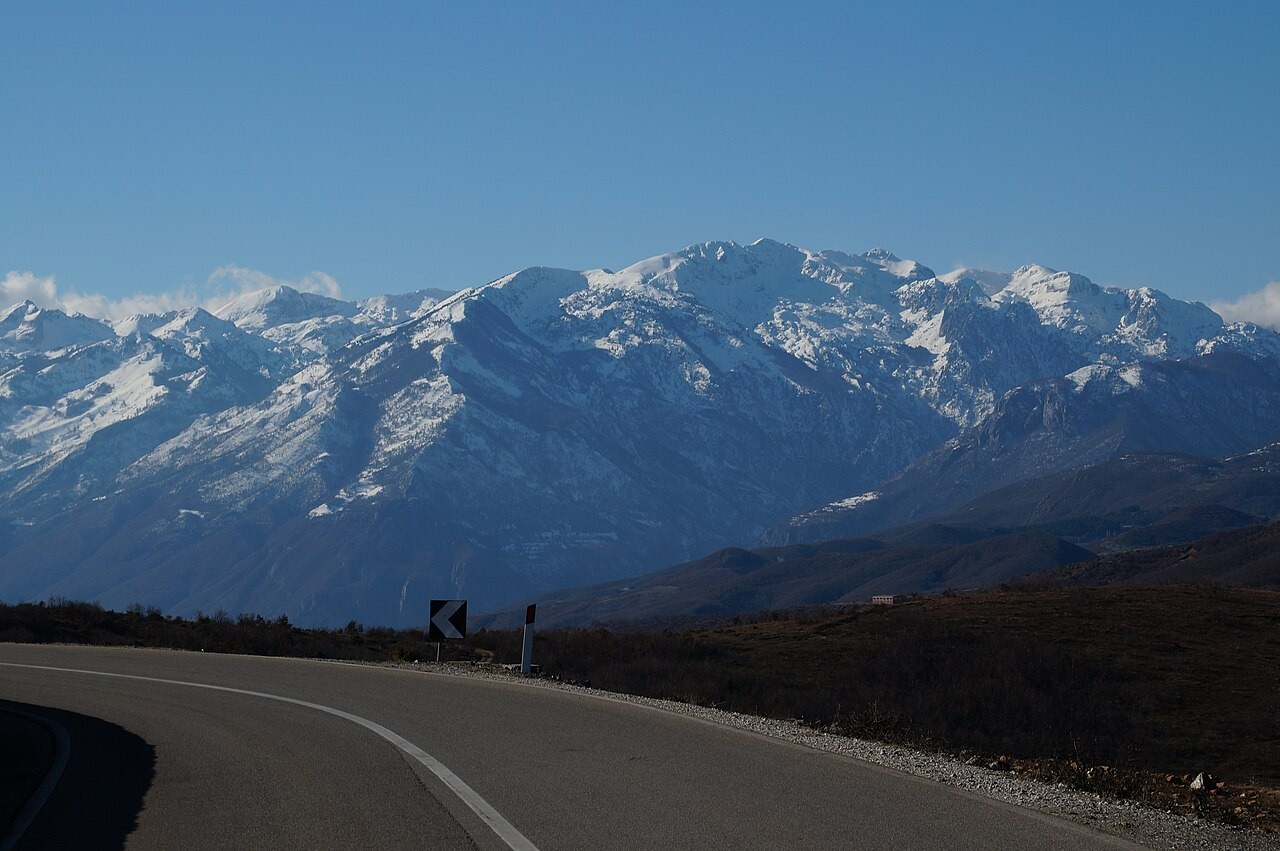
Summit and Valley Setting
Maja e Hekurave occupies the southern rim of the Valbonë Valley drainage in the Albanian Alps, the range known in Albanian as Bjeshkët e Namuna and forming part of the Prokletije. The peak sits between Qafa e Droçkës and neighbouring high points along this elevated watershed, with the deep valleys of the Albanian Alps framing its approaches on multiple sides.
Limestone Terrain and Alpine Habitat
The slopes of Maja e Hekurave are built on carbonate rock, exposing limestone scree and rock crevices across the high ground and upper ridgelines. North-facing patches on the mountain retain snow and damp conditions, providing the kind of habitat favoured by specialised alpine plants. This combination of broken calcareous terrain and persistent moisture characterises the ecological setting documented in botanical work on the mountain.
Cerastium hekuravense and Its Taxonomic History
Sándor Jávorka collected the type specimen of Cerastium hekuravense in limestone scree at approximately 1,700 metres on the Hekurave Mountains on 30 August 1918, and described the species in 1921, naming it after its mountain of origin. In 2018, Frajman and colleagues published a study combining genetic and morphological evidence that established C. hekuravense as distinct from C. dinaricum. At the time of publication the authors reported three known localities for the species, all in the southern Albanian Alps.