
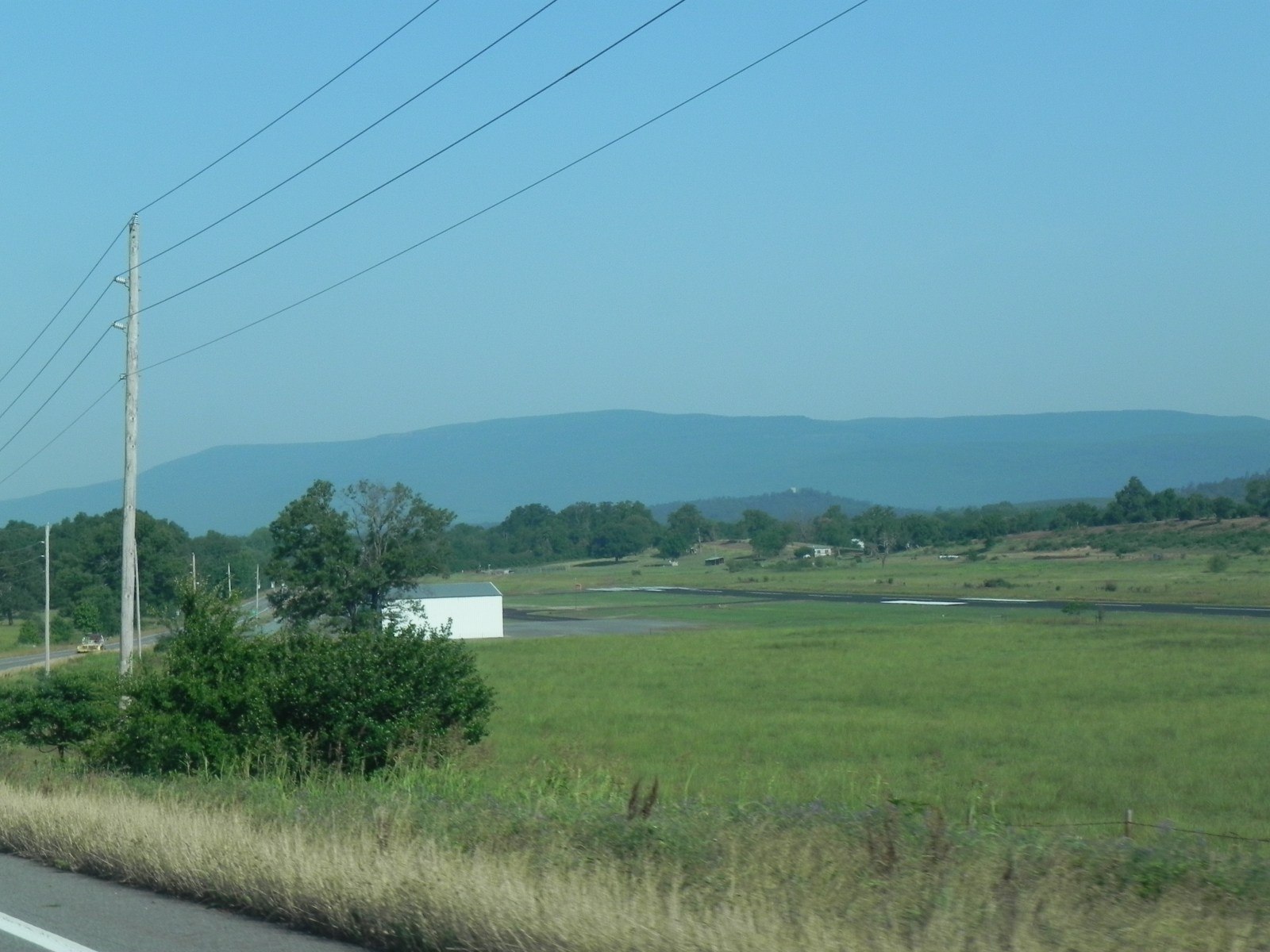
Plateau Form and Sandstone Bluffs
Arkansas's geological survey describes Magazine Mountain as a mesa-like landform capped by resistant sandstone that protected underlying rock from the erosion that lowered surrounding terrain. The plateau's surface remains relatively level across its extent while its margins drop in steep bluffs of that same hard stone. Signal Hill, at 839 m, sits atop this platform rather than projecting above it as an isolated pinnacle.
A Summer Retreat in the Nineteenth Century
Cooler plateau temperatures drew summer visitors during the nineteenth century, and the summit eventually supported farms and resort lodges. The Arkansas State Parks brochure records this seasonal pattern, in which elevation itself became the resource. That history of occupancy left a cultural imprint on the plateau before its later institutional management.
New Deal Construction and a State Park Partnership
The Works Progress Administration built visitor facilities on Magazine Mountain during the 1930s and 1940s. The lodge constructed in that era burned in 1971, ending one phase of the plateau's developed history. Today the summit plateau is managed as a state park in partnership with the U.S. Forest Service.