
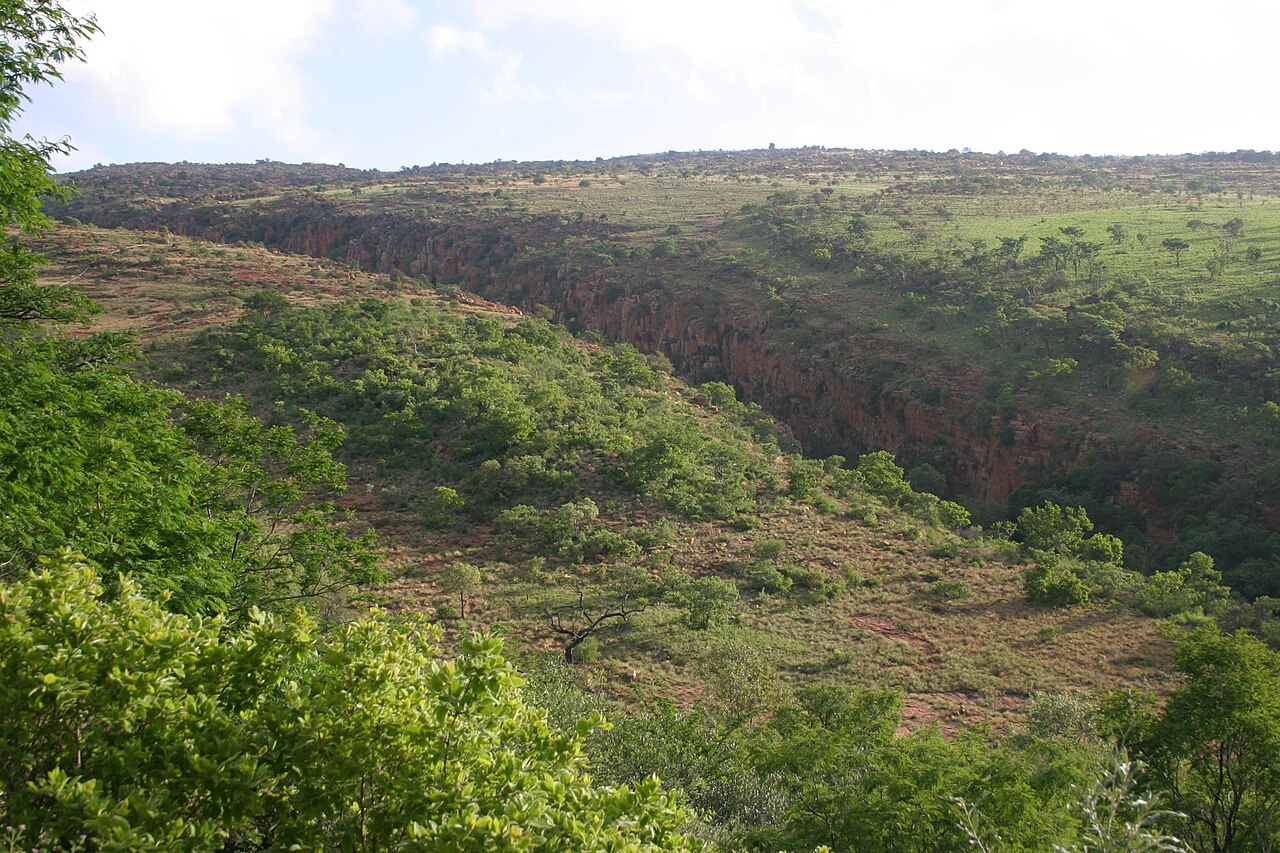
Quartzite Formation and Detrital Zircon Evidence
The ridge is built from rocks of the Magaliesberg Formation, a unit within the Pretoria Group of the Transvaal Supergroup. Detrital zircon dating published in Precambrian Research constrains deposition to over two billion years ago, placing these sediments among the older preserved sequences on the Kaapvaal Craton. The present ridge reflects subsequent tectonic folding rather than the original depositional surface.
UNESCO Biosphere Reserve Flora and Land Cover
The 2015 UNESCO Man and the Biosphere designation covers a landscape mosaic that includes Bankenveld grassland, bushveld savanna and sheltered Afromontane forest patches. Documented plant species within the reserve include the endemic aloe Aloe peglerae and the succulent Frithia pulchra, both recorded in the broader landscape. These occurrences reflect the reserve's role in connecting distinct vegetation communities across a moderate elevational range.
Relationship to the Cradle of Humankind
The Magaliesberg Biosphere Reserve overlaps spatially with the Cradle of Humankind, a UNESCO World Heritage Site designated separately for its palaeontological cave systems. The two designations recognise different values under different frameworks and are administered independently. The karst caves of the Cradle, including Sterkfontein, hold hominin fossil assemblages that have been the subject of ongoing excavation and dating research by institutions including the University of the Witwatersrand.