
The Basin and Its Name
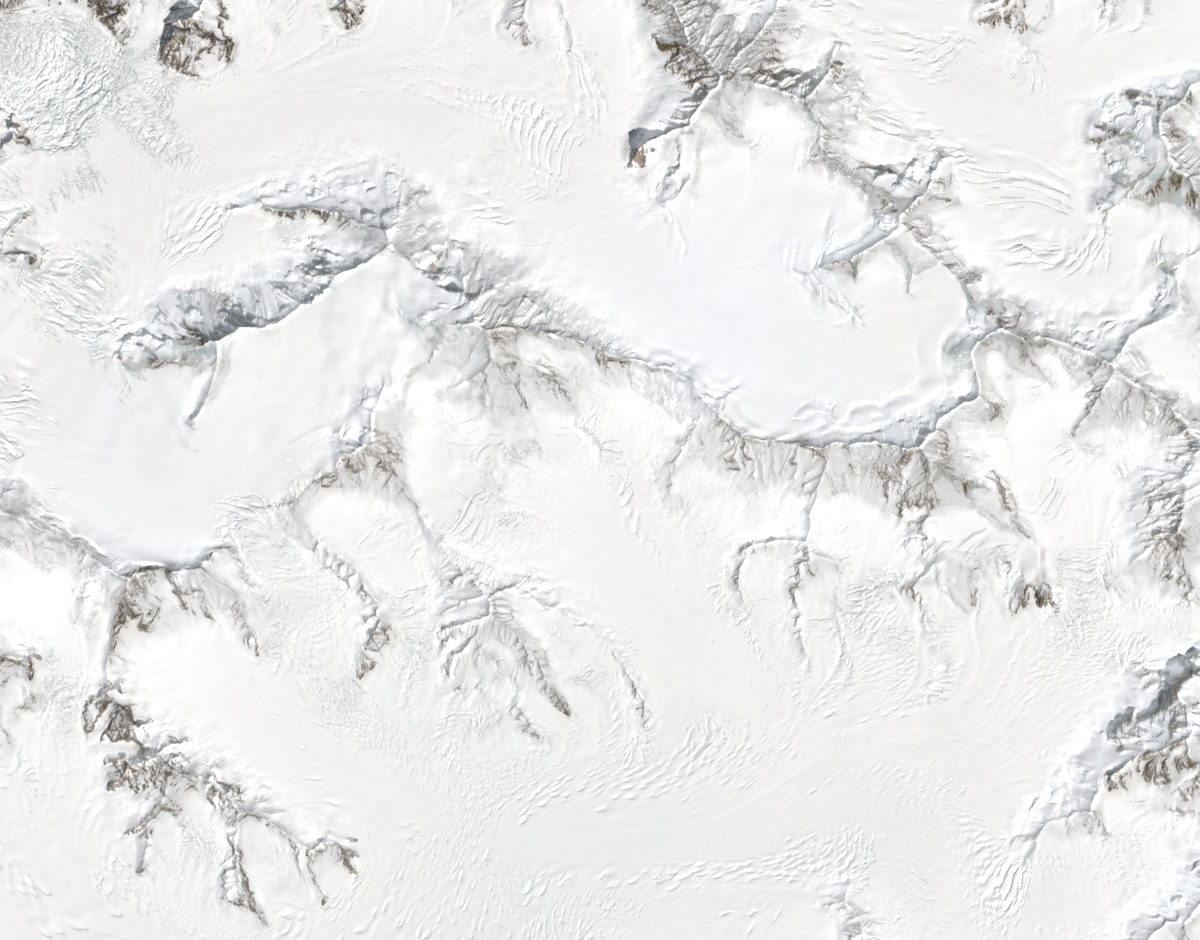
Snow Lake is a heavily crevassed basin at the head of the Biafo Glacier. Snow that survives the melt season compacts into ice, supplying the glacier that flows down the valley. Hispar Pass, west of the basin, connects this glacial landscape with the upper Hispar. The basin's name and rough extent were established through early-twentieth-century survey and expedition work; a map produced by Eric Shipton, P. R. Mott, and colleagues from their 1939 expedition, published in 1950, is cited by D. H. Greenald in his 1959 Alpine Journal account as the cartographic reference his party relied on. Greenald noted that reaching the snow basin from the pass confirmed why it had been named as it was.
The mountain’s rock-and-ice ridges rise above that basin. The American Alpine Journal’s account of the 1989 ascent gives the height as 6,590 metres. Later reporting in the same journal uses 6,593 metres.
Early Expeditions and the 1956 Reconnaissance
The 1956 Snow Lake expedition, whose first-hand account Greenald published in the Alpine Journal in 1959, brought a party of Denis Greenald, Gwen Greenald, Jim Durbin and Edward Williams to the Karakoram, with Captain Zafar as liaison officer. They set out for Snow Lake Peak and reached a different summit, which they called Cornice Peak. In 1985, Mike Harber and Mike Morris were lost during a separate attempt on the mountain. The American Alpine Journal reported their loss the following year.
The 1989 West-Ridge Ascent
On 29 July 1989, a British expedition led by Gordon A. Briggs reached the summit by the west ridge. Arthur Collins, Lew Hardy, Steven Sands, Philip Solt, Peter Stapely and Paul Vardon were the six climbers who made the top. The AAJ report on the climb notes seven days of climbing to reach the top. Subsequent AAJ records describe this as possibly the first ascent, making it the earliest documented successful ascent in the cited sources.