
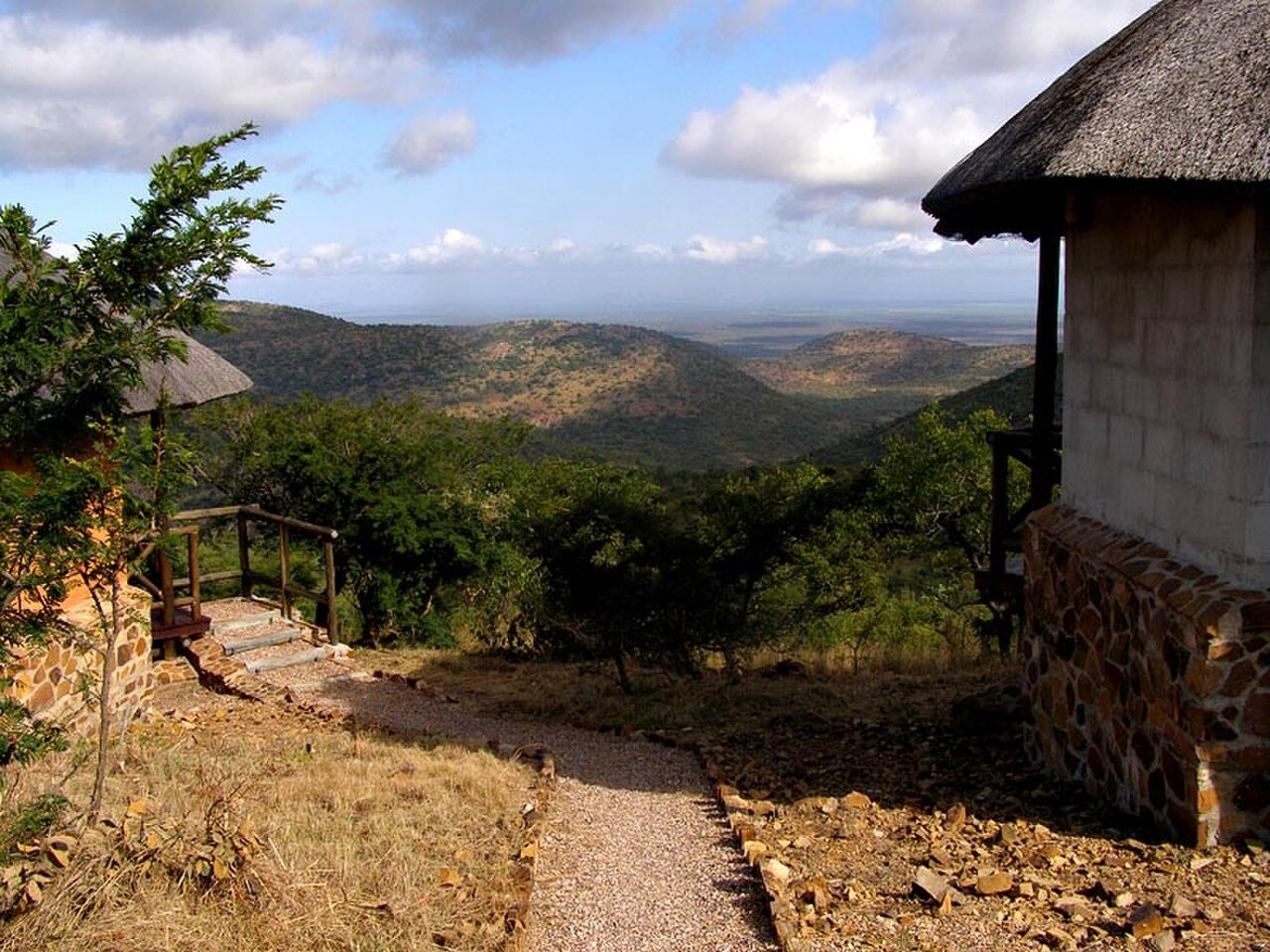
Karoo Basalt and Overlying Rhyolite Sequences
The range's geology reflects the Karoo volcanic episode that shaped much of the subcontinent. The South African National Biodiversity Institute documents lower basalt sequences capped by overlying rhyolite units within the range. University of Cape Town geochronological and geochemical studies map massive rhyolitic flows reaching their greatest accumulations in eastern Eswatini and the southern Lebombo, placing these thick deposits in a regional stratigraphic context.
Fern Communities on Rock Faces and Moist Habitats
The South African National Biodiversity Institute's survey of Eswatini ferns and fern allies records species colonizing rock faces and moisture-retaining habitats at a regional scale across the range. These communities reflect the interplay of volcanic substrate, aspect, and local humidity rather than any single site, and the SANBI report provides the principal documented baseline for pteridophyte distribution in this landscape.
UNESCO Lubombo Biosphere Reserve, 2019
In 2019 UNESCO admitted the Lubombo Biosphere Reserve into its World Network of Biosphere Reserves, making it the first biosphere reserve designation in Eswatini. The reserve encompasses the range and its associated habitats within Eswatini's borders. The Lubombo Range itself continues across the boundary into South Africa and Mozambique, though the biosphere designation applies to the Eswatini portion.