
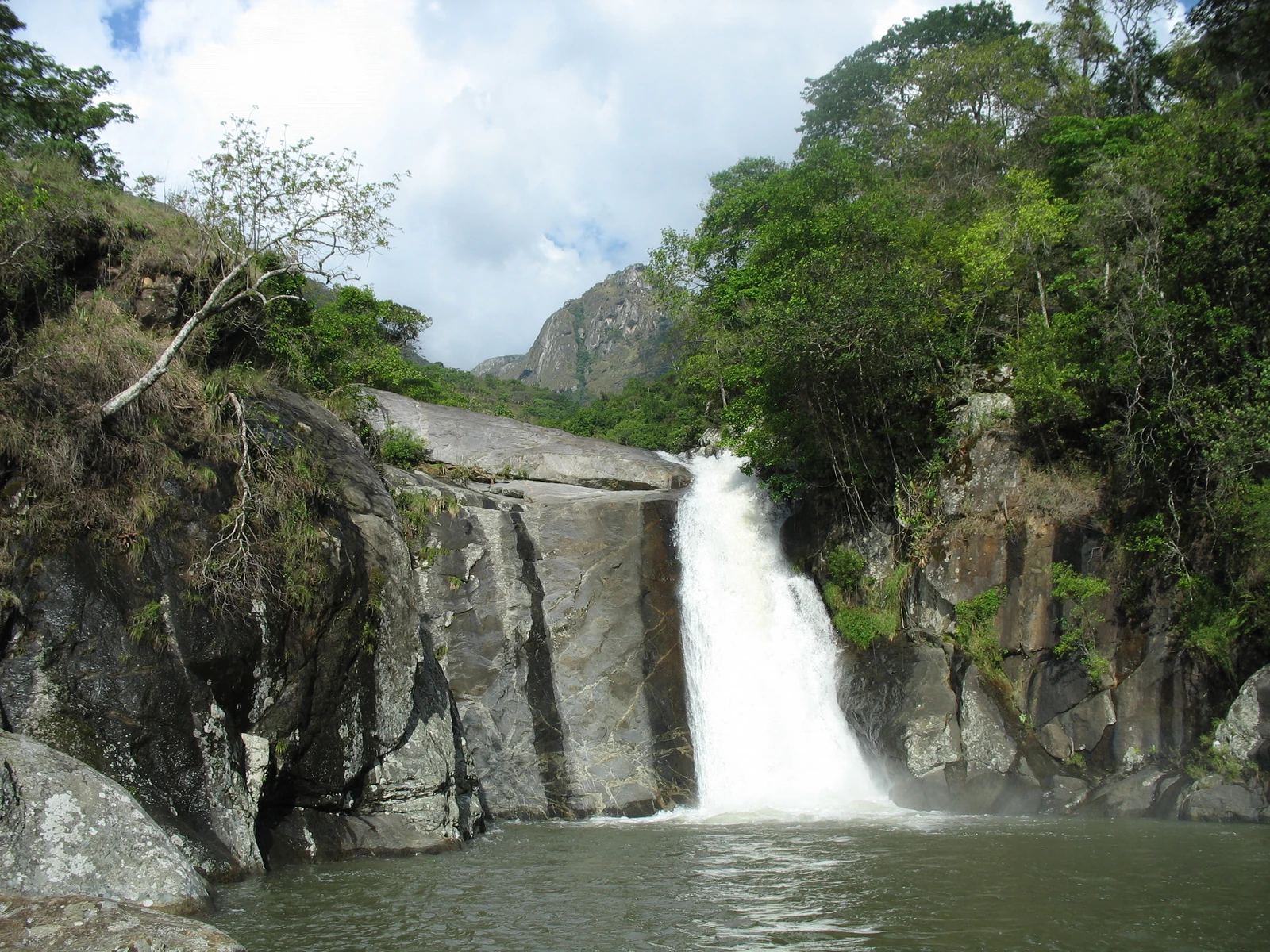
The Pool and Its Archaeological Record
The Malawian government’s World Heritage dossier records roughly 2,000 pottery fragments from excavations on the approach to the pool in 2008. Archaeologists also found glass beads, iron objects and coins. The dossier connects these finds with offerings and ceremonies to ask for rain.
Dziwe la Nkhalamba translates as the pool of the elders. The government dossier records several accounts of how it acquired that name. The pool is part of the Mount Mulanje Cultural Landscape, inscribed by UNESCO in 2025 in recognition of the traditions of its Yao, Mang’anja and Lhomwe custodians.
Geology of the Massif
The river runs down the western slopes of an isolated massif that rises steeply above the surrounding lowlands. Mulanje is made up partly of coarse-grained rocks that cooled underground. A 1986 mineralogical study examined two of those rocks, syenite and granite.
Riverbank Flora
In a 1985 field study, botanist Ian Edwards recorded the cycad Encephalartos gratus beside the Likhubula River. The species, first described in 1916, is native to Malawi and Mozambique. Its long leaves can reach about two metres, according to the botanical description held at Kew.