
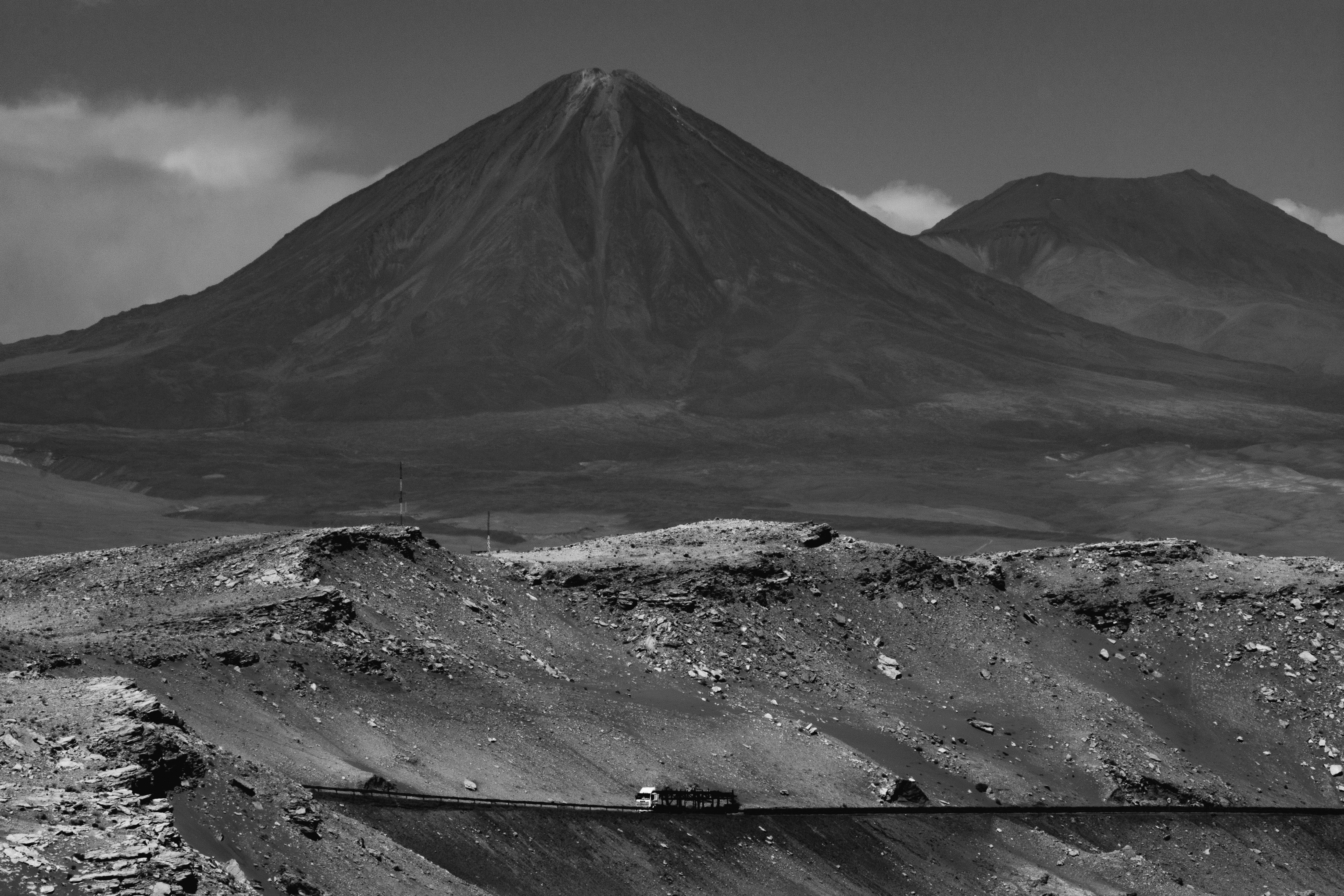
The crater lake and its extreme conditions
The crater lake of Licancabur should not be confused with the altiplano lagoons that spread at the foot of the volcano. Situated at the summit, it is exposed to low atmospheric pressure, high-intensity ultraviolet radiation, and extreme temperatures. These conditions make it a boundary environment for any form of life, and that is why it has attracted researchers studying organisms capable of thriving where physical and chemical parameters depart from the usual ranges for biology.
The scientific expeditions of the early twenty-first century
In October 2003, a team led by scientist Nathalie Cabrol reached Licancabur to study life in extreme conditions and to test diving and monitoring equipment in that high-altitude environment. NASA documents a subsequent diving expedition in 2006. These campaigns combined geological and biological fieldwork with the deployment of technology designed to operate in high-mountain environments.
Astrobiology and planetary analogies
Researchers affiliated with NASA have noted that the conditions of the crater lake — reduced pressure, intense ultraviolet radiation, and cold — bear similarities to those that may have existed in aquatic environments on Mars in earlier epochs. These similarities are research analogies that help design experiments and calibrate instruments; they do not constitute evidence that life existed or exists on Mars. Within this framework, the volcano serves as a natural laboratory for hypotheses about planetary habitability.