
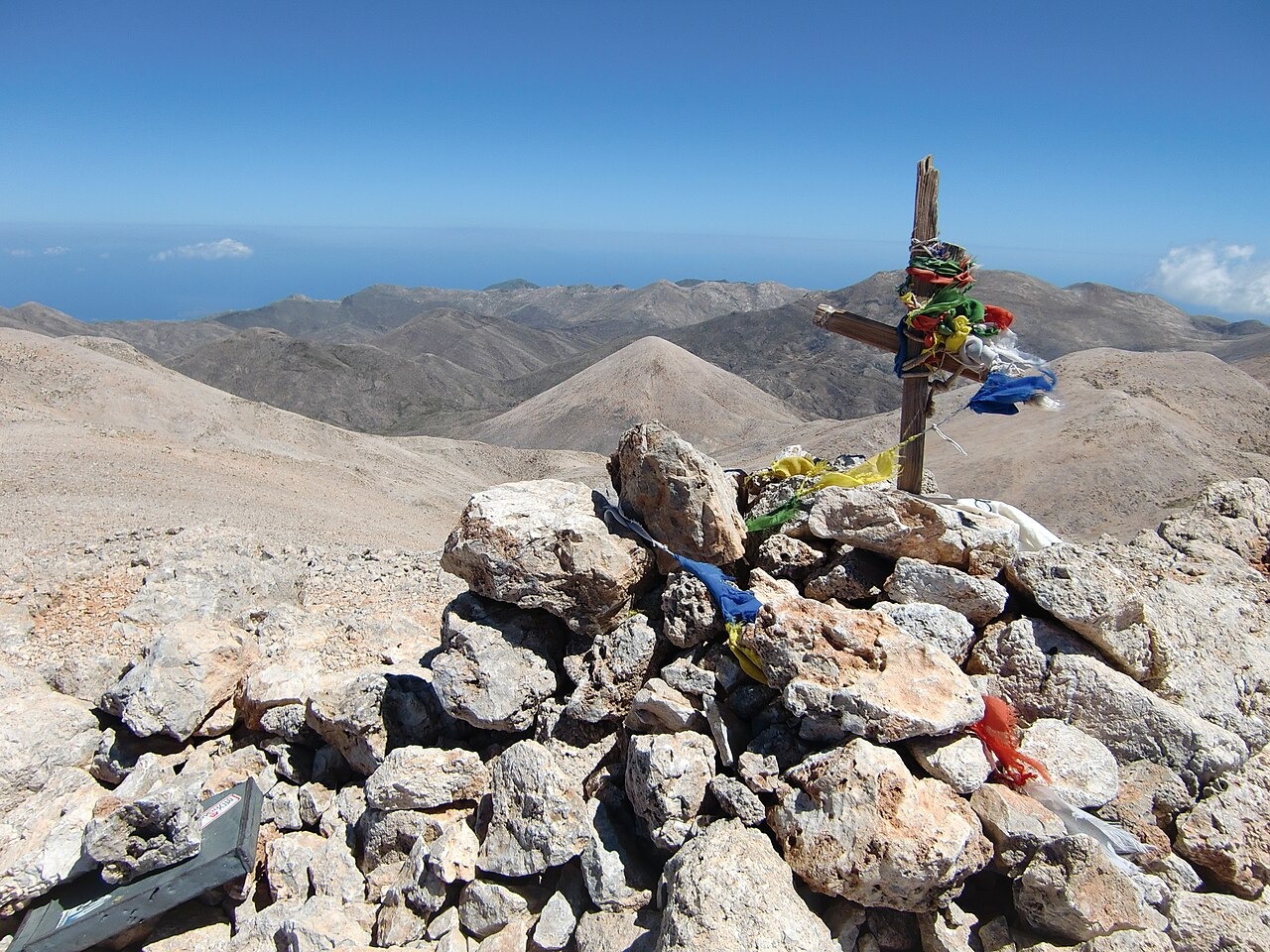
A Massif Built from an Ancient Sea
Marine sediments once laid down in the Tethys Ocean were uplifted to form the marble, limestone, and dolomite of the Lefka Ori, as recorded in Greece's tentative UNESCO nomination. The Samaria Gorge shares this carbonate foundation. Water moving through soluble rock, combined with erosion and ongoing uplift, drove the deep downward incision that formed the gorge.
Wildlife and a Biosphere Reserve
UNESCO lists Samaria under the Man and the Biosphere Programme as a biosphere reserve. Within the gorge, the Cretan wild goat — known locally as the kri-kri — is a documented example of the region's distinctive fauna. The Greek nomination dossier records Hellenistic coins from the ancient settlement of Tarra bearing a bee on one face and a Cretan wild goat head on the other.
Flora of the High Massif
The Greek heritage dossier records chasmophytes growing in rock cracks and 24 narrowly endemic plant species across the massif. The carbonate substrate and climatic conditions of western Crete together support these distinct assemblages. The park's plant inventory specifically lists Alyssum fragillimum as endemic to the White Mountains.