
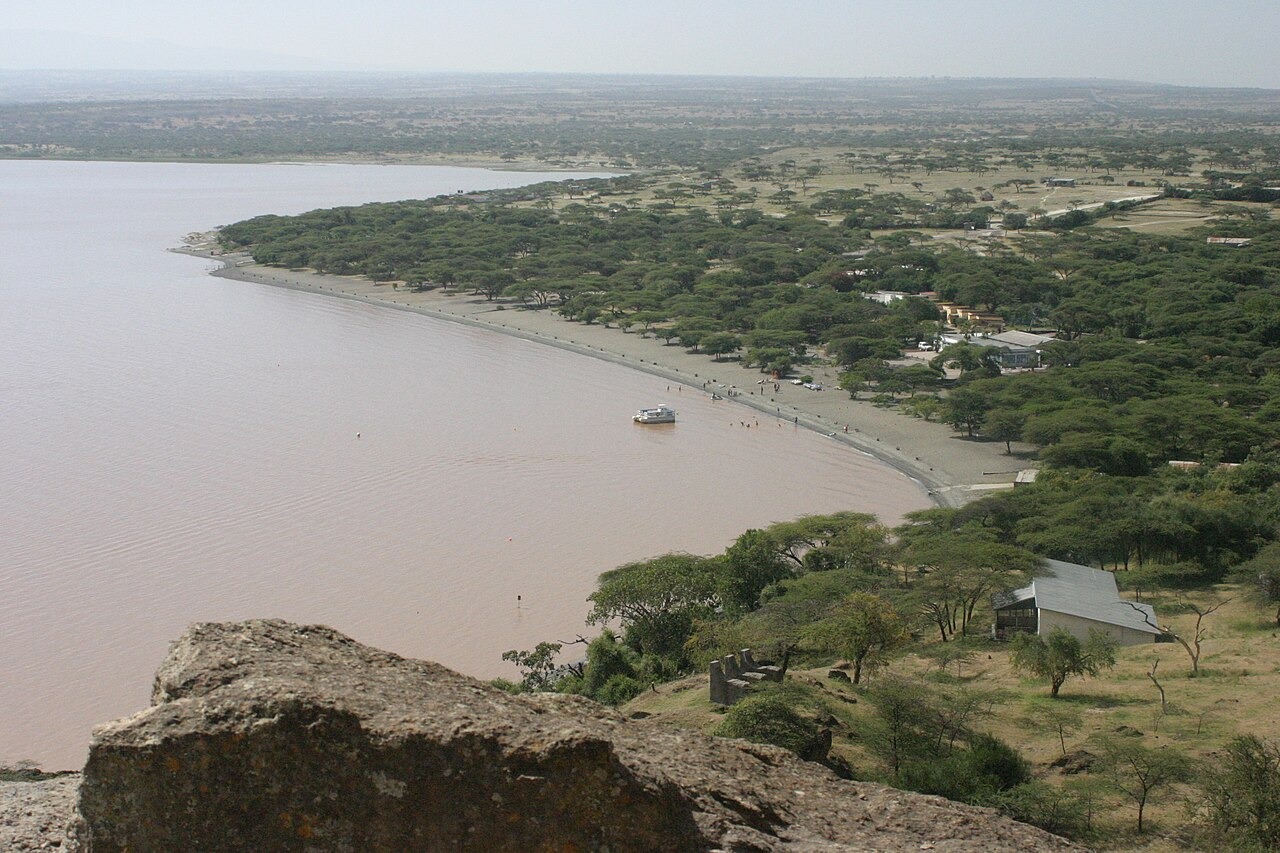
Basin Geology and Volcanic Rift Topography
A 1999 study published in Palaeogeography, Palaeoclimatology, Palaeoecology used aerial photographs, SPOT satellite imagery, local seismic reflection profiles, and lake sediment cores from Langano and Abijata to reconstruct the structural history of the Ziway–Shala basin. The surrounding escarpment units are composed of volcanic materials including rhyolites, ignimbrites, tuffs, and basalt, which researchers interpret as products of repeated rift-related volcanism and tectonic subsidence over geological time.
Hydrology of Lake Langano and the Horo Kelo Connection
Lake Langano receives water through three inputs: direct rainfall onto its surface, surface runoff from the surrounding catchment, and groundwater inflow from the volcanic escarpments, as modelled in a groundwater study of the Abijata–Langano–Ziway lake basin. The lake drains to Lake Abijata via the Horo Kelo outlet channel, linking these two water bodies within the same hydrological network.
Waterbirds of the Langano Lakeshore Islands
The Key Biodiversity Areas database documents Lake Langano as a KBA on the basis of its waterbird populations. Surveys recorded great white pelican Pelecanus onocrotalus as a qualifying species, along with small numbers of great cormorant Phalacrocorax carbo breeding on islands within the lake. The KBA designation reflects the significance of these island habitats for colonial nesting waterbirds in the Ethiopian Rift.