
Sandstone Cliffs, Seepage, and Contrasting Flanks
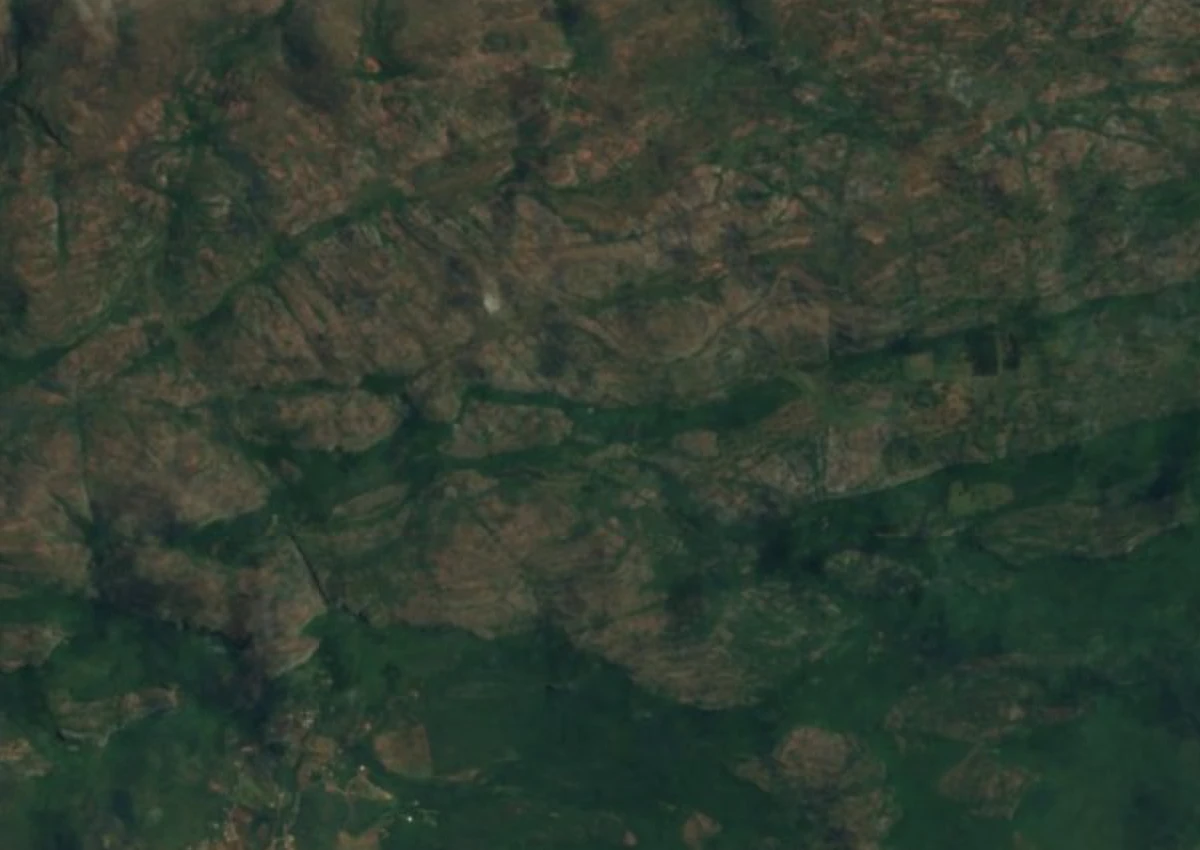
According to Schönhofer (2008), the sandstone in the study area dips at approximately 30 degrees north-northwest, and the resulting steep cliff faces force moist air upward while groundwater seeping at the cliff base sustains patches of persistent humidity in the ravines below. Munyai and Foord's 2015 survey documents the broader habitat contrast: the sampled northern face supports woodland, while the sampled southern face at elevations between roughly 1,200 and 1,400 m carries forest; higher toward the exposed summit, sedge and herb vegetation establishes itself on rocky quartzite soils. These changes in vegetation follow differences in ground cover, water and exposure along the ridge.
The Field Station and Ant Diversity Across the Slopes
Ian Gaigher founded the Lajuma field station, which began operating on the property in 2000. Between 2009 and 2013, Munyai and Foord ran a pitfall-trap survey across 11 stations distributed over the slopes, recording 133 ant taxa across the transect. Of the taxa recorded at those stations, 21 percent were found only on the southern slope and 14 percent only on the northern slope.
Luvhondo and the Vhembe Biosphere Reserve
The Luvhondo Nature Reserve, which encompasses the Lajuma summit, lies within the Vhembe Biosphere Reserve, designated in 2009. Foord, Dippenaar-Schoeman, and van der Merwe's 2002 Koedoe study, which records the summit elevation as 1,747 m under the name Letjume, reports an early local spider inventory. A field team sampled old and secondary-growth forest on the Lajuma property in 1997, and its specimens went into South Africa’s National Collection of Arachnida.
Exposed Summit Rocks as a Study Site
Melissa Petford's 2019 dissertation from the University of the Witwatersrand documents field observations conducted on the Lajuma summit and on a ridge located approximately two kilometres to the west. Walking measured transects and taking infrared readings of rock-surface temperatures, Petford observed the co-occurring dwarf geckos Lygodactylus incognitus and Lygodactylus soutpansbergensis at both locations. A summit weather station supported the environmental measurements. Across the two sites, L. incognitus was more active in cooler conditions and L. soutpansbergensis in warmer conditions.