
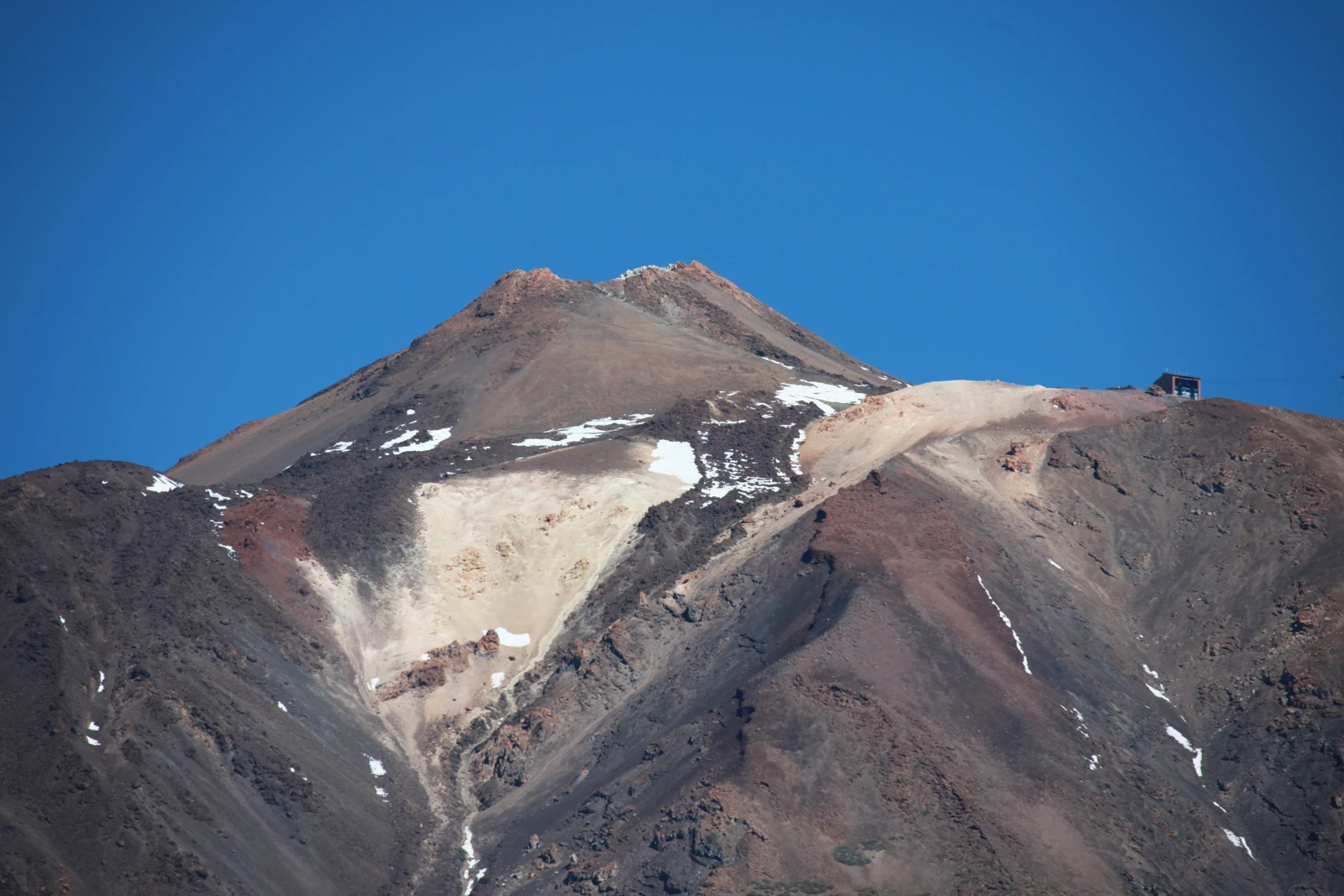
The rim buried by the Lavas Negras
The current terminal cone, known as Pilón or Pan de Azúcar, and the associated Lavas Negras are dated to around 1,150 ± 140 years ago according to the IGME. The lava flows filled much of the ancient depression and concealed its northern rim. Some flows reached the south and covered part of Montaña Blanca, whose pale material contrasts with the dark lavas.
The crater in the notes of Ramón Masferrer
On 1 and 2 September 1878, Ramón Masferrer y Arquimbau ascended Teide and crossed La Rambleta. In his account, published in 1879 in the Anales de la Sociedad Española de Historia Natural, he identified the ancient depression filled with volcanic material and recorded the name Pan de Azúcar for the cone rising within it.
The station below the Pilón
The Teide cable car was inaugurated in 1971, with its upper station at La Rambleta. In the 2011 photograph, the building visible to the right marks the elevation of this platform and allows it to be distinguished from the cone rising above.