
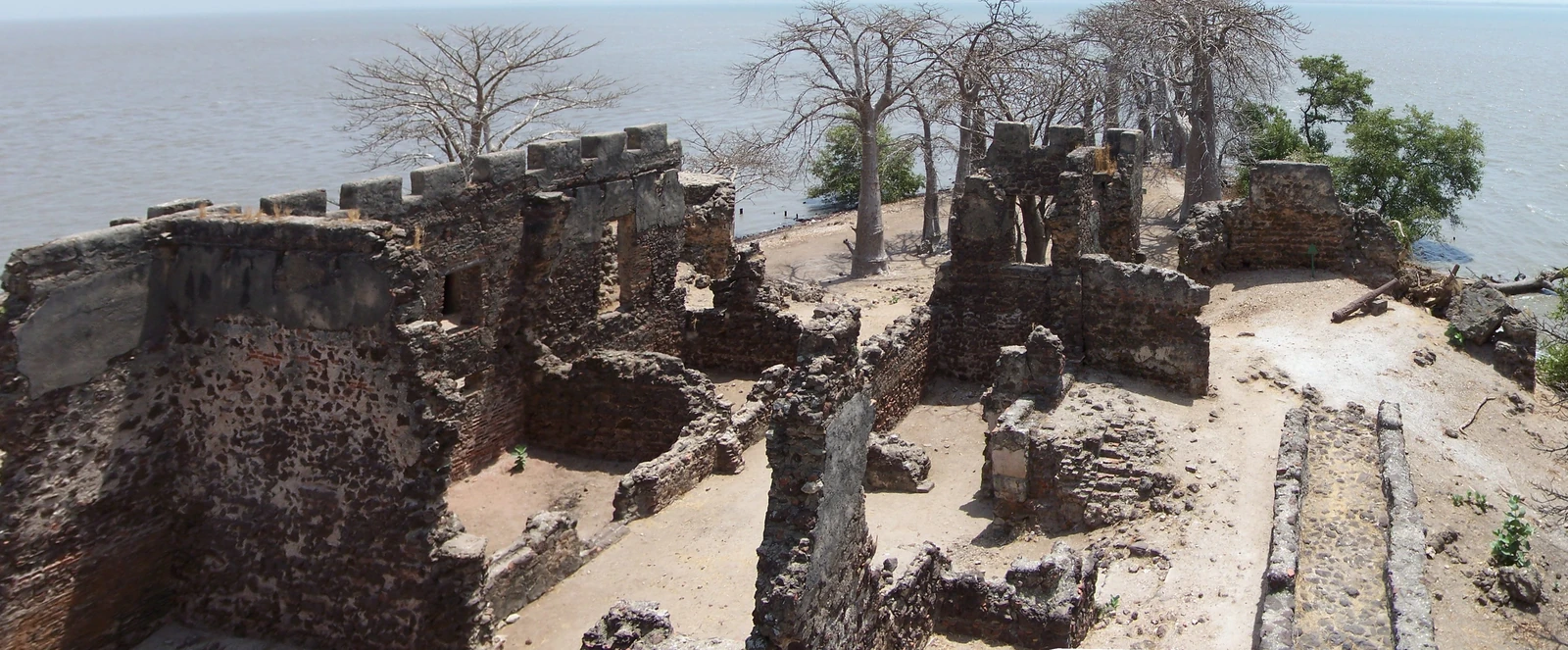
A River Island and Its Fort
The Gambia’s World Heritage nomination records that representatives of the Duke of Courland reached an agreement with Niuminka rulers and began building a fort in 1651. British forces took the island in 1661 and renamed it James Island. Its position made it possible for the garrison to monitor traffic farther upriver. During the transatlantic slave trade, the island became one of the places where people were held before being taken away by ship.
The 1807 Act and the Mouth Fortifications
The British Slave Trade Act received royal assent in 1807. Britain built the Six-Gun Battery in 1816 on the south bank of the river mouth, followed by Fort Bullen on the north bank in 1826. UNESCO records that both positions were intended to intercept vessels involved in the slave trade. They also extended British control over the Gambia River.
World Heritage Inscription and the Condition of the Ruins
UNESCO inscribed the site in 2003 under the name James Island and Related Sites. In 2011, the World Heritage Committee recorded a change of name to Kunta Kinteh Island and Related Sites.
The World Heritage assessment identifies erosion as a threat to the masonry. It also records the island’s significance for residents and for communities of the African diaspora, including people who visit the island and the villages across the river as places of remembrance.