
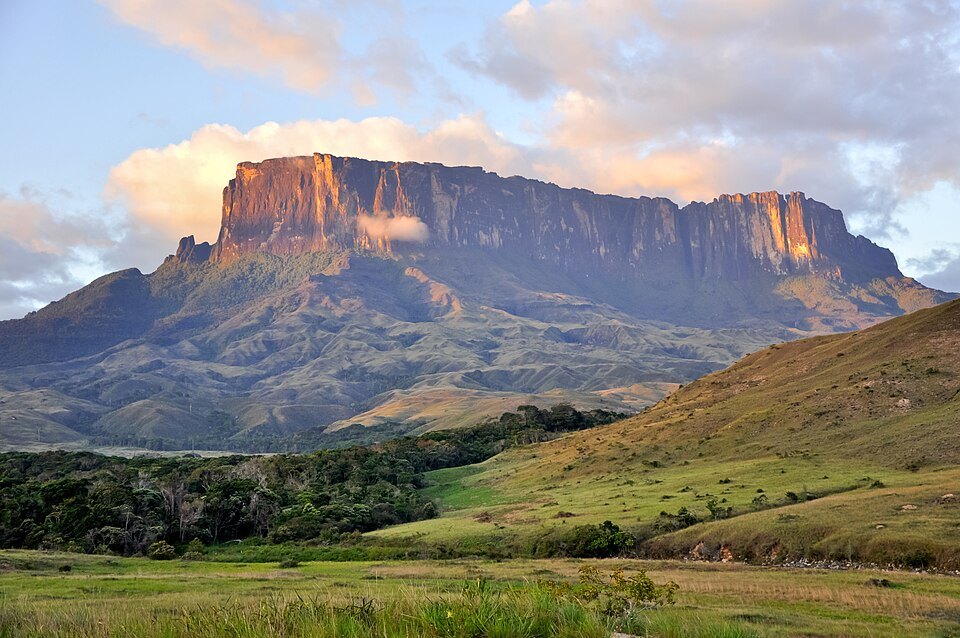
Geology and relief
The architecture of the tepuis results from differential erosion acting on the sandstone formations of the Guiana Massif. The upper plateaus remain elevated as the surrounding terrain is lowered over geological periods. Research into the sandstone caves of the tepuis describes a karst in siliceous rock that produces cavities and dissolution features in these formations. The escarpments of Kukenán are a consequence of this geological history.
Fauna of the eastern chain
The Smithsonian inventory documents at Kukenán the frog Oreophrynella nigra and the lizard Riolama leucosticta as examples of fauna with a distribution restricted to the eastern tepui chain. The inventory does not present them as exclusive to this tepui, nor is the list exhaustive.
World Heritage inscription
UNESCO inscribed Canaima National Park on the World Heritage List in 1994 for its natural values. The Committee's decision noted that the savanna population had not been consulted during the inscription process and requested that their interests be considered in a review of the park's boundaries. The toponym Matawi reflects the Pemón presence in the territory prior to this designation.