
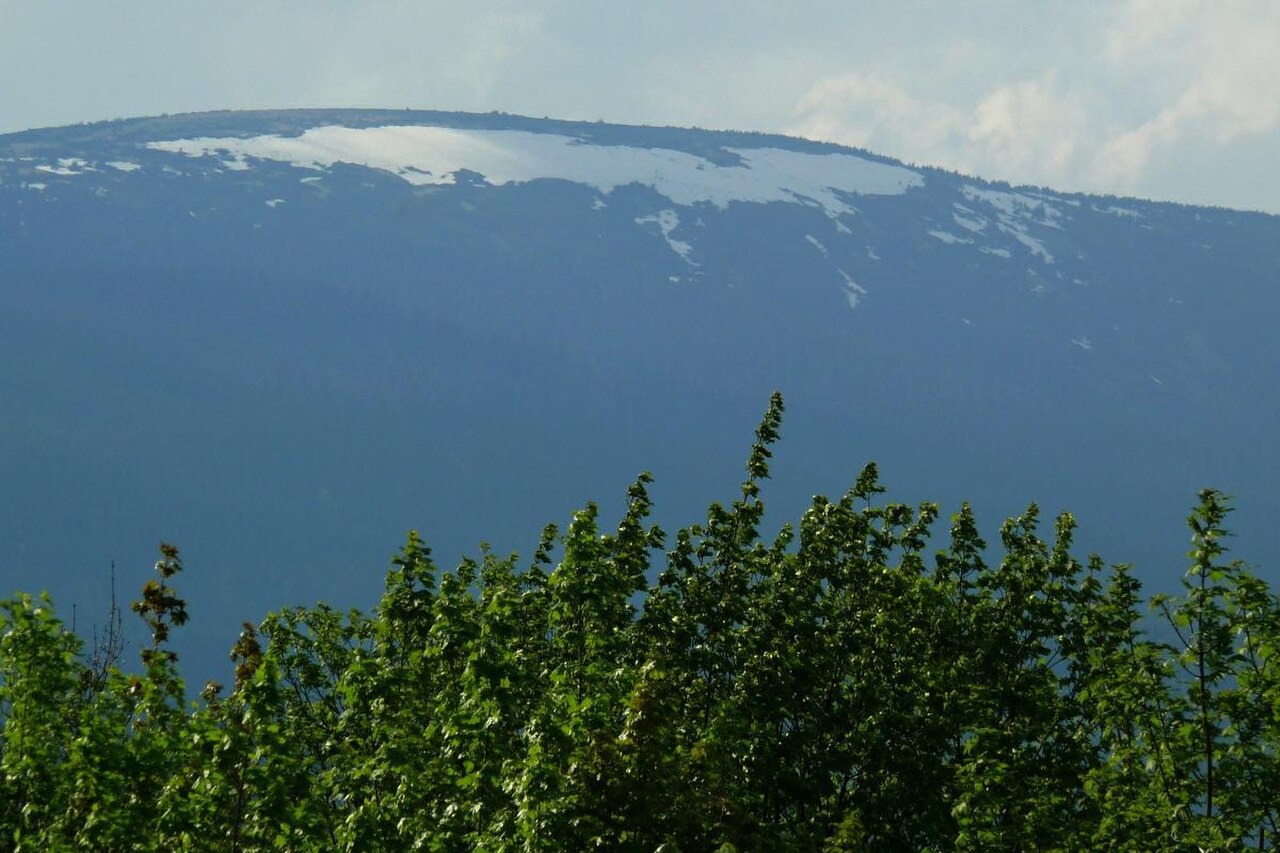
Summit Form and Underlying Geology
The upper slopes of Śnieżnik are broad and rounded, carrying naturally open summit grassland above montane spruce forest. The Polish Tourist and Sightseeing Society records the eastern side of the summit area as underlain by gneiss and the western side by mica schist. The Morava River begins its course on the Czech flank, and bands of crystalline carbonate in the upper Morava Valley host caves and disappearing streams documented in Czech conservation research.
Protected Landscapes on Both Sides of the Border
The Czech national nature reserve on the summit and upper slopes has been designated since 1990, when a formal decree established its current status, covering naturally open summit grassland and montane spruce slopes as an integrated ecological unit. A corresponding protected reserve has been established on the Polish side. Czech conservation documentation has reviewed the ecological character of the reserve and the karst research conducted within its boundaries.
The Lookout Towers
The Kłodzko section of the Moravian-Silesian Sudetic mountain association erected a stone lookout tower on Śnieżnik between 1895 and 1899. That structure was demolished in 1973 after standing for more than seven decades. A new lookout tower was constructed on the Polish side of the summit in 2021 and 2022, returning an observation structure to the top after nearly fifty years without one.