
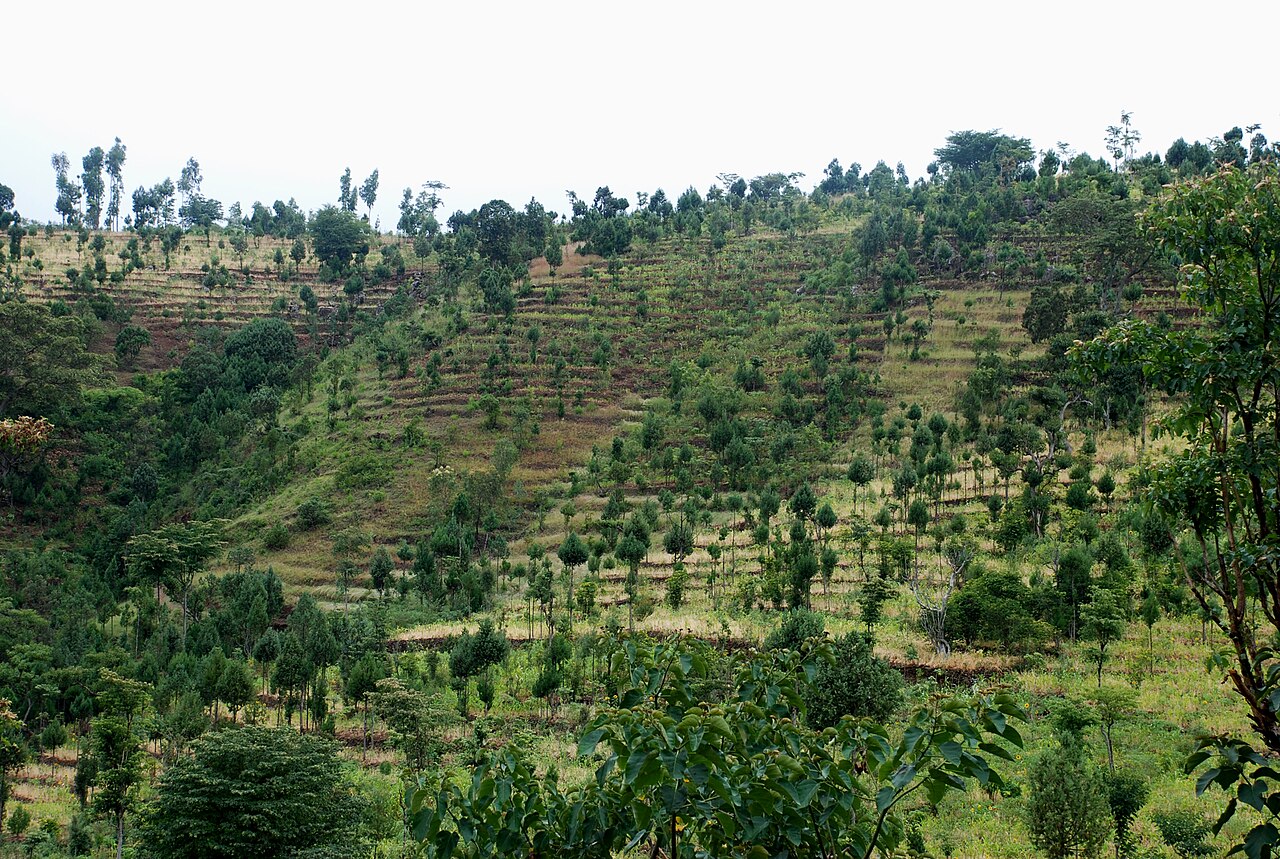
Dry-Stone Terraces Retaining Soil Across the Ridges
Konso farmers built agricultural terraces from locally quarried stone, with retaining walls reaching up to five metres on steeper slopes. The terraces arrest erosion, conserve moisture, and maintain productive soils across ridgelines that would otherwise shed rainfall quickly. UNESCO documentation identifies this terracing system as a defining feature of the inscribed 230-square-kilometre landscape.
Paletas: Walled Hilltop Settlements
Konso communities occupy paletas, hilltop settlements enclosed by dry-stone walls built from the same material used in the terraces below. Each paleta contains moras, communal gathering spaces where public affairs and social life are conducted. The arrangement reflects a settlement pattern tied directly to the surrounding agricultural and defensive landscape.
Harda Reservoirs and Living Traditions Spanning More Than 400 Years
Communal reservoirs known as harda are maintained near or within traditional forest areas to collect and store rainwater when it rains for use during dry periods. UNESCO records more than 400 years of continuous living traditions governing land management, terrace upkeep, and water infrastructure, representing at least 21 generations of transmitted knowledge and collective practice.