
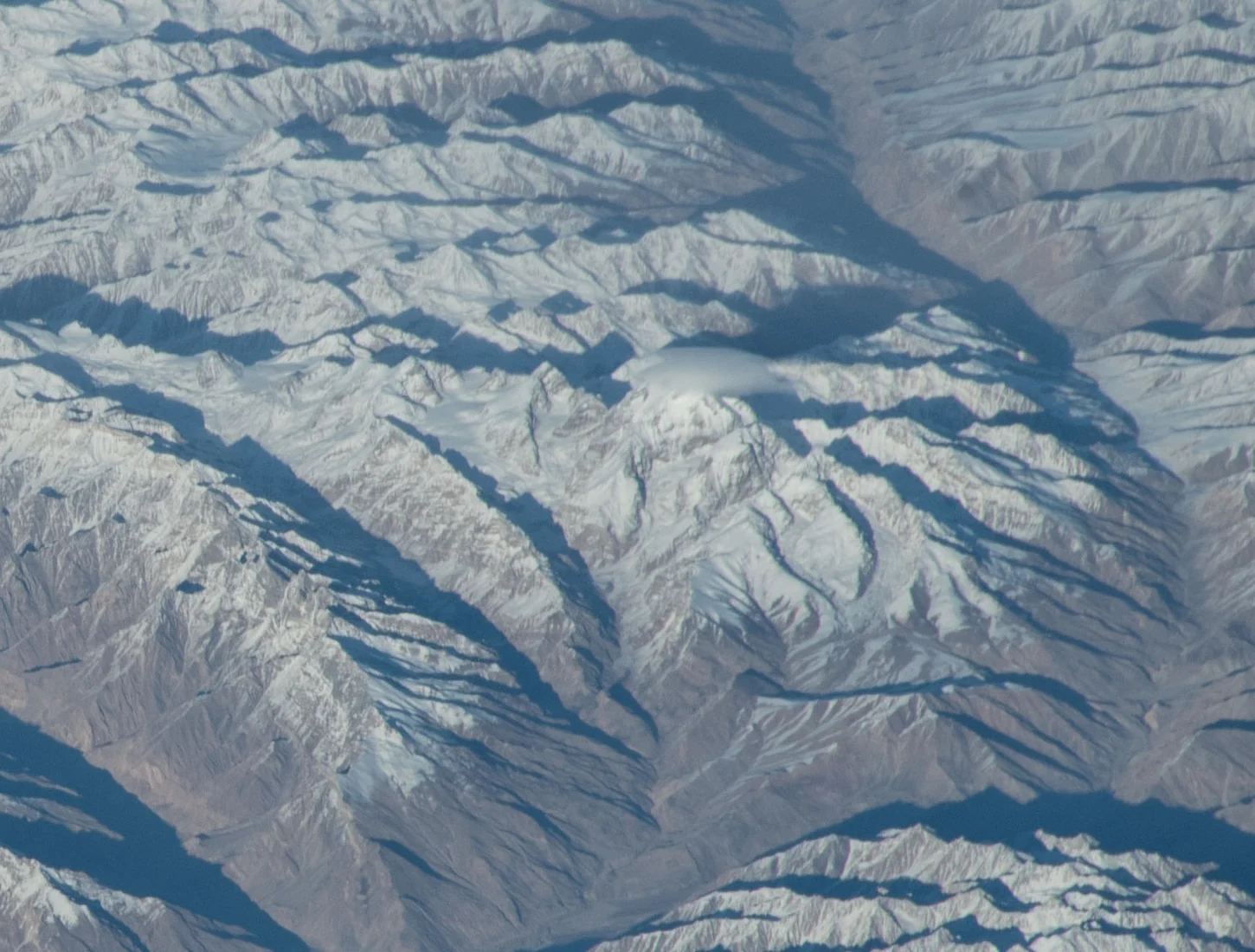
First Ascent, September 1960
Wolfgang von Hansemann, Dietrich Hasse, Siegbert Heine, and Johannes Winkler completed the first ascent in September 1960 after approaching from the Dara Sakhi valley. The expedition established three camps and made two unsuccessful summit attempts before all four climbers reached the top on a third push. Heine's account in the American Alpine Journal is the primary record of the climb.
Eisenerz Austrian Expedition, 1965
An Austrian expedition from Eisenerz reached the main summit on 8 July 1965, then climbed Bandaka Tawika on 12 July and Bandaka Uris on 20 July, covering three summits within the massif over twelve days. A separate American party led by Robin Hartshorne also in 1965 climbed Uris and attempted Bandaka Sakhi, recorded at 6,414 metres.
The Dara Sakhi Valley and Massif Structure
The Dara Sakhi valley, named in the 1960 expedition account, channels the approach into the central massif from lower Badakhshan. Regional reference sources and the Himalayan Journal record the main summit at 6,843 metres; a second survey value of 6,812 metres also appears in the literature. The named subsidiary summits give the Bandaka group a defined internal geography within the central Hindu Kush.