
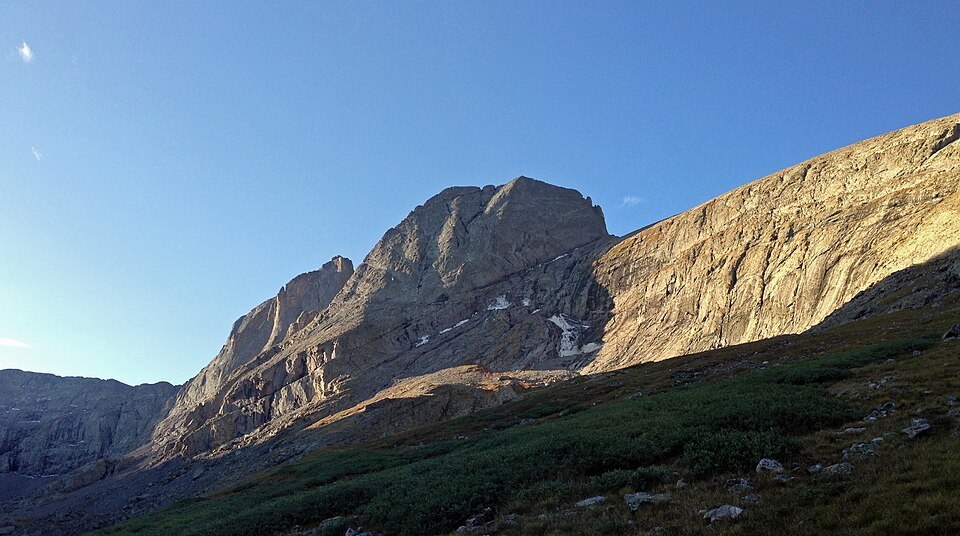
Shuttle Memorials on the Massif
Challenger Point, on the mountain's northwestern shoulder, was named to honor the crew of Space Shuttle Challenger, lost in 1986. On the east side, Columbia Point was designated in June 2003 by the Interior Department for the seven crew members of Space Shuttle Columbia. Both commemorative names apply to subsidiary points below the Kit Carson summit, not to the massif as a whole.
Trail Reroute and Alpine Restoration
The Rocky Mountain Field Institute completed a summit trail reroute in September 2020, redirecting traffic away from a drainage gully and from sensitive alpine vegetation and wetlands near Willow Lake. The new alignment incorporates rock steps and retaining walls to stabilize the tread. The project demonstrates how deliberate route placement can shift concentrated foot traffic off fragile high-elevation ecosystems without eliminating access to the summit.
Position Within the Sangre de Cristo Range
Kit Carson Mountain sits within the Sangre de Cristo Range, a southern spur of the Rocky Mountains that extends across the Colorado-New Mexico border. Crestone Peak, a separate and higher mountain, lies nearby in the same range but is a distinct summit with its own GNIS entry. The three named points of the Kit Carson massif—the main summit, Challenger Point, and Columbia Point—together give the formation an unusual density of federal commemorative designations for a single high-country landform.