
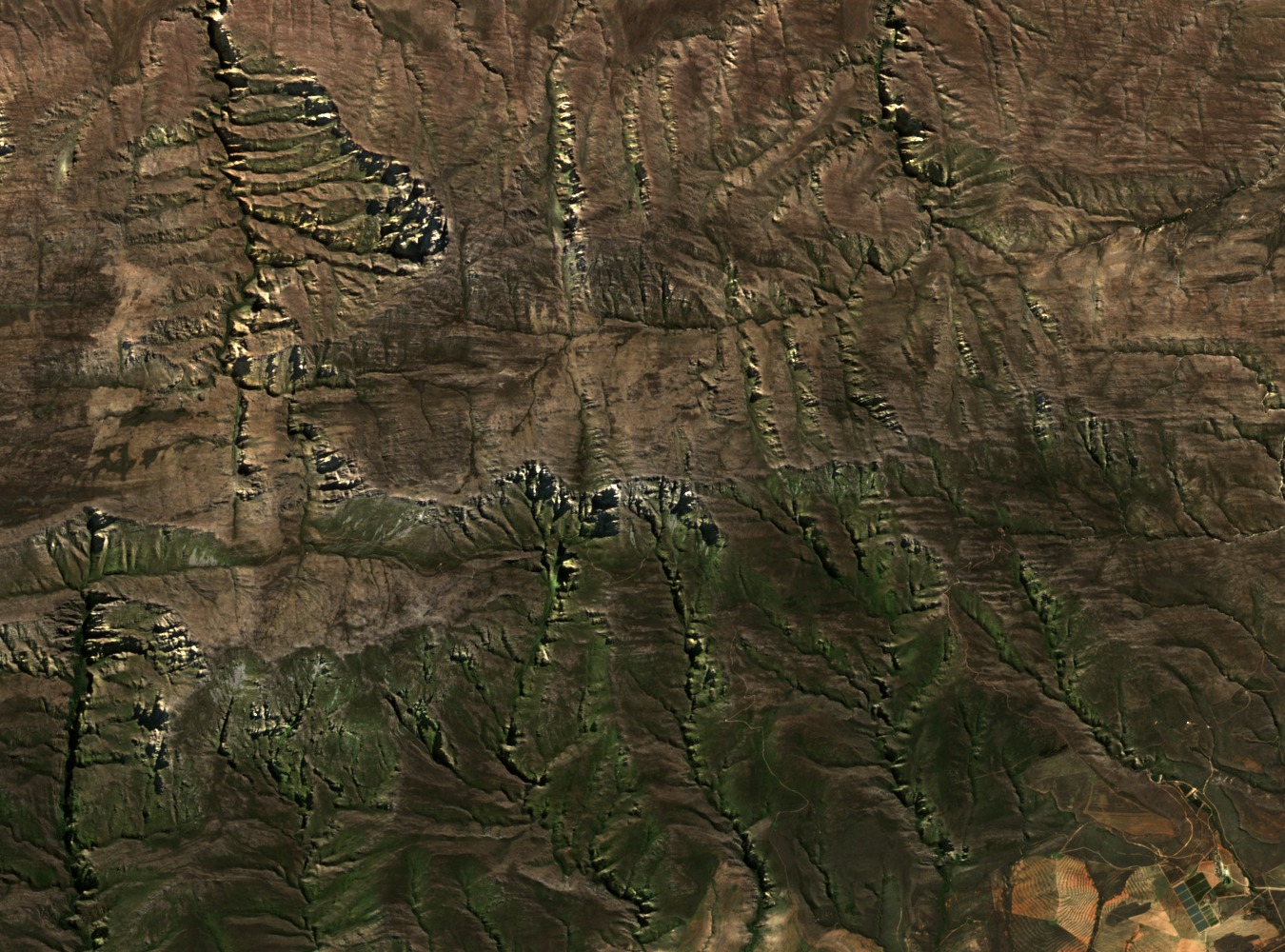
Mannetjiesberg and Kammanassieberg: Two Summits of the High Ridge
Mannetjiesberg reaches roughly 1,955 m as the reserve's highest point, while Kammanassieberg stands as a separate summit at 1,854 m. Both rise from the quartz sandstone backbone that defines the upper range. CapeNature's management plan for the reserve identifies each peak individually, reflecting the distinct character of the high ridge.
Catchment Streams and Native Freshwater Fish
Mountain streams draining the Kammanassie catchments support populations of native freshwater fish, documented in CapeNature's land and freshwater ecosystem work. The reserve's stream habitats are managed as part of a broader effort to protect indigenous aquatic species within the Cape Fold Belt, where stream integrity is closely tied to the condition of surrounding fynbos vegetation.
Cape Mountain Zebra Habitat Within the Reserve
The Kammanassie Nature Reserve provides habitat for Cape mountain zebra, a species whose population management is a core objective of CapeNature's reserve plan. The mountains offer the combination of rocky terrain and grassy patches that the species requires. CapeNature monitors the reserve population as part of its wider programme for this endemic South African ungulate.