
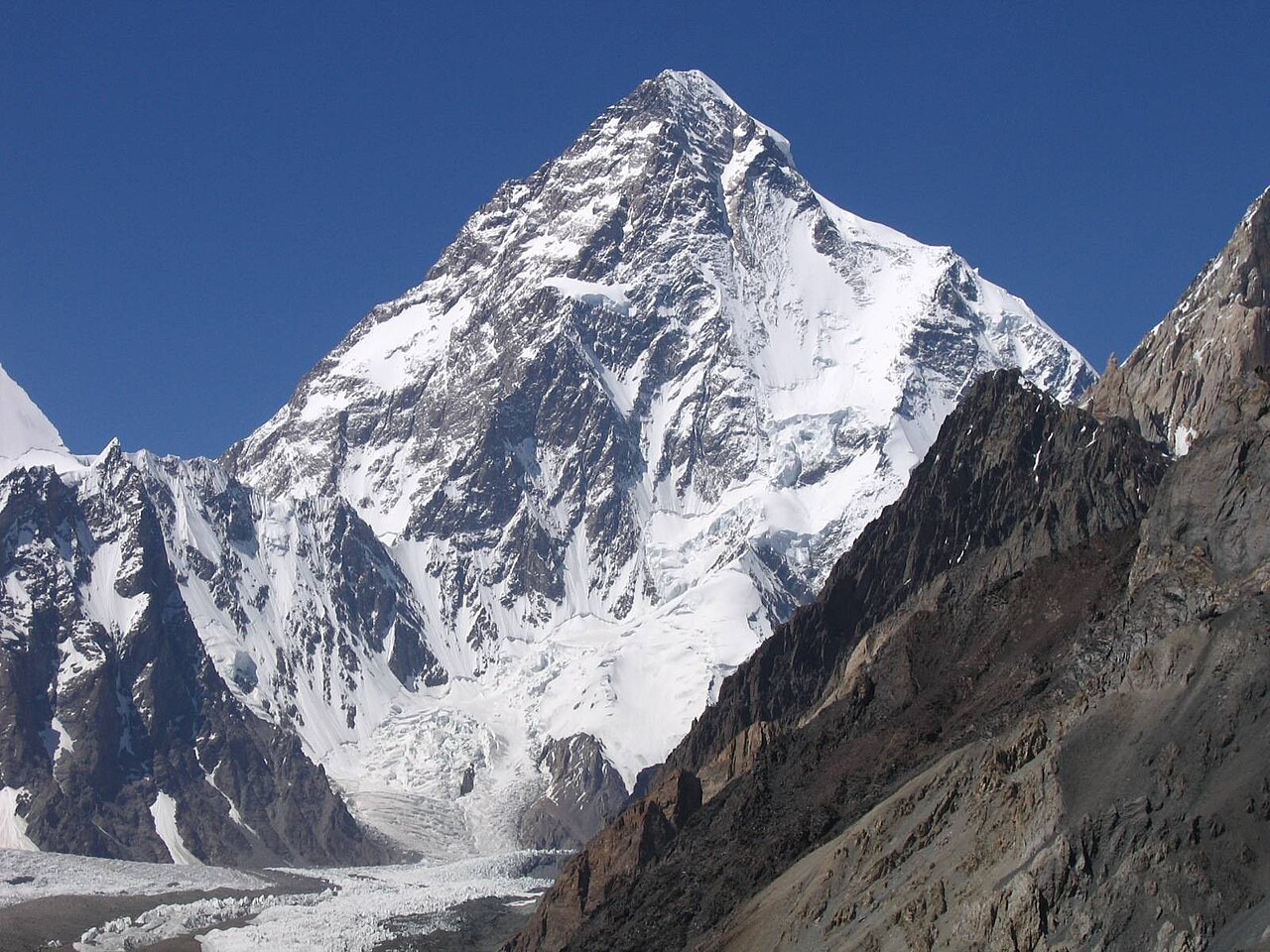
The Abruzzi Spur: The Historical Significance of the First-Ascent Route
In 1954, an Italian expedition led by Ardito Desio mounted a systematic assault on K2. On 31 July, Achille Compagnoni and Lino Lacedelli reached the summit via the Abruzzi Spur, completing the first human ascent of the peak. Desio's original report documented the full course of the expedition, and the Abruzzi Spur thereby became the most historically significant route in the climbing history of K2.
The expedition was not solely a mountaineering endeavour but also included geological survey work, a multidisciplinary character reflected in Desio's report. The expedition's scientific records accumulated early data for subsequent research into the geological characteristics of the Karakoram, giving the 1954 expedition a documentary legacy in both the history of exploration and the history of science.
The Baltoro Glacier and Regional Geographic Context
The Karakoram, where K2 is located, is one of the most concentrated regions of high-mountain glacial landforms in Central Asia. Around the southern flank of K2, the Baltoro Glacier is a large mountain glacier that forms the geographical corridor along which the approach route to base camp passes. This approach route, extending along the glacier, is the typical geographic setting for major Karakoram expeditions and is not a named glacial system exclusive to K2.
Sino-Pakistani Mountaineering Exchanges and Contemporary Ascent Records
The climbing history of K2 has continued to accumulate new records into the twenty-first century. Materials from the Department of Culture and Tourism of the Tibet Autonomous Region review a joint Sino-Pakistani summit in 2002, a record that reflects the tradition of bilateral cooperation between China and Pakistan in high-altitude mountaineering. The Chinese official name "Chogori" derives from a local language, while the designation "K2" originates from the systematic numbering of peaks during the nineteenth-century trigonometric survey of the Karakoram; both names are used in parallel in contemporary sources.