
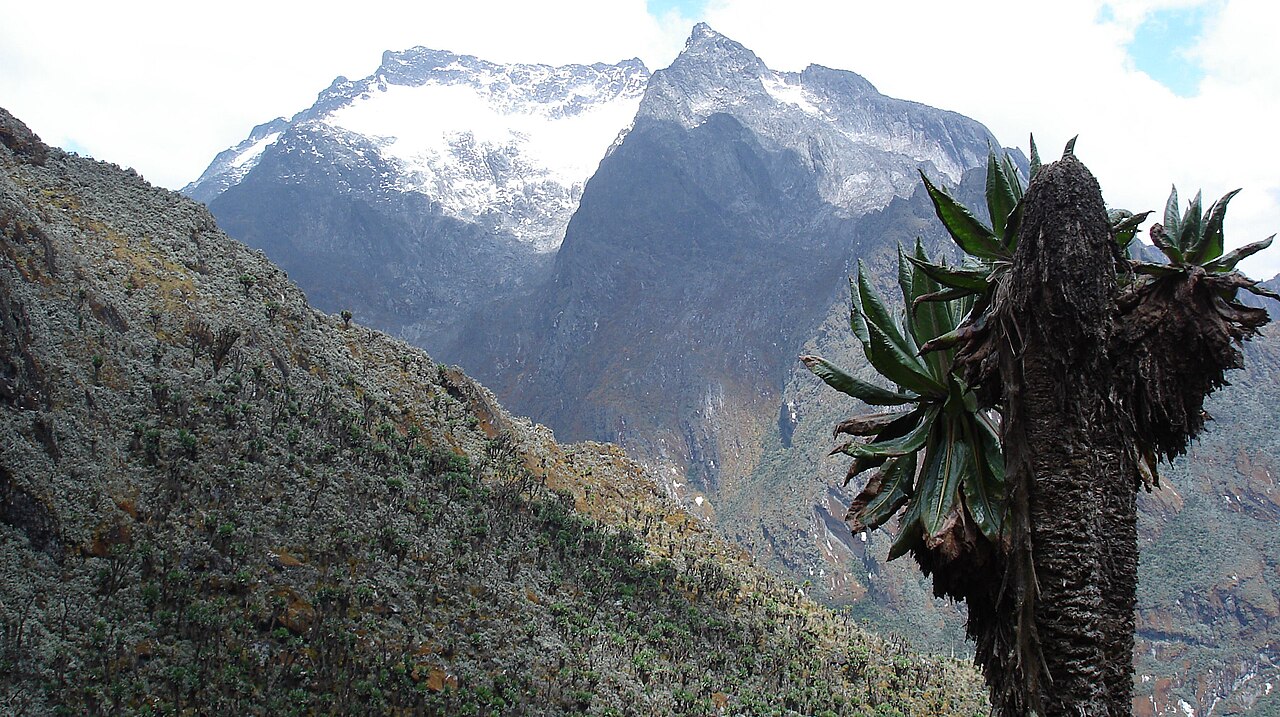
Naming by the 1906 Abruzzi Expedition
The Duke of the Abruzzi led a systematic survey of the Rwenzori in 1906, and the party assigned names to individual summits across the massif. Johnston Peak was named for Sir Harry Johnston during that expedition, with the designation published in the Royal Geographical Society's Geographical Journal in 1907. The account, covering pages 121 to 146, documented the naming conventions applied across Mount Speke and the surrounding peaks.
1953 Ascent of Both Speke Summits
A climbing party working in the Rwenzori massif in 1953 ascended both Vittorio Emanuele and Johnston Peak during the same period of activity on Mount Speke. Douglas Busk recorded details of this work in notes published in the Alpine Journal in 1954, confirming the two summits as separate objectives on the mountain and providing observations on conditions across the massif at that time.
Johnston Glacier and East Johnston Glacier
Glaciological fieldwork published in the Journal of Glaciology distinguishes two separate ice bodies associated with Johnston Peak. The Johnston Glacier occupies a southern position and was formerly a lobe of the summit ice cap. The East Johnston Glacier is a self-contained body to the east, which early cartography had grouped together with the Vittorio Emanuele Glacier. Photographs taken during the 1906 Abruzzi expedition contributed to separating these features in later physical analysis.