
Geology of an Isolated Massif
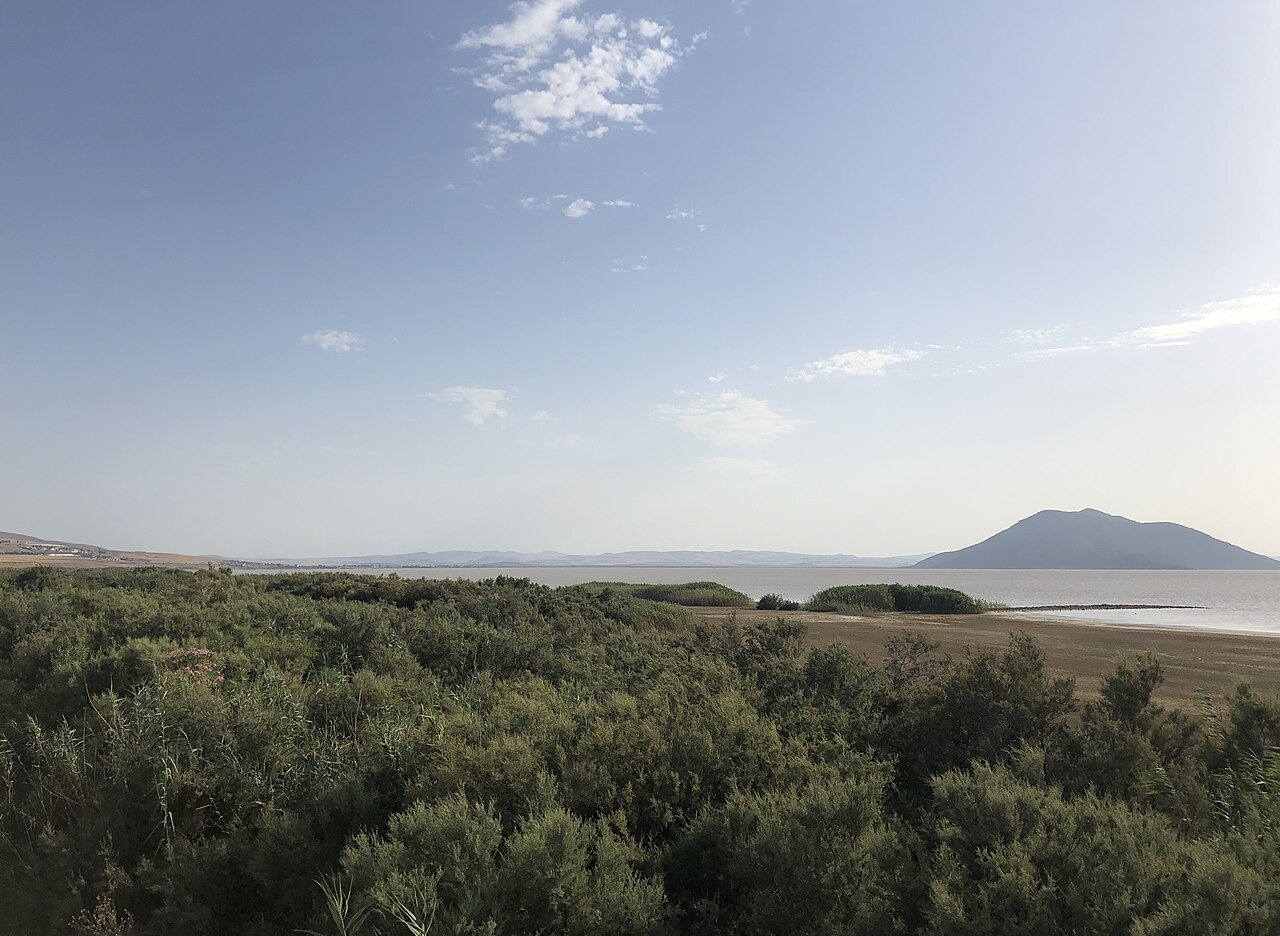
The Tunisian National Environment Protection Agency identifies Jebel Ichkeul as the park's defining landform, an isolated wooded rock massif distinct from the surrounding lake and marshland. According to the UNEP-WCMC geological inventory, the massif is composed of Triassic and Jurassic limestone that underwent metamorphism, with marble exposed in parts of the southwest face. This ancient structural origin separates Jebel Ichkeul from the flat wetland basin it overlooks and gives the mountain its characteristic rocky profile above the water margins.
Seasonal Hydrology and the Three-Habitat System
The park encompasses three interdependent habitats: the mountain massif, the lake, and the surrounding marshes. Lake Ichkeul receives freshwater inflows from connected rivers and drains toward the sea, with salinity levels that shift according to seasonal and annual hydrological cycles rather than holding constant as either freshwater or saline. The UNEP-WCMC inventory documents how this fluctuating salinity governs aquatic vegetation and in turn supports the marsh and shoreline communities that extend to the mountain's wooded lower slopes.
World Heritage Status and the Danger Listing
UNESCO inscribed Ichkeul National Park on the World Heritage List in 1980. The site was placed on the List of World Heritage in Danger in 1996 after upstream dam construction reduced freshwater inflows to the lake, altering salinity and affecting the vegetation and habitat conditions the park was inscribed to protect. UNESCO removed Ichkeul from the Danger List in 2006, following documented improvements to water management and inflow conditions attributed to interventions assessed by the World Heritage Committee.