
Summit and Setting
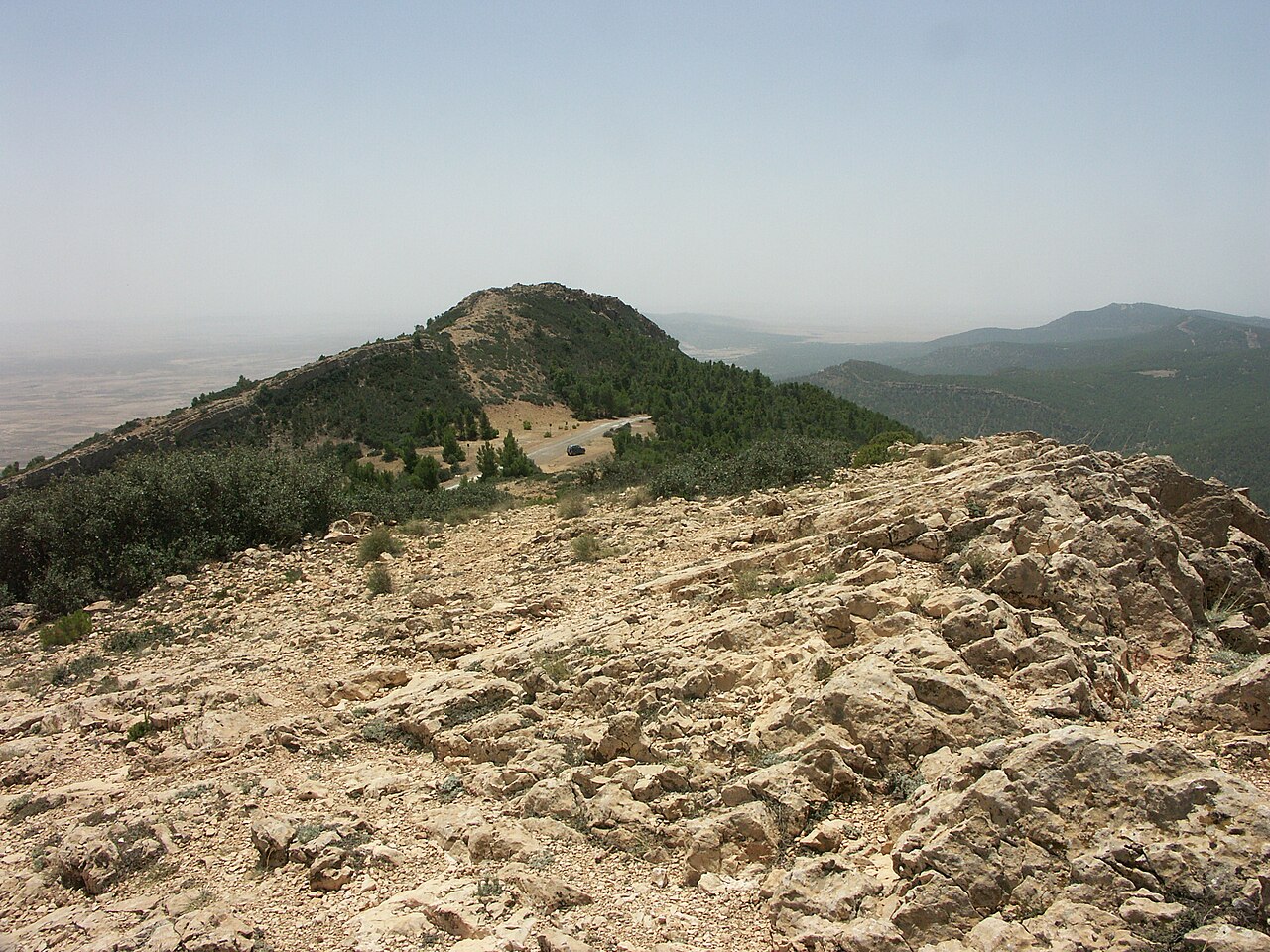
Jebel Chambi (Chaambi) rises to 1,544 metres in western Kasserine Governorate and is Tunisia's highest point. Both spellings are in current use and render the same toponym. The mountain forms a massif whose elevated terrain defines the extent and ecological character of Chambi National Park, which takes its name from the mountain.
Vegetation Zones
Ministry environmental assessment §6.2.3.1 documents three vegetation zones tied to elevation on the massif. Holm oak stands occupy the upper slopes above 1,100 metres. At lower elevations, Aleppo pine grows alongside Phoenician juniper and rosemary. Below 900 metres, esparto grass steppe prevails across the lower terrain.
Wildlife and Human Traces
Cuvier's gazelle and Barbary sheep are recorded within the park. The massif contains historic olive presses and traces of lead mining, physical evidence of earlier agricultural and extractive activity on the slopes. Neither feature has been precisely dated in available sources. A regulation of 6 July 1984 addresses general park management and marks a point in the park's regulatory history, without indicating when the park was established.