
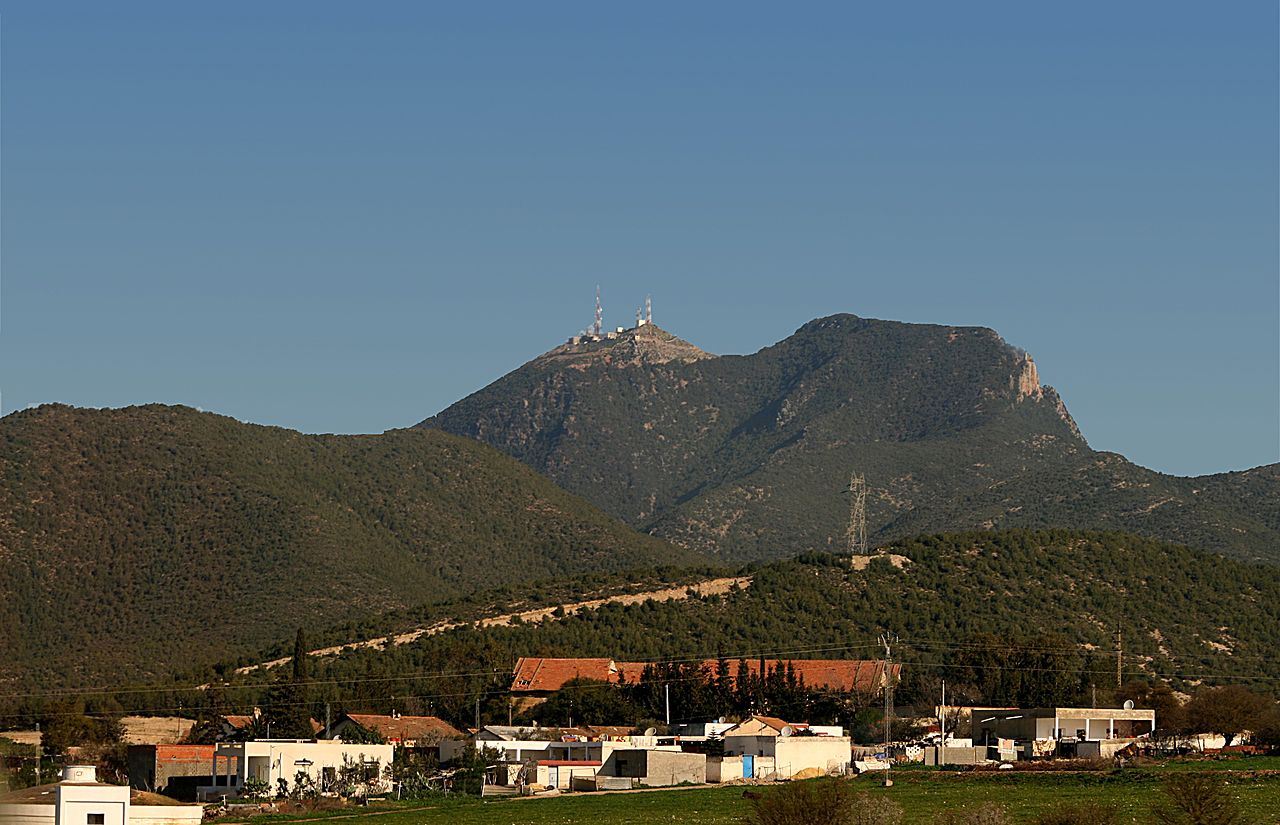
Position and Geology
Jebel Bou Kornine rises to 576 metres near Hammam-Lif, at the northeastern end of the Tunisian Dorsal where the range meets the Gulf of Tunis. Its twin-peaked profile forms a prominent silhouette above the coastal plain and has made it a visual reference across the bay.
Flora and Park Status
Les Amis des Oiseaux has documented Barbary thuya (Tetraclinis articulata) and Aleppo pine on the slopes of Jebel Bou Kornine. Persian cyclamen is characteristic of the park and nationally rare in Tunisia, with Jebel Bou Kornine representing one of the species' few documented sites in the country. This is a national-scale restriction: the significance of the site is as a critical location for a nationally rare species, not as a globally unique population.
The park was formally established by Decree 87-282 on 17 February 1987, one of the earlier national park designations in Tunisia's protected areas system. Detailed biodiversity documentation, including the formal recording of Persian cyclamen in Tunisia's sixth national biodiversity report, followed the initial decree.
Raptor Rehabilitation and Community History
Les Amis des Oiseaux rehabilitated and released a peregrine falcon and a lanner falcon at the park. These records document individual recovery events and carry no inference about breeding populations at the site. Environmental reporting also records springtime gatherings historically associated with Aïn Zarga within the park, linking the mountain to documented patterns of community use.