
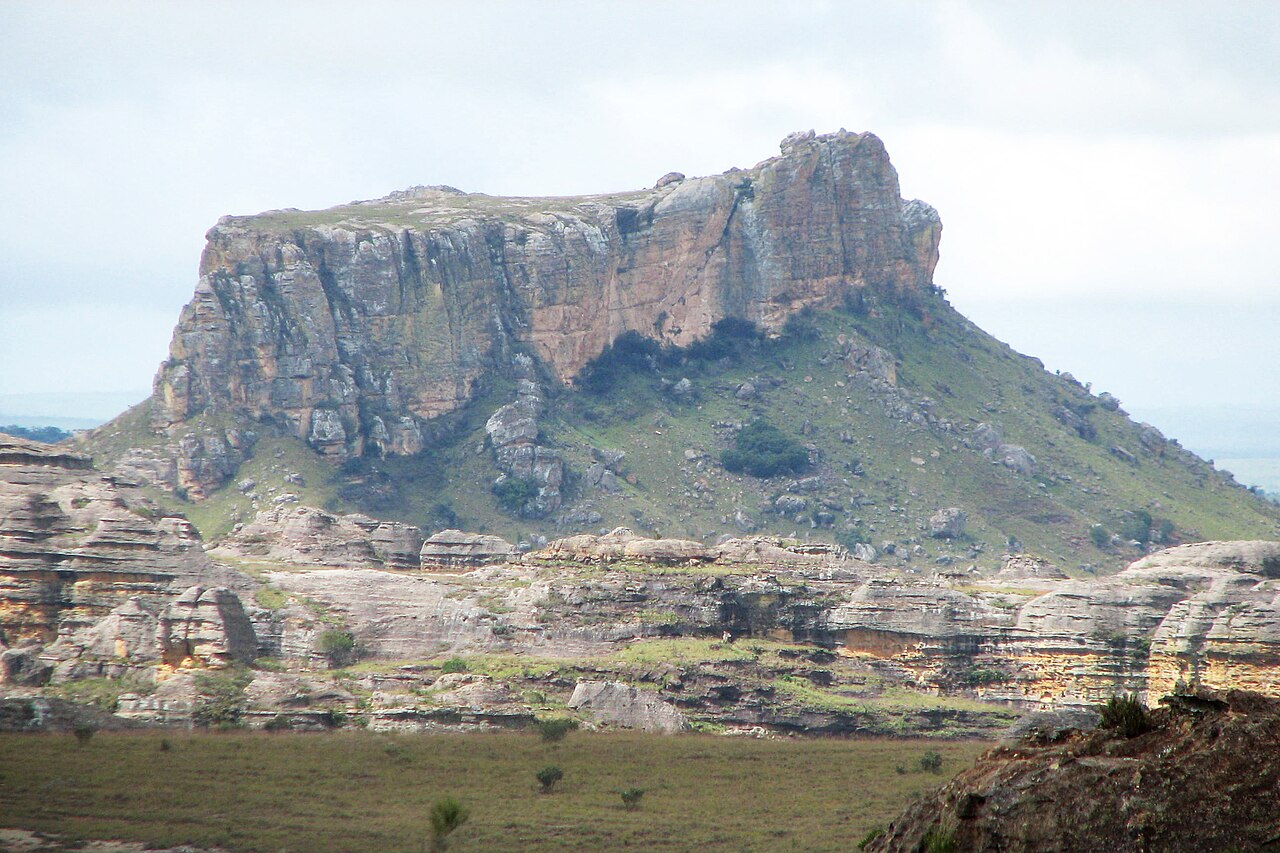
Jurassic Sandstone and the Formation of Isalo's Relief
The massif is composed of Jurassic-age sandstone that erosion has worked into an intricate topography of gorges, isolated rock towers, and flat-topped plateaus. Research documented by the University of Wrocław describes how fractures and differential weathering along bedding planes account for the vertical canyon walls and sculpted pinnacles that define the massif's silhouette across elevations from 510 to 1,268 metres.
Canyon Vegetation Distinct from the Exposed Plateau
Within the deeply incised canyons, sheltered microclimates support plant communities that contrast with the sparse vegetation on the windswept sandstone plateau above. The Foundation for Protected Areas and Biodiversity of Madagascar records this ecological contrast as one of the park's defining features, with moisture-retaining canyon floors hosting ferns, palms, and other species not found on the exposed ridgelines.
Bara Cultural Connections to the Massif
The Foundation for Protected Areas and Biodiversity of Madagascar documents places within Isalo that hold sacred significance for the Bara, a community with longstanding ties to the south-central plateau. These cultural associations are part of the park's protected heritage, and management of the site acknowledges this dimension alongside its geological and ecological values.