
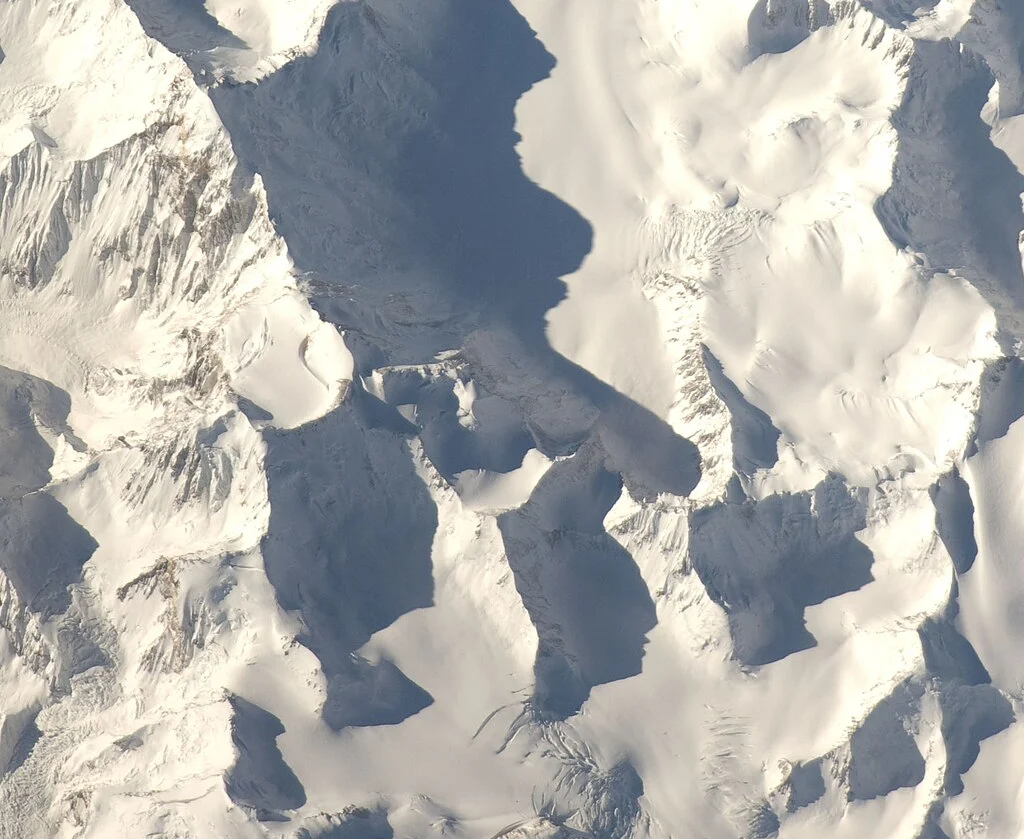
Name and Elevation
Official Tajik sources record the elevation as 6,940 metres. The UK Permanent Committee on Geographical Names lists both the current Tajik name, Qullai Istiqlol, and the former Soviet designation, Revolution Peak, in its Tajikistan toponymic factfile. The Yazgulem Range runs through Gorno-Badakhshan Autonomous Oblast in Tajikistan's eastern highlands, and Independence Peak stands as its highest point.
The Tajik Ministry of Economic Development and Trade lists Revolution Peak at 6,974 m in its guide to the lakes and mountains of Tajikistan.
First Ascent, 1954
On 17 August 1954, a team led by Soviet climber Aleksei Ugarov made the first recorded ascent of the main summit. The MAI Mountain Club, citing Ugarov's account, says the team passed east of the north summit and reached the saddle between the central and the main summits.
1962 Northwest Face Ascent
In 1962, a twelve-member Soviet team led by Myshliaev climbed the northwest face of Independence Peak, with the ascent documented in a Soviet report. The northwest face rises above the glaciated valleys of the Yazgulem Range in western Gorno-Badakhshan, and the team's size of twelve reflects the logistical scale Soviet expeditions applied to objectives in the Pamirs.
1967 Face Returns
Soviet teams returned to the northwest face in 1967, completing ascents the American Alpine Journal documented in 1969 as the second and third ascents of the face route. The 1969 AAJ record credits these specifically as ascents of the face; the source makes no further claims about the summit's overall climbing sequence.