
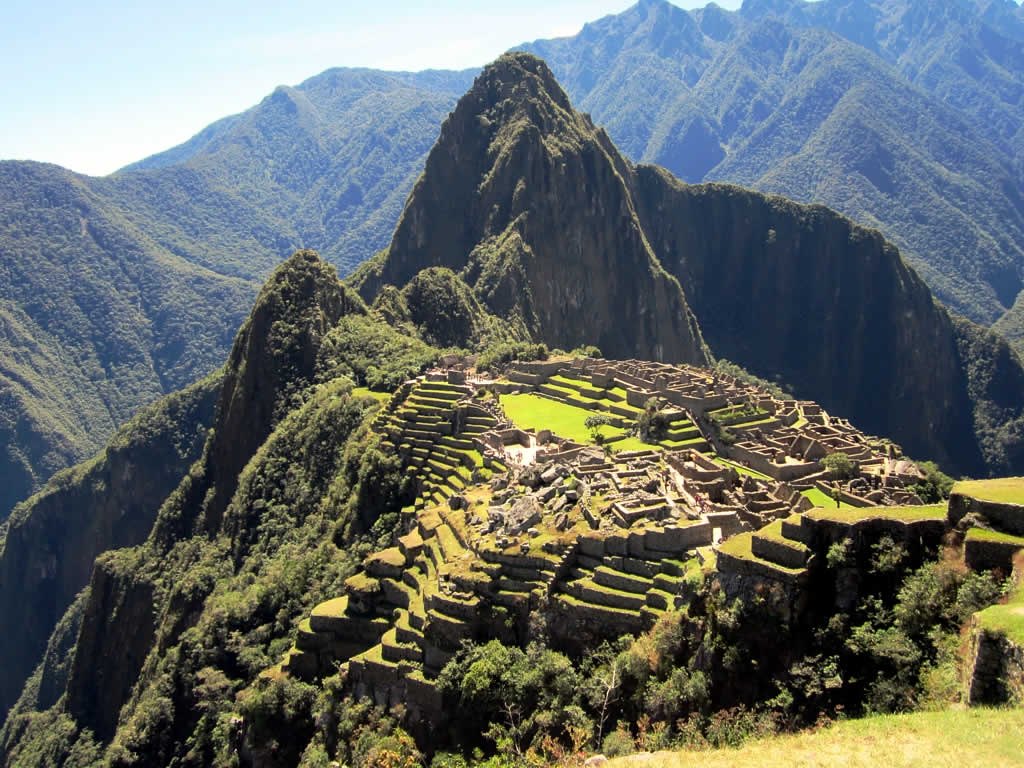
Constructions and stairways
The upper part of the peak concentrates built enclosures, stepped terraces, and caves carved into the rock. A stairway path connects the base with the summit. Along the section towards the western flank, some steps were cut directly into the rock, integrating the route into the geology of the peak.
Hypotheses about function
The archaeological team proposes that the documented enclosures and terraces may have served ceremonial, astronomical, and visual surveillance functions. The sources present these interpretations as working hypotheses supported by the material record.
Western flank and differentiated routes
On the western flank lies the sector known as the Gran Caverna, with enclosures set within rock shelters and connected to the rest of the peak by its own path. In the circuit system of the Ministry of Culture of Peru, the summit of Waynapicchu corresponds to route 3-A, Gran Caverna to route 3-C, and Huchuy Picchu, the neighbouring summit, to route 3-D.