
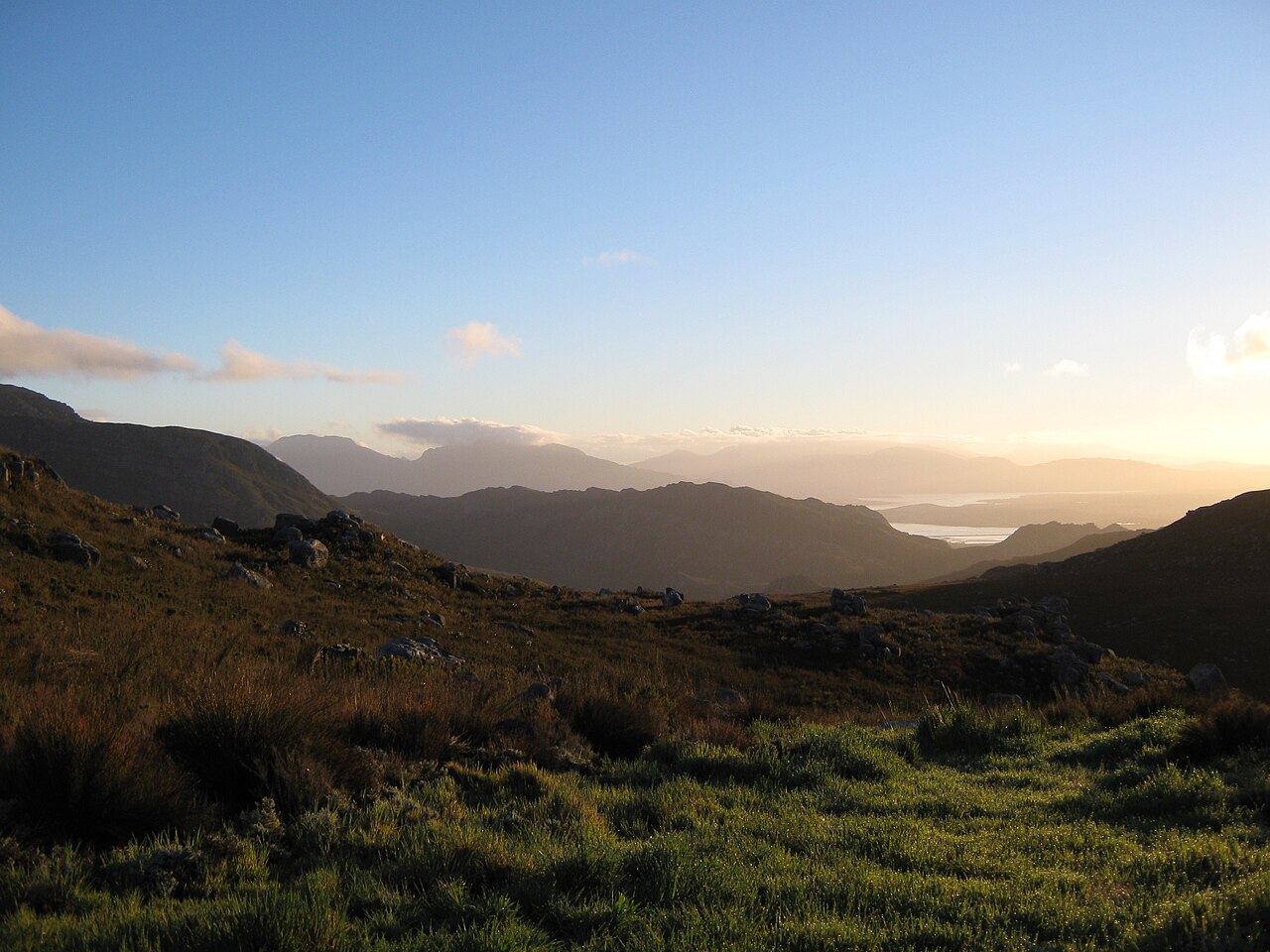
Rainfall Gradients Across the Boland Mountain Complex
The South African nomination for the Cape Floral Region documents annual rainfall of 700 to 1,700 mm across the Boland mountain complex. Within that range, Dwarsberg Plateau in the neighbouring Jonkershoek Nature Reserve records up to 3,300 mm per year, among the highest figures measured anywhere in the complex. The Palmiet River drains portions of the Hottentots Holland reserve, carrying runoff from these elevated catchments toward the coastal lowlands.
Fynbos and the Cape Floral Region World Heritage Property
Fynbos vegetation covers the reserve and connects it to the Cape Floral Region Protected Areas, inscribed as a serial UNESCO World Heritage property in 2004 and extended in 2015. The serial property spans multiple reserves across the Western Cape, and the Hottentots Holland reserve contributes one component of that larger designation. The fynbos here supports the exceptional plant diversity that underpins the World Heritage listing.
Wetland Monitoring Within the Boland Reserve Complex
In 2022, CapeNature conducted wetland surveys across the Boland Nature Reserve Complex, with the Hottentots Holland reserve included as part of that monitoring programme. The surveys assessed the condition and extent of wetland systems within the complex, contributing baseline data for the ongoing management of water-dependent habitats across the interconnected reserves.